MEXICO · TRADE
Key Facts
—The date: US and Mexican officials hold a third bilateral round of the USMCA joint review on July 20 in Mexico.
—Autos: Washington wants to lift the automotive rules-of-origin threshold to 82% and require at least 50% of a vehicle’s value to be sourced in the United States.
—Metals: The US is pushing to tighten the rule that 70% of a producer’s steel and aluminum come from North America, with stricter verification.
—The China shadow: US concern centers on Chinese investment in Mexican factories seen as a way to sidestep tariffs on US-bound goods.
—Narrowing gap: Mexico says the number of US concerns has fallen from 54 to 14, according to Economy Minister Marcelo Ebrard.
The United States and Mexico go into a third round of USMCA review talks on July 20, with tougher auto and steel content rules and China’s footprint in Mexican factories at the center. Mexico says most of Washington’s concerns have already been narrowed.
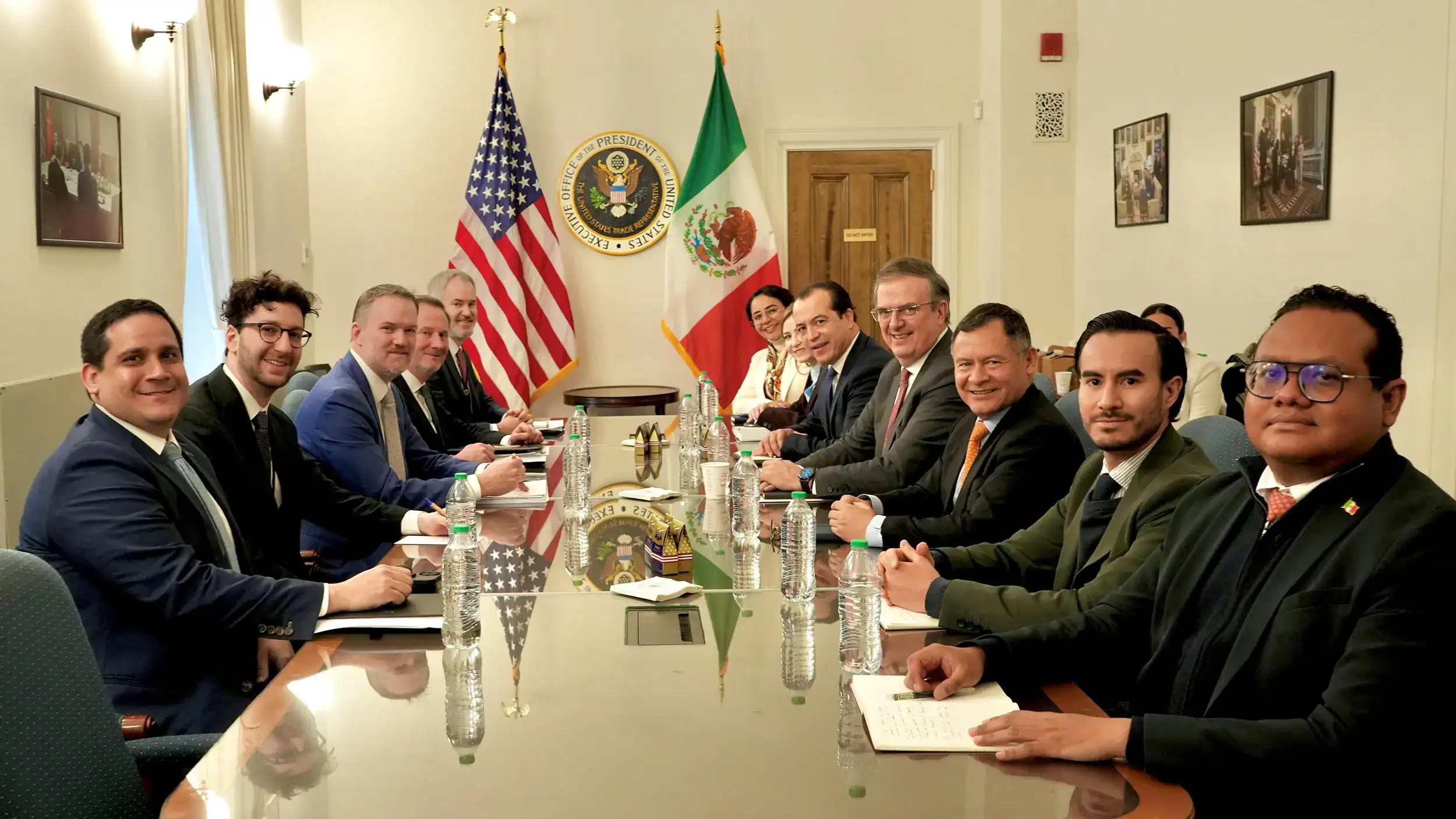
US and Mexican negotiators during an earlier USMCA round. (Photo: Internet reproduction)
One-stop reference
Company Intelligence
Every listed company in Latin America — financials, ownership and structure for 1,450+ companies across 26 exchanges, in one place.
Browse the directory →RTAsk Rio TimesCost of living, safety, visas across Latin America›
What is on the table
The two sides meet for a third bilateral round on July 20 as part of the treaty’s mandatory joint review. The talks are technical but carry high stakes for cross-border industry.
Washington wants the automotive rules of origin raised to 82%, plus a new requirement that at least half of a vehicle’s value be made in the United States. Mexico is pressing to ease tariffs on steel, aluminum and autos.
Rules of origin are the criteria that determine where a product is considered to have been made. They decide whether a car or a shipment of steel qualifies for the zero-tariff treatment that sits at the heart of the USMCA.
Without meeting those thresholds, goods face standard import duties, which can quickly erase the profit margin on a vehicle assembled across three countries.
The current automotive rule already requires a high share of North American content. Raising it further would force manufacturers to rethink supply chains that may have relied on parts from Asia or Europe.
The proposed US-specific floor of 50% adds an entirely new layer, because it would treat the three partner nations unequally for the first time in the pact’s architecture.
China is the subtext
The sharpest theme is China. US officials worry that Chinese firms are building in Mexico to route goods into the US while dodging tariffs.
Products with Chinese-origin components are set to draw extra scrutiny, tying US-China policy directly to how the USMCA is enforced.
This concern is not new, but it has intensified as Chinese companies have expanded their manufacturing footprint in Mexican industrial parks. From an American perspective, the worry is that a factory in Monterrey or Aguascalientes could function as a back door, allowing goods that would otherwise face steep US tariffs on Chinese imports to enter the American market under a “Made in Mexico” label.
Stricter verification of steel and aluminum origin is one tool Washington wants to use to close that perceived loophole. The existing rule that 70% of a producer’s steel and aluminum must come from North America would be paired with tougher paperwork and audit rights, making it harder to blend cheaper Chinese metal into a supply chain that feeds US assembly lines.
Mexico plays it cool
Mexico’s strategy has been to avoid confrontation and settle as much as possible before deadlines. Ebrard says the list of US concerns has shrunk from 54 to 14.
That non-confrontational stance is meant to protect the country’s biggest advantage, its deep integration with the US and Canadian economies.
That integration is not merely diplomatic. It is physical and daily: components cross the border multiple times before a finished vehicle rolls off the line.
A confrontational approach could disrupt those flows and hurt Mexican workers faster than any tariff. By reducing the list of open disputes quietly and early, Mexican negotiators are betting that a smaller, more manageable set of disagreements stands a better chance of being resolved without escalation.
Why it matters for the region
A tighter USMCA would reshape where cars, parts and metals are made across North America. It would also test how far nearshoring can grow with Chinese capital under a microscope.
For Mexico, the review is the single biggest variable hanging over investment this year.
Nearshoring, the trend of moving production closer to the final consumer instead of relying on distant Asian factories, has been a bright spot in Mexico’s economic story. But its future depends on whether companies believe the rules will stay stable long enough to justify building new plants.
If the USMCA review produces a rulebook that feels unpredictable or tilted toward one country, boardrooms in Detroit, Wolfsburg and Tokyo may hesitate before committing fresh capital.
The metals provision matters beyond the auto sector. Steel and aluminum are the bones of construction, appliances and machinery.
Tightening the North American sourcing rule could raise input costs for Mexican manufacturers who have grown accustomed to a more flexible global supply. Whether those costs can be absorbed or passed on will shape the competitiveness of everything from refrigerators to bridge beams sold across the continent.
What to watch next is whether the narrowed list of 14 US concerns includes any of the most contentious automotive or metals demands, or whether those remain unresolved and simply uncounted. Another open question is how Canada, which is not at this bilateral table, will react to any US-Mexico understandings that affect the trilateral balance.
The review’s ultimate test will be whether a modernized rulebook strengthens all three economies or leaves one partner feeling it paid a disproportionate price for continued access to the American consumer.
Frequently Asked Questions
When is the next USMCA round?
US and Mexican officials hold a third bilateral round on July 20, 2026, in Mexico as part of the treaty’s joint review.
What does the US want on autos?
Washington wants to raise the automotive rules-of-origin threshold to 82% and require at least 50% of a vehicle’s value to be sourced in the United States.
Why is China part of the USMCA talks?
US officials are concerned that Chinese investment in Mexican factories is being used to route goods into the US while avoiding tariffs.
Read More from The Rio Times
The Rio Times · Power Map
See who really holds power in Latin America
Click to open the Power Map →