Key Points
— Peru’s Congress removed interim president José Jerí on February 17 after just four months, replacing him with 83-year-old leftist legislator José María Balcázar — the country’s eighth president in a decade. Jerí was caught in secret meetings with a Chinese businessman holding government concessions.
— Peru is formally a presidential republic but functions as an unstable parliamentary regime. Congress has weaponized a “moral incapacity” clause to oust four presidents since 2020 alone. The presidency has become a provisional office.
— Despite the chaos, GDP grew 3.4 percent in 2025. The paradox rests on one man: Central Bank Governor Julio Velarde, in his 20th year at the helm, who has kept inflation below 3 percent and international reserves above $70 billion while nine presidents rose and fell around him.
Another President, Another Scandal
On February 17, Peru’s Congress voted 75-24 to remove interim president José Jerí after footage surfaced of secret meetings with Zhihua Yang, a Chinese businessman holding government concessions. Jerí entered the restaurant wearing a hoodie. Neither meeting was logged in presidential records. He apologized, insisted nothing improper occurred, and was removed anyway.
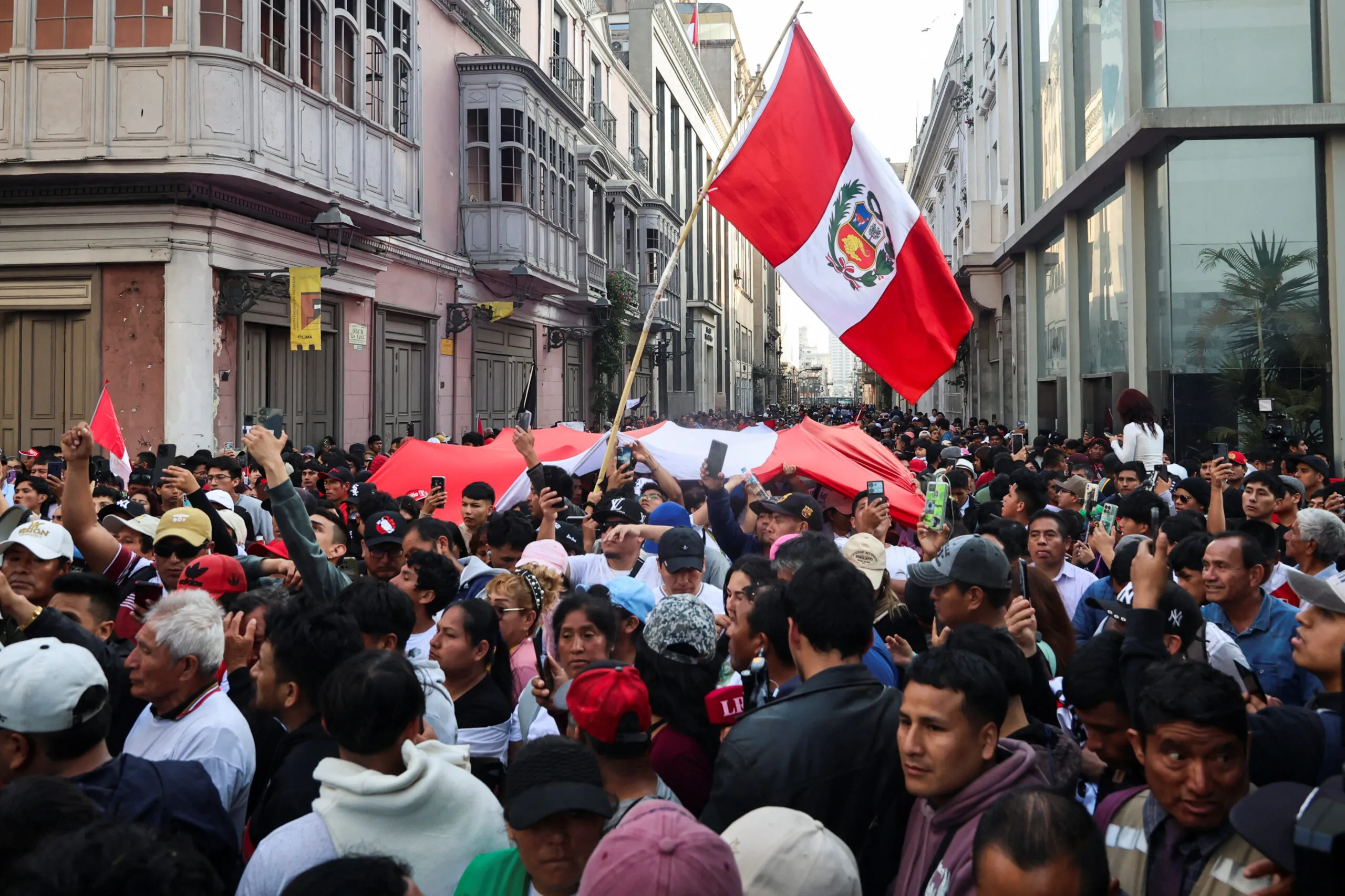
Peru’s Presidents Keep Falling. Its Economy Doesn’t. (Photo Internet reproduction)
Congress elected José María Balcázar, an 83-year-old former judge from the leftist Perú Libre party, as his replacement. He will serve until elections on April 12 and a new president’s inauguration on July 28. One day after taking office, Balcázar was summoned to trial on charges of illicit appropriation — confirming that Peru’s anti-presidential machine spares no one.
The System That Eats Its Leaders
Peru’s constitution allows Congress to declare a president “permanently morally incapable” and remove them. What was designed as an extraordinary safeguard has become routine. Since 2018, four presidents have been impeached and removed, two resigned to avoid the same fate. This Congress alone has ousted three: Pedro Castillo (2022), Dina Boluarte (October 2025), and Jerí.
Three structural factors sustain the cycle. Peru’s party system has collapsed — traditional parties replaced by personality vehicles that disintegrate after each election, leaving presidents without legislative allies. The constitution lets the executive and legislature dissolve each other, turning confrontation into a survival race. And anticorruption has become the primary language of political legitimacy — and the fastest route to removing rivals.
The Velarde Paradox
Here is what baffles outside observers: markets barely react. The sol barely moved when Jerí fell. GDP grew 3.4 percent in 2025, projected at 3.2 percent for 2026. Since 1993, Peru’s economy has expanded in 30 of 33 years. The explanation rests on one institution and one man.
Julio Velarde has led the Central Reserve Bank since 2006 — nearly 20 years, across nine presidents, under left-wing and right-wing governments alike. He has kept inflation within the 1-to-3 percent target band, built international reserves above $70 billion, and maintained investment-grade sovereign ratings throughout coups, pandemics, and political meltdowns. Named the world’s best central banker by The Banker in 2015, he functions less as a technocrat and more as an institutional monarch — not ruling by decree, but by permanence.
The Buffer Has an Expiration Date
Velarde announced in September 2025 that he will not seek a fifth term when his mandate ends in July 2026. He has named potential successors — chief economist Adrián Armas and general manager Paul Castillo, both veterans. Markets have treated Peru’s political instability as noise because the central bank remained insulated. But the structural risk is clear: if parliamentary volatility ever extends to monetary governance, the buffer disappears. Peru’s economy has thrived not because of its political system but in spite of it. That distinction holds only as long as the institutions keeping the lights on remain untouched.
Read More from The Rio Times