Peru · Politics
Key Facts
—Inauguration date July 28, 2026, for a five-year term.
—Official result Fujimori won 50.135% of valid votes to Roberto Sánchez’s 49.865%, a margin of 49,641 votes.
—Vice presidents Luis Fernando Galarreta (first) and Miguel Ángel Torres Morales (second).
—Political context Fujimori becomes Peru’s latest president in a decade of turnover, highlighting chronic instability.
—Policy signals Priorities center on security, the economy, mining, and investment.
Keiko Fujimori inauguration ceremonies will take place in Lima on July 28, 2026, formally bringing the conservative leader to power for the first time after a razor-thin runoff victory that has left Peru deeply divided. The daughter of former president Alberto Fujimori will take the oath of office before foreign dignitaries, including Spain’s King Felipe VI, as she inherits a nation hungry for stability after years of political turmoil.
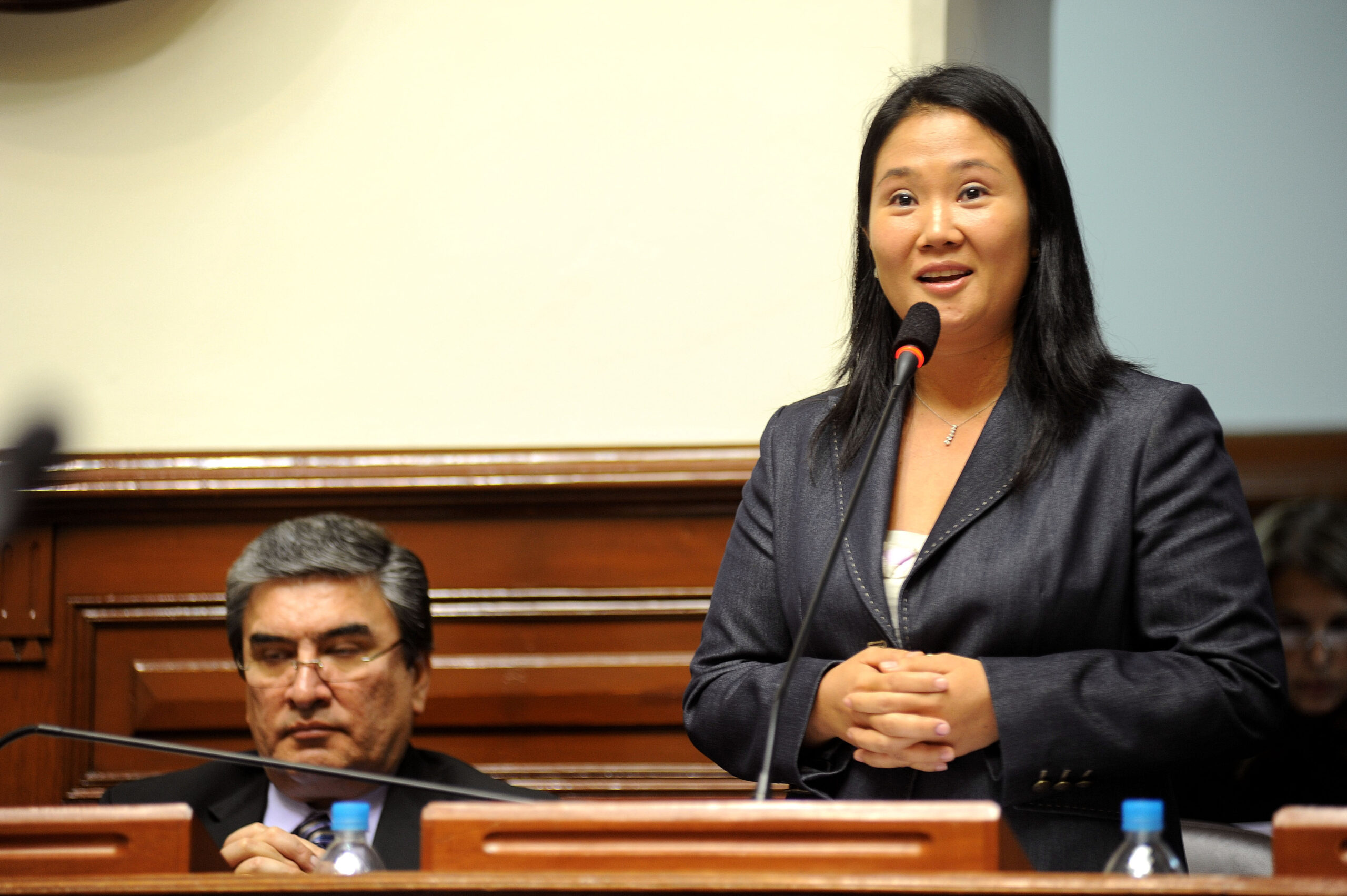
Keiko Fujimori, who takes office as Peru’s president on July 28, 2026. Photo: Congreso de la Republica del Peru / Wikimedia Commons, CC BY 2.0.
One-stop reference
Company Intelligence
Every listed company in Latin America — financials, ownership and structure for 1,450+ companies across 26 exchanges, in one place.
Browse the directory →RTAsk Rio TimesCost of living, safety, visas across Latin America›
Keiko Fujimori inauguration: A Razor-Thin Mandate Confirmed
Peru’s electoral authorities proclaimed Fujimori the winner on July 3, nearly a month after the June 7 runoff. The official tally gave her 50.135% of valid votes against left-wing rival Roberto Sánchez’s 49.865%, a gap of just 49,641 ballots out of roughly 18 million cast.
Sánchez immediately alleged irregularities, particularly in overseas voting, and sought to contest the outcome. Electoral officials said a full review found no inconsistencies and rejected the challenge, clearing the path for the Keiko Fujimori inauguration to proceed as scheduled.
The disputed count has left a cloud over the transition. International observers noted the process was technically sound, yet the losing candidate’s refusal to concede has hardened political fault lines in a country where trust in institutions remains fragile.
The Return of a Polarizing Dynasty
Keiko Fujimori is no stranger to the presidency, though she has never held it herself. She is the daughter of Alberto Fujimori, whose 1990-2000 rule crushed hyperinflation and a brutal insurgency but ended in a corruption and human rights scandal that landed him in prison.
Her victory reopens that unresolved national debate. Supporters see her as the leader who can replicate her father’s economic discipline without his authoritarian excesses. Critics fear the return of a dynasty they associate with strongman tactics and impunity.
Reuters described the result as the return of a divisive Fujimori dynasty to power. The Keiko Fujimori inauguration marks her third presidential bid, following narrow losses in 2011 and 2016, and cements a political comeback that once seemed improbable.
A Business-Friendly Agenda Takes Shape
Fujimori has signaled a conservative, pro-investment platform aimed at restoring confidence in Peru’s economy. Her early priorities include boosting mining output, attracting foreign capital, and tackling a security crisis driven by organized crime.
Markets welcomed the result. Business circles viewed a Fujimori presidency as far more favorable to investment than a left-wing alternative, according to Reuters reporting. Peru’s sol currency firmed in the days after the proclamation.
For foreign investors and expats, the policy direction matters. Peru holds vast copper reserves and is the world’s second-largest producer. Mining investment, often a bellwether for the broader economy, could accelerate if Fujimori delivers on pledges to streamline permitting.
A Fragile Political Landscape
Fujimori will become Peru’s latest president in a decade of turnover, a staggering statistic that underscores the country’s chronic instability. Congress remains fragmented, with no single party holding a majority, forcing any president into constant negotiation.
The rapid turnover has sapped state capacity. Each new administration inherits unfinished projects and a weary bureaucracy. Fujimori’s team has indicated she will prioritize governability, but the razor-thin mandate gives her limited political capital.
Her running mates, first vice president Luis Fernando Galarreta and second vice president Miguel Ángel Torres Morales, bring congressional experience that could help navigate the legislature. Galarreta is a seasoned operator from Fujimori’s Popular Force party.
What Foreigners Should Watch
For the expat and investor community in Peru, the Keiko Fujimori inauguration brings both opportunity and uncertainty. Her pro-business rhetoric is clear, but execution depends on a fractious Congress and street-level opposition.
Security policy will be a key test. Rising extortion and violent crime have affected neighborhoods where many foreigners live and work. Fujimori has promised a firmer hand, though details remain scarce.
Currency stability is another factor. The Peruvian sol trades at roughly 3.4 per US dollar. Any political shock could move that rate quickly, impacting everything from rental contracts denominated in dollars to repatriated profits.
International Reaction and Dignitaries
Spain’s King Felipe VI confirmed his attendance at the July 28 ceremony, a sign of the deep ties between Madrid and its former colony. Japan’s government also issued a statement welcoming the transition, reflecting the historic bond with Peru’s large Nikkei community.
Argentine President Javier Milei, a fellow conservative, was expected to attend, reinforcing a budding ideological bloc in South America. The gathering of right-leaning leaders in Lima signals a regional shift that could shape trade and diplomatic alignments.
For foreign residents, the international presence underscores Peru’s openness to global engagement. The Keiko Fujimori inauguration is being framed by her team as a fresh start for a country eager to turn the page on years of scandal and stagnation.
Frequently Asked Questions
When is Keiko Fujimori’s inauguration as president of Peru?
The Keiko Fujimori inauguration is scheduled for July 28, 2026, in Lima. She will serve a five-year term.
What was the official result of Peru’s 2026 presidential runoff?
Keiko Fujimori won 50.135% of valid votes to Roberto Sánchez’s 49.865%, a margin of 49,641 votes out of roughly 18 million cast, according to electoral authorities.
What are Keiko Fujimori’s main policy priorities?
She has signaled a conservative, business-friendly agenda focused on security, economic growth, mining investment, and attracting foreign capital.