Africa · Western
Key Facts
—Financing. Ivory Coast secured USD 80 billion in international public financing for its 2026–2030 development plan, four times more than expected.
—Target. Planning Minister Souleymane Diarrassouba aims to see several hundred national champions emerge in the coming years.
—Flagship firms. Petro Ivoire, Djamo, and Kaira Holding are competing alongside multinationals in energy, fintech, and consumer goods.
—Pipeline. The PEPITE programme aims to transform 100–150 innovative SMEs per year into national champions by 2030.
—IFC backing. The IFC and CGECI launched a Local Champions Acceleration Initiative in January 2026, with Ivorian portfolio exposure at USD 879 million.
Ivory Coast is deliberately engineering a new class of domestically controlled corporate giants through massive development financing and targeted industrial policy, betting that Ivory Coast national champion firms can compete with foreign multinationals and propel the country into upper-middle-income status by 2030.
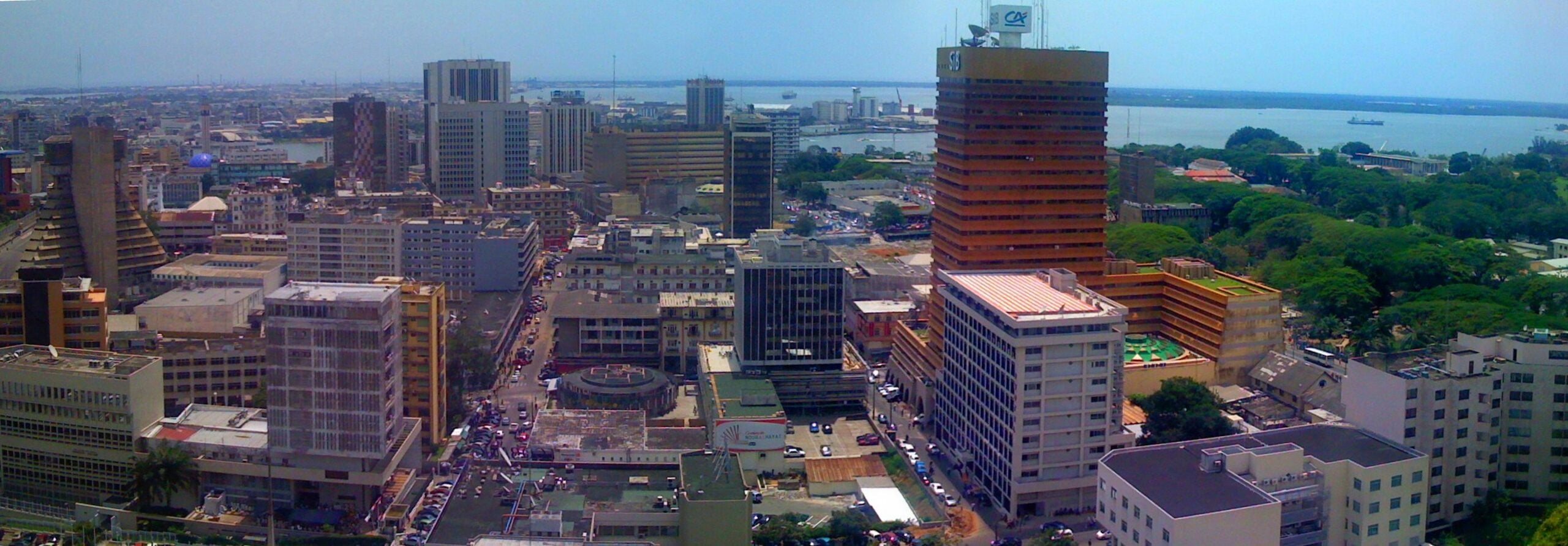
Ivory Coast bets on ‘national champion’ firms to drive next phase of growth (Photo internet reproduction)
One-stop reference
Company Intelligence
Every listed company in Latin America — financials, ownership and structure for 1,450+ companies across 26 exchanges, in one place.
Browse the directory →RTAsk Rio TimesMarkets, currencies and the economy›
The Blueprint for Building Domestic Giants
The government and private-sector elites are promoting large, domestically controlled companies as engines of growth, job creation, and regional expansion. Planning Minister Souleymane Diarrassouba has stated publicly that the aim is to see “several hundred national champions” emerge in the coming years, a target that signals just how central this policy has become to Abidjan’s economic vision.
Economist Blaise Makaye of the University of Bouaké describes this as the final phase of a strategy to make Ivory Coast an upper-middle-income country by 2030, with gross national income per capita above USD 4,000, up from around USD 2,700 today. The employers’ federation CGECI defines a national champion as a company whose shareholding and centre of decision are controlled by Ivorians, ranking among the top five in its sector, with proven experience and strong governance.
The CGECI’s earlier objective, set around 2019–2020, was the emergence of 65 champions by 2020, including 15 firms with annual turnover above 25 billion CFA francs (about USD 41 million) and 50 firms above 10 billion CFA francs (about USD 16 million). Those benchmarks have since been expanded and folded into the broader 2030 strategy.
Flagship Firms Leading the Charge
The strategy is anchored around a handful of high-profile companies in sectors historically dominated by foreign groups. Petro Ivoire, an Ivorian fuel and gas distributor, competes directly with international majors in downstream energy, while Djamo, a fast-growing digital banking and fintech platform, offers online financial services in a market long dominated by foreign banks.
Kaira Holding, operating under the Kaera brand in natural cosmetics and consumer products, is building domestic brands against global consumer-goods companies. These firms do not displace multinationals but compete alongside them by moving faster, tailoring products to local needs, and investing in local production, signalling a shift from a purely foreign-led growth model to a hybrid economy with stronger domestic corporate actors.
The Money Behind the Ivory Coast National Champion Ambition
In early July 2026, Ivory Coast secured USD 80 billion in international public financing for its National Development Plan 2026–2030, a sum four times larger than expected. Authorities anticipate nearly USD 150 billion more from the private sector, bringing the total envisioned envelope to over USD 230 billion.
The earlier National Development Plan 2021–2025 mobilised about CFA 59 trillion (approximately USD 100 billion) to accelerate structural transformation, expand infrastructure, and strengthen the private sector as a key driver of growth. The broader 2030 strategy seeks to double real GDP per capita and make national industry a core engine of the economy, a goal that depends heavily on the success of domestic champions.
On 29 January 2026, the International Finance Corporation and CGECI launched the Local Champions Acceleration Initiative in Abidjan, aiming to identify high-potential local companies with demonstrated operational maturity and transform them into pillars of economic and social development. The IFC’s Côte d’Ivoire portfolio stood at USD 879 million as of that date, its largest programme within the West African Economic and Monetary Union, spanning energy, agro-industry, health, and MSME finance.
The SME Pipeline and Local Content Rules
The Programme Économique Pour l’Innovation et la Transformation des Entreprises, known as PEPITE, is designed to identify, accompany, and transform innovative SMEs, mid-sized firms, and high-growth startups into national champions by 2030. Target firms include technology startups and industrial companies in expansion, all with majority Ivorian ownership, and PEPITE envisages 100 to 150 beneficiary firms per cohort per year.
A local content law in the oil and gas sector, implemented in 2021, gives preference to Ivorian companies and employees, explicitly aiming to build national champions and transfer know-how. The CGECI and government have identified five priority clusters where champions should emerge: construction and public works, real estate, transport and logistics, financial services, and agriculture and industry.
Geopolitics and the Great-Power Contest
Ivory Coast’s champion strategy positions it as a pro-Western, business-friendly hub amidst widespread regional instability. Several neighbouring Sahel states have tilted toward Russia and distanced themselves from Western partners, while Ivory Coast remains a reliable Western partner advancing a liberal development agenda, a dynamic explored in our pillar series Africa: The New Scramble.
Domestic champions in logistics, finance, and energy can help Abidjan project influence across Francophone West Africa, strengthening its bargaining power in sub-regional bodies and trade negotiations. Successful champions may become intra-African multinationals, echoing the broader trend of African firms that expand across borders when global multinationals are absent or less competitive, a pattern familiar to Latin American readers who have watched Brazilian and Mexican firms pursue similar regional strategies.
By aligning closely with the World Bank, IFC, and Western governments, Ivory Coast effectively ties its national champions agenda to Western development and security strategies in the region. At the same time, the sheer scale of planned financing makes the country attractive to global capital from diverse origins, including Gulf and Asian investors, creating a multi-polar investment landscape.
Risks, Debt, and What to Watch Next
The ambition to mobilise over USD 80 billion in public financing and USD 150 billion in private funding for 2026–2030 raises questions about debt sustainability and project execution capacity. State-backed champions can become politically connected conglomerates benefiting from privileges without delivering productivity gains, especially if governance and oversight are weak.
Implementing local content laws and champion privileges while maintaining an open investment climate for multinationals requires careful balancing to avoid regulatory unpredictability. Investors should watch whether PEPITE and the IFC-backed acceleration initiative produce genuine mid-sized corporate success stories or whether most firms remain small despite policy ambitions.
The country’s role as a stable hub also depends on continued domestic calm and effective security policy amid Sahel instability. Economic champions can only thrive if regional trade and investment routes remain open, making the political dimension of this strategy as important as the financial one.
Frequently Asked Questions
What is an Ivory Coast national champion firm?
A national champion is defined by the employers’ federation CGECI as a company whose shareholding and centre of decision are controlled by Ivorians, ranking among the top five in its sector, with proven experience and strong governance. The government aims to create several hundred such firms to drive job creation and regional expansion.
How much financing has Ivory Coast secured for its national champion strategy?
In July 2026, Ivory Coast secured USD 80 billion in international public financing for its National Development Plan 2026–2030, four times more than expected. Authorities anticipate nearly USD 150 billion more from the private sector, bringing the total envisioned envelope to over USD 230 billion.
Which companies are leading Ivory Coast’s national champion push?
Flagship firms include Petro Ivoire, an Ivorian fuel and gas distributor competing with international majors, Djamo, a fast-growing digital banking and fintech platform, and Kaira Holding, a group in natural cosmetics and consumer products building domestic brands against global competitors.