Key Points
- Forecasters now see slightly better growth and lower inflation in 2025, though still above Brazil’s official target.
- The central bank is holding a 15% rate and signals it can tighten again if fiscal or price risks flare up.
- High real rates, a weak currency and new US tariffs keep Brazil attractive for investors but painful for borrowers.
Brazil’s Focus report, a poll of banks and consultancies, is the country’s dashboard of expectations. The latest edition shows how Brazil hopes to escape the hangover from cheap credit and heavy state intervention: by keeping money tight while aiming for a controlled “soft landing”.
For 2025, economists now expect GDP growth of 2.25%, up from 2.16% a month ago. The central bank is more cautious. In its own report, it cut its 2025 growth forecast from 2.1% to 2.0%, citing weaker third-quarter data and the drag from new US import tariffs on Brazilian goods.
On prices, the Focus survey now sees the IPCA index at 4.40% in 2025 and a little above 4% in 2026. That remains above the 3% target, but closer to the new “continuous” band of 1.5% to 4.5%.
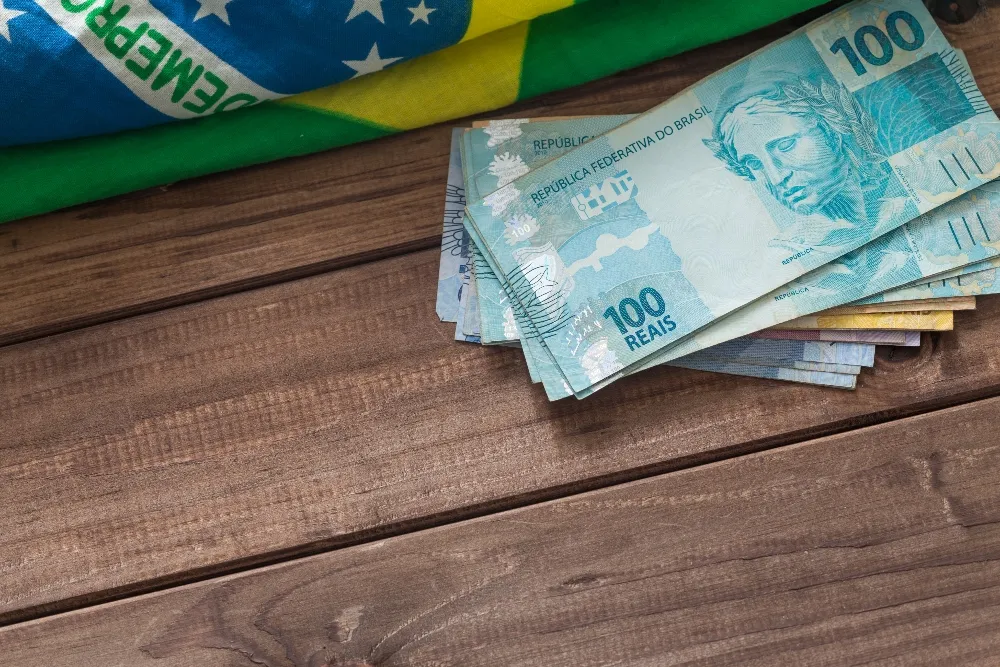
Brazil’s High-Rate Therapy And The Market’s Quiet Vote Of Confidence. (Photo Internet reproduction)
High Rates Steady Course
The bank’s internal path is sterner, with inflation at 4.6% in 2025, 3.6% in 2026 and approaching 3.3% by mid-2027, after being forced to write an open letter explaining an earlier overshoot.
The cost of that stance is the Selic rate. It has been frozen at 15% for three meetings, and markets expect it to end 2025 at that level before sliding only slowly to around 12% in 2026 and below 10% by 2028. With inflation near 4.4%, Brazil is running one of the highest real interest rates anywhere.
The currency completes the picture: markets see the dollar at about 5.40 reais at the end of 2025 and 5.50 in later years, a weak exchange rate that helps exporters and yield-hunters but keeps imports expensive for households.
For expats and foreign investors, Brazil is no longer a playground for easy money and promises. It is a high-yield, high-discipline market where the central bank is determined not to repeat the errors of looser, more populist years.