Now Published in Two Editions
Get the Latin America Power Map
You’re reading the Brief — the whole hemisphere at a glance, free, every weekday. The Latin America Power Map is the daily instrument no one else publishes: a single reading of all fourteen nations across markets, power and society — a power ranking, currencies and rates beside defense strength, the leader’s grip, alliances and social cohesion. Thirty signals, one board, every morning. The whole region in sixty seconds.
Rio Times · Latin America
Key Facts
—Brazil A mood of strategic patience as CSN pushes out a mountain of debt and the government puts a crown jewel container terminal on the auction block.
—Mexico A collective sigh of relief ripples through corporate boardrooms as Orbia escapes a billion-dollar legal phantom.
—Colombia A strange cocktail of institutional stability and political vertigo as the central bank holds rates steady while an ex-Ecopetrol chief seeks a plea deal.
—Argentina Cautious optimism curdles into anxiety as car sales collapse and savers hoard dollars despite the minister’s celebrations.
—Chile A fragile hope takes root as industrial production finally stirs after eight long months, even while unemployment casts a long shadow.
—Peru The earth growls deep beneath the Amazon, a reminder of nature’s veto power over all our economic blueprints.
On the final day of July, the continent felt caught between the deep groaning of the earth and the high-frequency hum of financial survival, a day where a plea deal and a missed earthquake casualty felt like equal mercies.
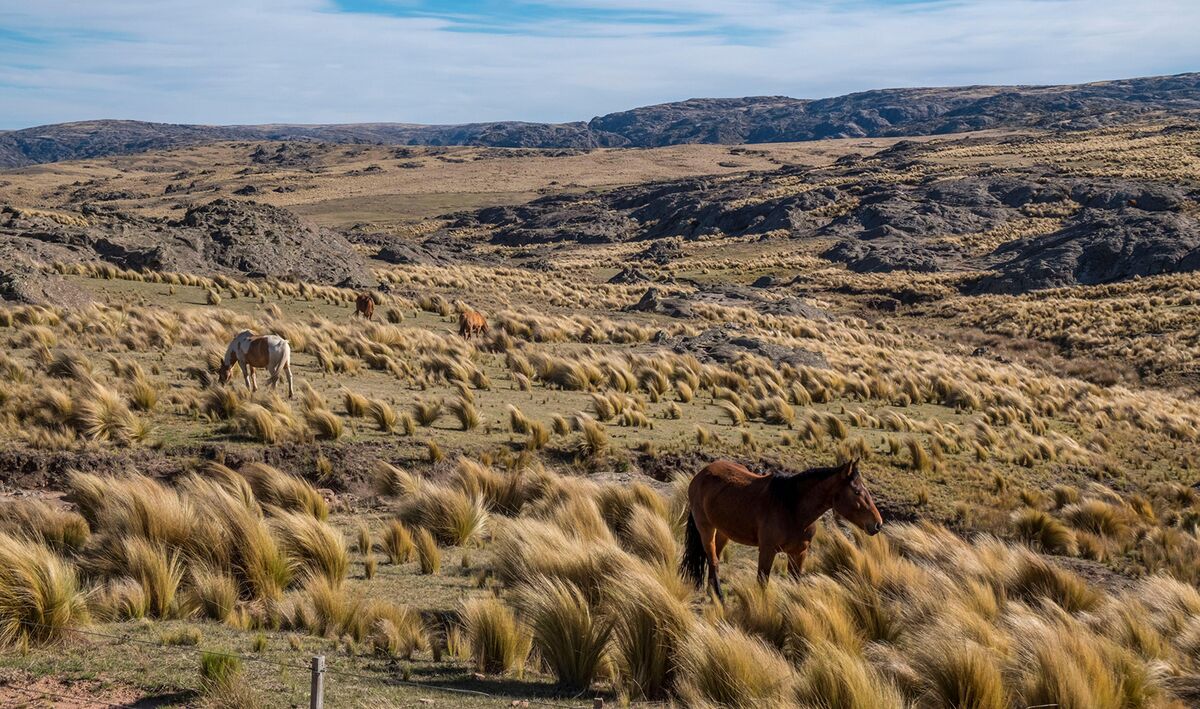
From the deep tremors near Pucallpa to the shifting plates of regional finance, July 31 was a day of subterranean adjustments. (Photo internet reproduction)
One-stop reference
Company Intelligence
Every listed company in Latin America — financials, ownership and structure for 1,450+ companies across 26 exchanges, in one place.
Browse the directory →
Instrument
Level
Session
Ibovespa (Brazil)
177,999
+0.47%
S&P/BMV IPC (Mexico)
66,936
-0.58%
S&P IPSA (Chile)
11,017
-0.13%
S&P Merval (Argentina)
3,291,323
-0.41%
COLCAP (Colombia)
2,392
+2.12%
USD/BRL
5.0793
+0.40%
USD/MXN
17.328
-0.09%
Source: EODHD close, 2026-07-31. Figures rendered directly from the feed.
The Continent’s Mood Today
There is a distinct end-of-cycle weariness in the air, a sense that the continent is tidying up loose ends before a long, uncertain sleep. In Colombia, a former oil chief asks for a plea deal to close a chapter on a scandalous campaign; in Brazil, a steel giant frantically rearranges its debt to buy time. It is not panic—the COLCAP’s leap and the steady hand of Colombia’s central bank prove that—but it is the quiet, desperate choreography of entities trying to outrun their pasts. The earth itself joined this mood of release, a magnitude 5.6 quake near Pucallpa, Peru, rattling nerves across the Brazilian border without demanding a toll of blood, as if the Amazon shrugged in its sleep.
The triggers are specific and interlocking. CSN’s bond exchange, carrying a steep 11% coupon, is a flare sent up from the commodity trenches, while Colombia’s Grupo Cibest injects $70 million into Guatemala’s Banco BAM, a sign of capital still seeking fertile ground across borders. Meanwhile, Mercado Libre’s quiet trademark filing for ‘Balse’ suggests a coming retail war against Shein, a battle for the region’s wallets fought not in the streets, but in supply chains. From the auction of Brazil’s Santos terminal to Chile’s fragile industrial rebound, the day’s stories are all acts of reconfiguration—of debt, of corporate identity, of the ground beneath our feet.
Brazil – The Art of the Long Goodbye
Brazil on Friday was a masterclass in managed decline and aggressive future-proofing. The air in São Paulo’s financial districts was thick with the scent of ink and obligation as Companhia Siderúrgica Nacional (CSN) launched a massive $1.3 billion bond exchange, offering a painful 11% coupon to push its debt maturities further out on the horizon, as our reporting detailed. This is not a victory lap; it is a grim, necessary refinancing undertaken while warning of widening losses. The Ibovespa’s slight uptick felt less like enthusiasm and more like a quiet acknowledgment that a potential default had been, for now, elegantly sidestepped.
Yet, the state is also looking ahead with cold, hard calculation. The announcement of a $193 million auction for a container terminal in Santos, the nation’s logistical aorta, signals a pragmatic rush to modernize infrastructure regardless of the fiscal noise. This push-and-pull between private sector fragility and public sector ambition was framed by a deeper, demographic clock ticking in the background: our reporting on the IBGE’s projections reminds everyone that the country’s population will peak in 2041. Every bond issued, every terminal auctioned, is shadowed by the specter of a future, shrinking market. InfoMoney captured the political parallel, with Tarcísio opening his campaign on a platform of pure management—a promise to govern a country that is already learning to count its future inhabitants in smaller numbers.
Live Market IntelligenceLatin America — Cross-Market Board
Rio Times · Live Market Intelligence
Latin America — Cross-Market Board
Regional
Aug 1, 2026 · 16:30
Ibovespa · benchmark
177,999.00
+0.47%
L 177,014day rangeH 178,719
+33.76% over 12 months
Market breadth · 4 names
25% advancing
1 ▲ advancing3 declining ▼
Currencies, rates & key inputs
Latin America scoreboard
IndexLastTodayStrength
IbovespaBrazil
177,999.00
+0.47%
S&P/BMV IPCMexico
66,935.53
-0.58%
S&P IPSAChile
11,016.85
-0.13%
S&P MERVALArgentina
3,291,323
-0.41%
MSCI COLCAPColombia
2,392.10
+2.12%
BVL S&P PerúPeru
57,890.85
—
Full instrument board
Instrument
Last
Change
YoY
Prev.
High
Low
Volume
IBOV
177,999.00
+0.47%
+33.76%
177,158.86
178,719
177,014
—
IPSA
11,016.85
-0.13%
—
11,030.67
11,040
10,928
1,513,213,483
IPC MEX
66,935.53
-0.58%
+16.62%
67,327.01
67,613
66,833
138,500,282
MERVAL
3,291,323
-0.41%
+41.90%
3,304,918
3,367,570
3,286,692
—
COLCAP
2,392.10
+2.12%
—
9.04
9.05
9.02
4,133
BVL PERÚ
57,890.85
—
—
—
—
—
—
USD/BRL
5.07
-0.09%
-8.98%
5.08
5.08
5.07
—
EUR/BRL
5.85
-0.37%
-8.04%
5.88
5.85
5.81
—
USD/MXN
17.33
-0.01%
-8.05%
17.33
17.33
17.33
—
USD/CLP
930.47
+0.00%
-5.19%
930.47
930.47
930.47
—
USD/COP
3,151
+0.93%
-24.74%
3,122
3,151
3,151
—
USD/PEN
3.39
-0.01%
-5.06%
3.39
3.39
3.39
—
USD/ARS
1,485
+0.00%
+12.50%
1,485
1,485
1,485
—
USD/UYU
40.20
+1.25%
+1.75%
39.71
40.20
40.20
—
USD/PYG
5,931
+1.14%
-19.63%
5,864
5,931
5,931
—
USD/BOB
12.10
+4.29%
+79.54%
11.60
12.10
12.10
—
USD/DOP
57.99
+0.24%
-4.46%
57.85
57.99
57.99
—
USD/CRC
448.40
+1.33%
-9.16%
442.49
448.40
448.40
—
Largest moves today
USD/BOB
12.10
+4.29%
COLCAP
2,392.10
+2.12%
USD/CRC
448.40
+1.33%
USD/UYU
40.20
+1.25%
USD/PYG
5,931
+1.14%
USD/COP
3,151
+0.93%
IPC MEX
66,935.53
-0.58%
IBOV
177,999.00
+0.47%
The session read
The Ibovespa rose 0.47%, with breadth negative — 1 of 4 names higher. COLCAP led, while IPC MEX lagged.
From The Rio Times
Related coverage · 31 Jul 2026
Latin American Pulse for Friday, July 31, 2026
Read →
Mexico – A Phantom Dissipates in the Boardroom
A strange, quiet jubilation settled over Mexican corporate law offices on Friday. The mood was not one of explosive victory, but of a deep, existential threat evaporating into thin air. The Rio Times reported that Orbia, the Mexican chemicals giant, had successfully escaped a $1.14 billion cartel lawsuit. A billion-dollar phantom, a legal Sword of Damocles that had hung over the company, was simply wiped away by a court ruling. The S&P/BMV IPC’s slight dip suggests the broader market was unmoved, but for Orbia, it was a rebirth by judicial decree.
This narrow escape contrasts with the broader, more pedestrian challenge highlighted by Expansión: the struggle to convert Mexico’s growing number of investment accounts into actual, lasting wealth. The democratization of finance is underway, but the mood is one of caution, a realization that opening an account is far easier than building a patrimony. The Orbia ruling, then, is a private miracle in a landscape where the real, daily miracle—turning savings into security—remains stubbornly elusive for the many.
Colombia – Holding Steady in a Political Storm
Colombia’s Friday felt like a tightrope walk performed with a straight spine. The Banco de la República, in a move of almost theatrical steadiness, held interest rates at 12% and announced it would start buying up reserves due to a cheap dollar, as reported by La República. The COLCAP soared by over 2%, a roar of approval from a market desperate for a technocratic anchor. The central bank stood as a pillar of orthodoxy, seemingly unmoved by the political weather.
But that weather is turbulent. Our reporting broke the news that Ricardo Roa, the recently departed CEO of Ecopetrol, is seeking a plea deal over alleged irregularities in President Gustavo Petro’s 2022 campaign, which he managed. It is a seismic political event wrapped in the quiet language of legal procedure. The contrast is dizzying: a stable, predictable monetary authority on one hand, and a state oil company’s former chief trying to negotiate his way out of a campaign finance scandal on the other. La República also noted Petro’s comments on gas imports, a reminder that energy sovereignty remains a live wire. The nation’s mood is a held breath, a bet that institutional gravity can withstand the pull of political chaos.
Argentina – The Weight of the Dollar and the Silence of the Showroom
In Buenos Aires, the mood is a brittle thing, a thin veneer of official celebration over a deep well of personal anxiety. iProfesional captured the dissonance perfectly: while Economy Minister Caputo celebrates that more dollars are entering the country than leaving, Argentine savers quietly bought up $2.4 billion in June alone. The people are voting with their wallets, and they are voting for the greenback, a deep-seated instinct that no macroeconomic statistic can soothe. The S&P Merval’s slight decline reflects a City that is, as iProfesional advises, recommending extreme caution for August.
The real economy is sending smoke signals. Car sales, a bellwether of middle-class confidence, suffered their worst collapse of the year, reshaping the very ranking of top brands. The story of a leading empanada business collapsing under 230 bounced checks and a billion pesos in debt is not just a business failure; it is a parable of the real cost of this transition. Our reporting on Argentina’s economy notes that inflation is down to 1.9% a month and poverty is at a seven-year low, but the showroom floors are empty and the empanada empire is in ruins. The ‘Milei miracle’ has a ledger, and on Friday, the debit column felt heavier.
Chile – A Faint Pulse in the Factory Floor
A cautious, almost superstitious hope flickered through Chile on Friday. After eight long months of decline, industrial production finally turned a corner, as Emol reported, reinforcing a fragile bet that the country might just dodge a technical recession. The sound of machinery stirring back to life is the most precious music in Santiago right now, a signal that the patient’s long fever might be breaking. The peso rallied, with the dollar falling sharply over the week, a sign of easing nerves.
Yet, the celebration is muted, a whispered prayer rather than a shout. Unemployment remains stubbornly high at 9.4%, a figure our own reporting confirmed, and Minister Rau could only offer the tentative hope that a ‘turning point’ has been reached. It is the language of the wince, not the victory cry. The joblessness is a cold, hard floor beneath the warm air of industrial output. Chile’s mood is that of a family watching a sick relative take their first spoonful of soup: desperately hopeful, but terrified of a relapse.
Peru – The Earth’s Reminder
Peru’s day was split in two: the solid, encouraging clink of construction steel, and the deep, terrifying growl of the earth. El Comercio reported that construction grew by a roaring 11.8% in the first half of the year, and Proinversión is accelerating a massive $40 billion infrastructure portfolio. The sol held steady, a quiet anchor of stability. The mood in Lima’s boardrooms was one of bullish, forward-looking momentum, a country building its way out of stagnation.
Then, the Amazon spoke. A magnitude 5.6 earthquake near Pucallpa, as reported by The Rio Times, sent tremors rippling across the border into Brazil. No damage, no casualties—just a deep, planetary reminder that all this building, all these adjudications and portfolios, occur on a living, restless crust. The quake was not a tragedy, but it was a metaphysical one. It punctured the illusion of control, leaving behind a mood of humbled awe. The day’s two stories—the soaring construction figures and the seismic shudder—are a perfect diptych of Peruvian existence: audacious ambition forever shadowed by the Andes’ ancient, unpredictable power.
The Shared Mood
The thread tying these six nations together on the last day of July is a shared act of renegotiation with reality. Brazil is renegotiating its debt maturities, Colombia its political accountability, Argentina its social contract with the dollar, and Chile its relationship with economic gravity. Even the earth in Peru seemed to be renegotiating its own internal pressures. This is not a continent in revolution, but in a vast, complicated, and deeply exhausting process of restructuring.
This points to a deeper regional psyche: a weariness with grand ideological experiments and a grudging turn towards the brutal, unglamorous work of technical management. From Tarcísio’s ‘management-focused’ campaign in Brazil to the Colombian central bank’s stoic rate hold, the day’s heroes are not caudillos but technocrats, not prophets but accountants. The shared mood is a collective, whispered confession that the miracles didn’t come, and now the bills are due. It is a sobering, adult feeling, as unglamorous and necessary as an 11% bond coupon or a plea deal signed in a quiet room.
Frequently Asked Questions
What was the biggest corporate survival story in Latin America on Friday?
Mexico’s Orbia escaped a $1.14 billion cartel lawsuit, effectively wiping out a massive legal threat. Meanwhile, Brazil’s CSN launched a $1.3 billion bond exchange with a steep 11% coupon to push out its debt maturities, a costly but critical move to avoid a liquidity crisis.
How did Colombia’s political and economic realities collide on July 31?
The collision was stark. The central bank held rates steady at 12%, projecting an image of total institutional stability, while simultaneously, the recently departed CEO of state oil company Ecopetrol, Ricardo Roa, requested a plea deal over alleged campaign finance irregularities tied to President Gustavo Petro.
What natural event punctuated the economic news in Peru?
A magnitude 5.6 earthquake struck deep beneath the Amazon near Pucallpa, Peru. Tremors were felt across the border in Brazil, but no damage or casualties were reported. The event served as a powerful, humbling counterpoint to the country’s booming construction sector and infrastructure ambitions.
Sources: The Rio Times, La República, iProfesional, Emol
Companion: today’s Latin America Power Map (PDF) — our full daily dossier on who holds power across the region.
{“@context”: “https://schema.org”, “@type”: “FAQPage”, “mainEntity”: [{“@type”: “Question”, “name”: “What was the biggest corporate survival story in Latin America on Friday?”, “acceptedAnswer”: {“@type”: “Answer”, “text”: “Mexico’s Orbia escaped a $1.14 billion cartel lawsuit, effectively wiping out a massive legal threat. Meanwhile, Brazil’s CSN launched a $1.3 billion bond exchange with a steep 11% coupon to push out its debt maturities, a costly but critical move to avoid a liquidity crisis.”}}, {“@type”: “Question”, “name”: “How did Colombia’s political and economic realities collide on July 31?”, “acceptedAnswer”: {“@type”: “Answer”, “text”: “The collision was stark. The central bank held rates steady at 12%, projecting an image of total institutional stability, while simultaneously, the recently departed CEO of state oil company Ecopetrol, Ricardo Roa, requested a plea deal over alleged campaign finance irregularities tied to President Gustavo Petro.”}}, {“@type”: “Question”, “name”: “What natural event punctuated the economic news in Peru?”, “acceptedAnswer”: {“@type”: “Answer”, “text”: “A magnitude 5.6 earthquake struck deep beneath the Amazon near Pucallpa, Peru. Tremors were felt across the border in Brazil, but no damage or casualties were reported. The event served as a powerful, humbling counterpoint to the country’s booming construction sector and infrastructure ambitions.”}}]}
Who’s gaining power in Latin America — and who’s about to lose it?
The daily Power Map ranks all fourteen nations — markets, companies, armies, alliances and the leaders behind them — and shows exactly which way each is moving. The whole region’s pecking order, on one page.
This article was drafted with automated assistance and reviewed before publication. How we use AI · Report an error
Read More from The Rio Times