Your support helps us to tell the story
From reproductive rights to climate change to Big Tech, The Independent is on the ground when the story is developing. Whether it’s investigating the financials of Elon Musk’s pro-Trump PAC or producing our latest documentary, ‘The A Word’, which shines a light on the American women fighting for reproductive rights, we know how important it is to parse out the facts from the messaging.
At such a critical moment in US history, we need reporters on the ground. Your donation allows us to keep sending journalists to speak to both sides of the story.
The Independent is trusted by Americans across the entire political spectrum. And unlike many other quality news outlets, we choose not to lock Americans out of our reporting and analysis with paywalls. We believe quality journalism should be available to everyone, paid for by those who can afford it.
Your support makes all the difference.Read more
Scientists have identified a new tiger cat species in the cloud forest region of Bolivia, marking the first discovery of a living feline in over a century.
The discovery could rewrite the evolutionary history of small South American cats and pose new challenges for their conservation.
South American cats, wild felines smaller than housecats known as tigrillos, were considered to be one species. But a new analysis of genome samples and museum specimens reveals that they comprise five distinct species.
One of the five species, named Leopardus tilcayo, was found in Yungas, the eastern slope of the Andes where the mountain range meets the Amazon basin in Bolivia.
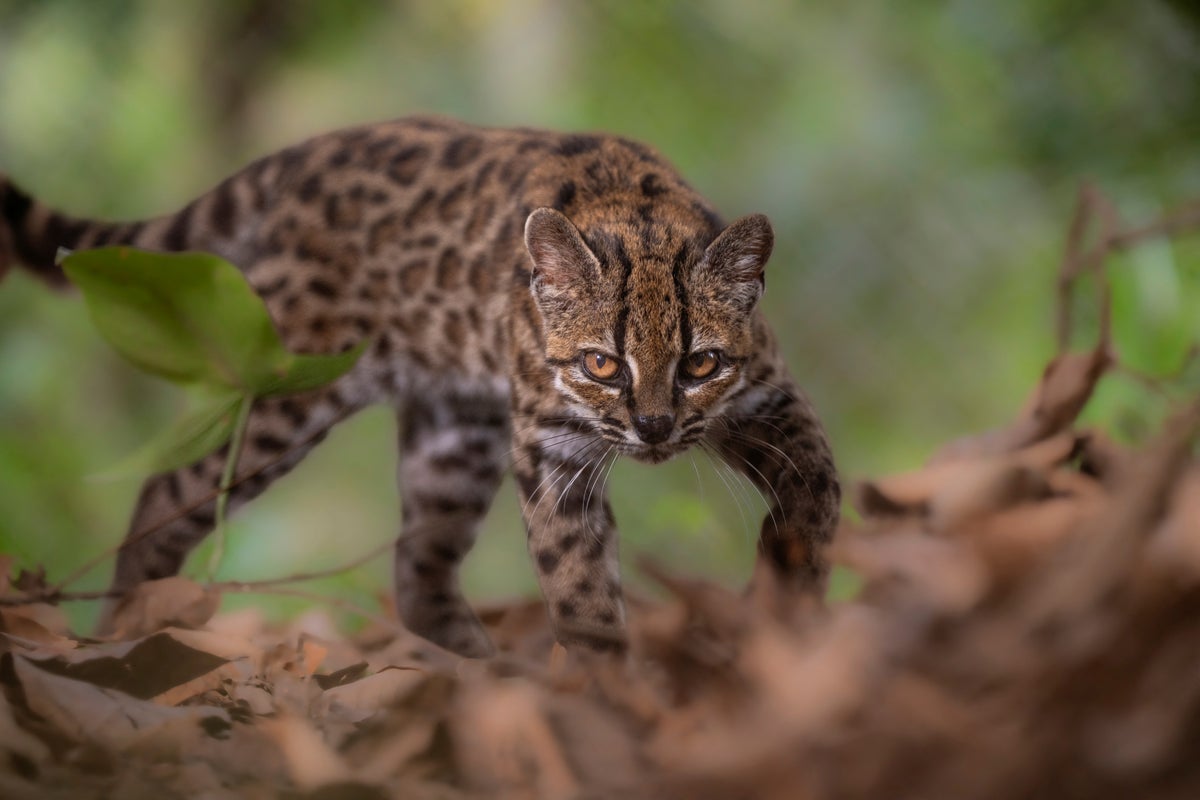
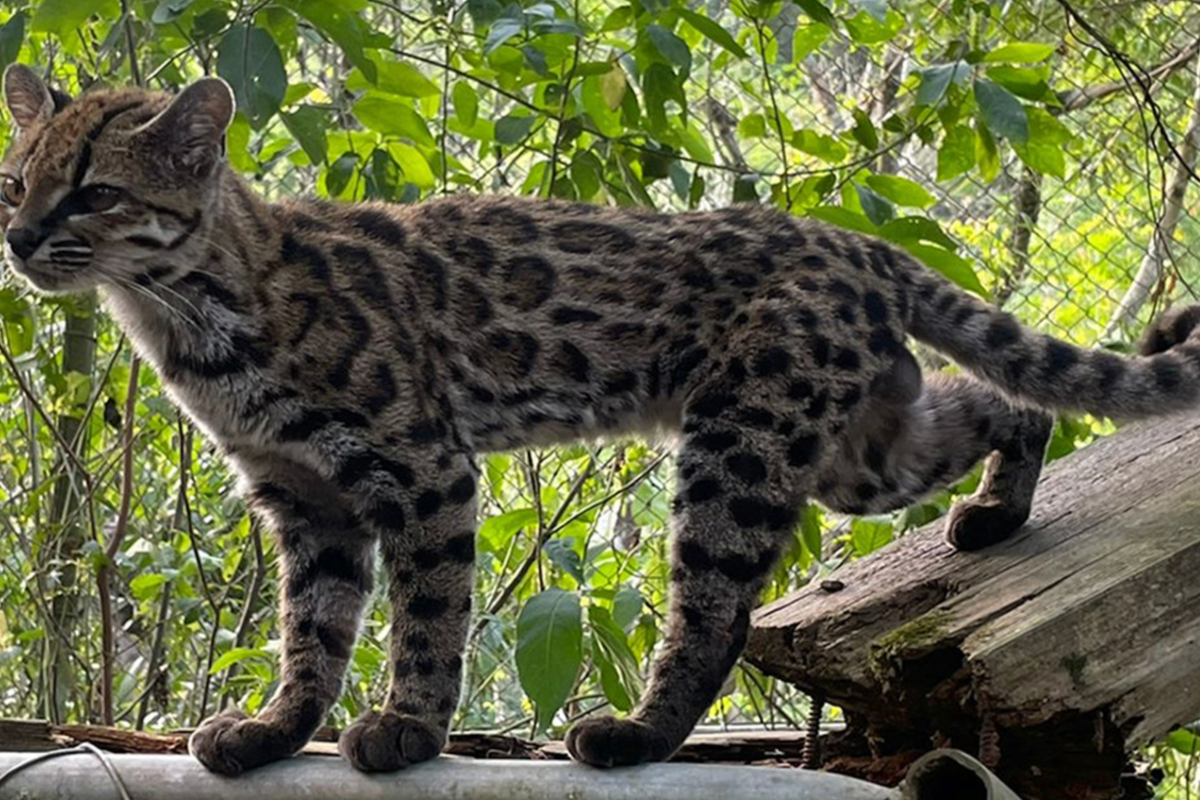
A Leopardus tilcayo cat, a newly identified species (Reuters)
Measuring at 45-50cm long, with a tail of 10in, L tilcayo is smaller than an average housecat, according to a study detailing the discovery published in the journal Current Biology.
The tiger cat weighs just 1.4-2kg.
A subspecies, called Leopardus tigrinus antisuyo, was also found in the Yungas of Peru.
Its name is inspired by a region of the Inca Empire where the feline is currently located.
In spite of their similar appearances, tigrillos belong to different evolutionary lineages.
Researchers made the discovery after studying genomes collected from 38 felines in different countries across South America. The genetic data of at least eight cats was obtained from their specimens preserved in museums.
Leopardus tilcayo is the only known individual of the newly identified species (Reuters)
Scientists compared the genomes with genetic material obtained from animals in other regions of South America.
This allowed them to reconstruct with greater precision the evolutionary relationships between the different lineages.
The major finding from the study was the recognition of Leopardus tilcayo as a separate species.
Recognising that tiger cats do not correspond to a single species carries important consequences for their conservation, researchers say.
The felines face increasing threats, including the loss and fragmentation of their habitats, as well as hunting and diseases transmitted by domestic animals.
National Geographic explorer Paola Nogales Ascarrunz led the study that identified Leopardus tilcayo as a new species (Reuters)
Some of the newly identified species also inhabit ecosystems that may be significantly affected by climate change.
The populations of these cats suffer from low genetic diversity, meaning their ability to respond to environmental changes may be limited.
In light of the latest findings, it is no longer enough to address the conservation of the tiny cats as if they are a single species, researchers say.
Each lineage requires focused studies on its distribution, genetic diversity, threats, and conservation needs.
“Altogether, our results clarify the evolutionary history of a complex radiation of wild cats, reveal novel taxa, and serve as a basis for conservation planning on behalf of these elusive wild cats,” they said in the study.