Your support helps us to tell the story
From reproductive rights to climate change to Big Tech, The Independent is on the ground when the story is developing. Whether it’s investigating the financials of Elon Musk’s pro-Trump PAC or producing our latest documentary, ‘The A Word’, which shines a light on the American women fighting for reproductive rights, we know how important it is to parse out the facts from the messaging.
At such a critical moment in US history, we need reporters on the ground. Your donation allows us to keep sending journalists to speak to both sides of the story.
The Independent is trusted by Americans across the entire political spectrum. And unlike many other quality news outlets, we choose not to lock Americans out of our reporting and analysis with paywalls. We believe quality journalism should be available to everyone, paid for by those who can afford it.
Your support makes all the difference.Read more
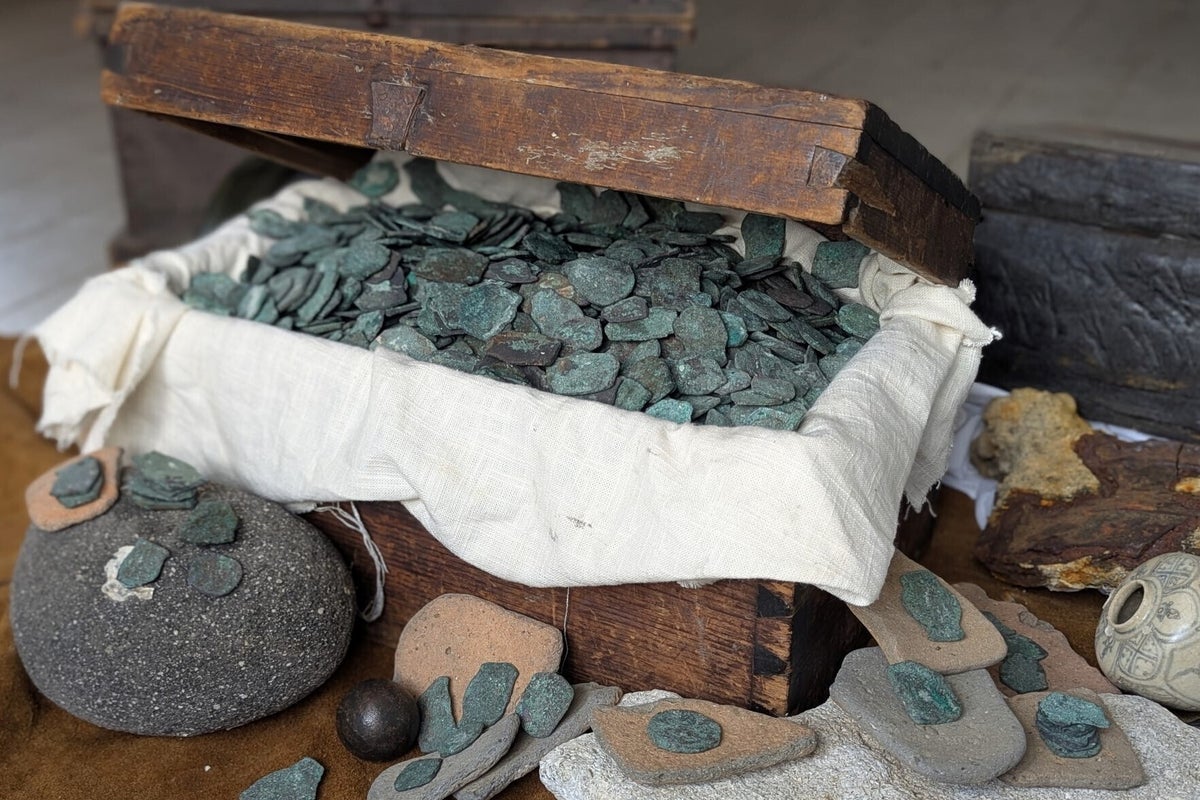
Hidden beneath the turquoise waters off a stretch of Florida known as the “Treasure Coast,” a team of divers from a shipwreck salvage company have uncovered exactly that — a load of long-lost Spanish treasure they estimate is worth $1 million.
More than 1,000 silver and gold coins thought to be minted in the Spanish colonies of Bolivia, Mexico and Peru were uncovered this summer off Florida’s Atlantic coast, 1715 Fleet – Queens Jewels LLC announced this week.
Centuries ago, the fortune was being ferried back to Spain when a hurricane wrecked the fleet’s ships on July 31, 1715, spilling the treasures into the sea, according to the 1715 Fleet Society.
Over the years, millions of dollars in gold coins from the 1715 Fleet have been found by salvagers and treasure hunters in a coastal area stretching from Melbourne to Fort Pierce.
Dates and mint marks are still visible on some of the recently recovered coins, the salvage company said, a benefit for historians and collectors hoping to glean more from the lost treasure.
“This discovery is not only about the treasure itself, but the stories it tells,” Sal Guttuso, director of operations for the salvage company said in a statement. “Each coin is a piece of history, a tangible link to the people who lived, worked, and sailed during the Golden Age of the Spanish Empire. Finding 1,000 of them in a single recovery is both rare and extraordinary.”
Last year, Florida officials announced they had recovered dozens of gold coins stolen by salvagers from the wreck. The suspect was identified as a family member of the team contracted by 1715 Fleet – Queens Jewels LLC to work the site.
Under Florida law, any “treasure trove” or other historic artifacts “abandoned” on state-owned lands or in state waters belong to the state, though excavators can be permitted to carry out “recovery services.” The law requires that roughly 20% of the recovered archaeological materials be retained by the state for research collections or public display.
___ Kate Payne is a corps member for The Associated Press/Report for America Statehouse News Initiative. Report for America is a nonprofit national service program that places journalists in local newsrooms to report on undercovered issues.