Your support helps us to tell the story
From reproductive rights to climate change to Big Tech, The Independent is on the ground when the story is developing. Whether it’s investigating the financials of Elon Musk’s pro-Trump PAC or producing our latest documentary, ‘The A Word’, which shines a light on the American women fighting for reproductive rights, we know how important it is to parse out the facts from the messaging.
At such a critical moment in US history, we need reporters on the ground. Your donation allows us to keep sending journalists to speak to both sides of the story.
The Independent is trusted by Americans across the entire political spectrum. And unlike many other quality news outlets, we choose not to lock Americans out of our reporting and analysis with paywalls. We believe quality journalism should be available to everyone, paid for by those who can afford it.
Your support makes all the difference.Read more
The European Union is willing to implement a sweeping free trade agreement with the Mercosur group of South American countries on a provisional basis, the head of the EU’s executive commission said Friday, despite a vote by the EU parliament to delay ratification for legal review.
The EU would be ready to act as soon as at least one Mercosur country ratifies, European Commission President Ursula von der Leyen said at the conclusion of a summit of EU leaders in Brussels where several national leaders raised the issue.
“There is a clear interest that we ensure that the benefits of this agreement apply as soon as possible,” von der Leyen said at a news conference. “In short, we will be ready when they are ready.”
No formal decision to implement the deal had been taken yet, she said.
At the same news conference, Antonio Costa, head of the EU council of member governments, said the executive commission had the authority to move ahead on interim implementation.
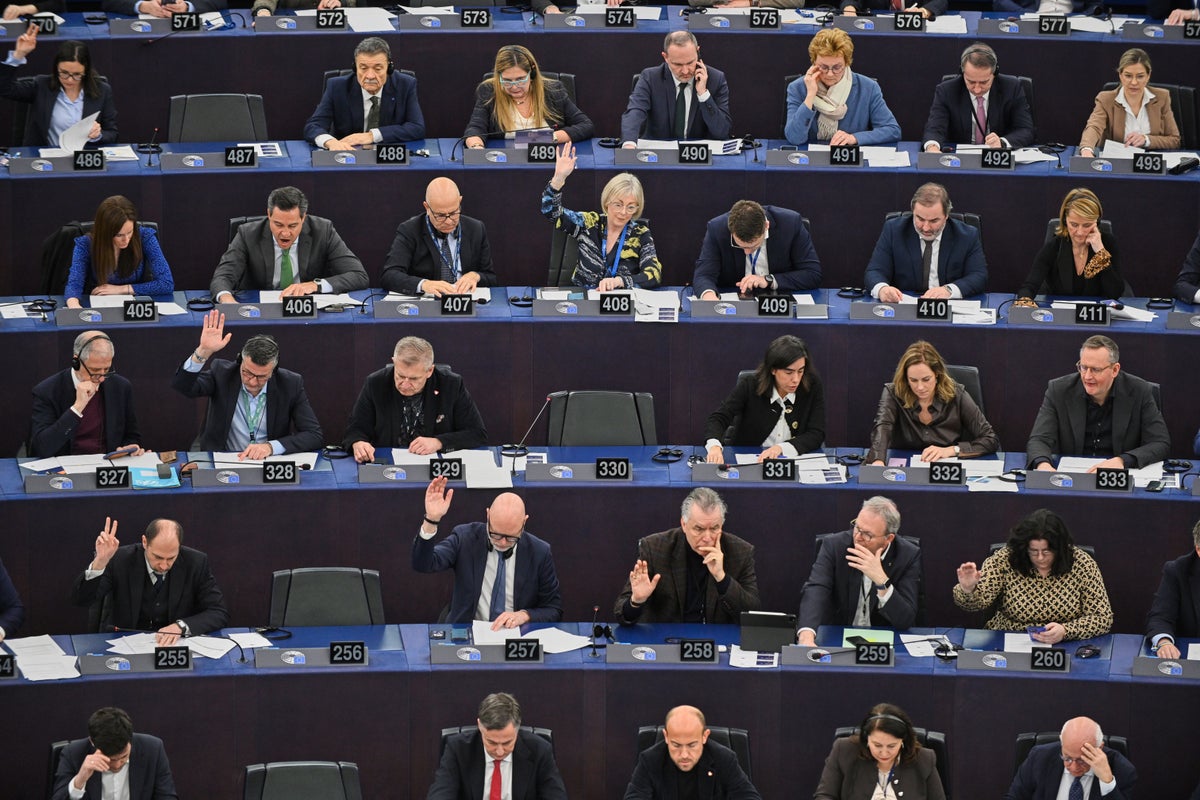
A decision to do that is likely to provoke criticism from opponents of the deal, led by France. On Wednesday, the parliament narrowly voted to refer the trade deal to the European Court of Justice for legal review, holding up ratification since the parliament cannot vote on ratification until the court rules. That could take months.
The deal is central to Brussels’ plan to form trade relations outside a historic dependency on the U.S. in the wake of antagonism and aggression during U.S. President Donald Trump’s second term. They’ve struck deals from Japan to Mexico and are expected to sign a similar accord with India later this month.
Supported by South America’s cattle-raising countries and European industrial interests, the accord is aimed at gradually eliminating more than 90% of tariffs on goods ranging from Argentine beef to German cars, creating one of the world’s largest free trade zones and making shopping cheaper for more than 700 million consumers.
France, Europe’s major agricultural producer, wanted stronger protections for farmers and has sought to delay the pact.
However German Chancellor Friedrich Merz called the vote to delay “regrettable” and has urged provisional application of the agreement.
Ratification is considered all but guaranteed in South America, where the agreement has broad support.
Mercosur consists of the region’s two biggest economies, Argentina and Brazil, as well as Paraguay and Uruguay. Bolivia, the bloc’s newest member, is not included the trade deal, but could join in the coming years. Venezuela has been suspended from the bloc and is not included in the agreement.