AIPAC’s playbook ahead of Thursday’s Democratic primary for a New Jersey congressional seat looks familiar: United Democracy Project, a super PAC controlled and funded by allies of the pro-Israel group, spends millions of dollars’ worth of television ads, mailers and phone calls to demolish a candidate they oppose.
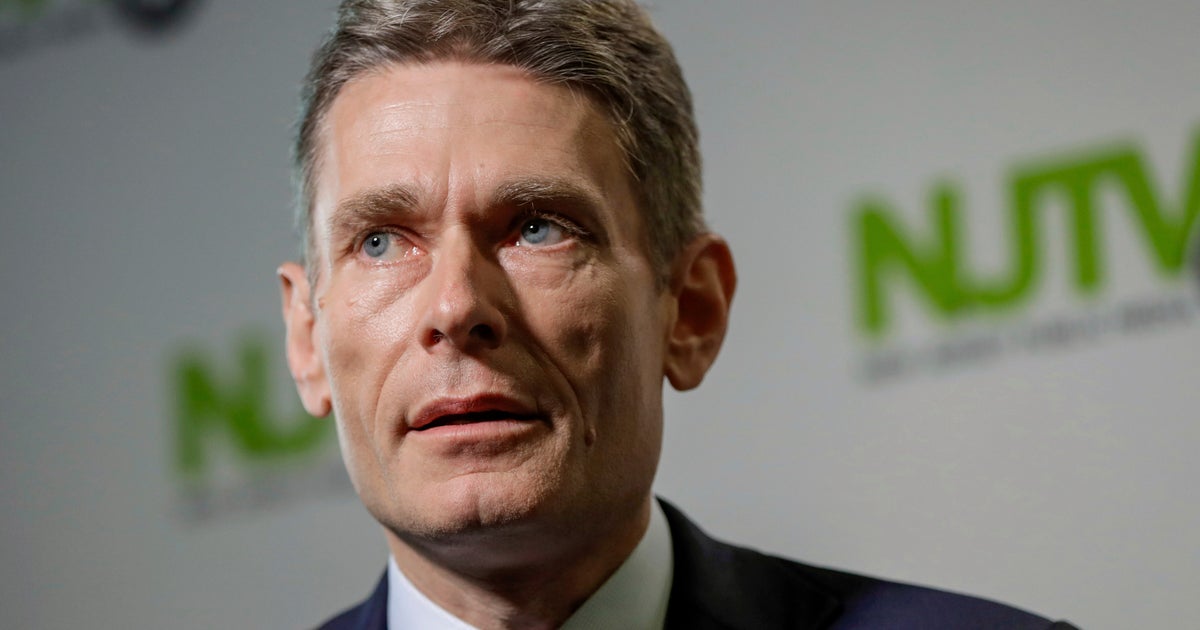
“ICE’s deportation force is out of control,” a female narrator says at the start of one of the group’s 30-second ads airing ahead of the special election. “Tom Malinowski voted with Trump to increase funding.”
The twist is who the ads are targeting. Former Rep. Tom Malinowski is not only a former ally of the American-Israel Public Affairs Committee, but he’s also a mainstream liberal and definitely not the most left-wing candidate in the race. That’s activist Analilia Mejia, a former top official on Sen. Bernie Sanders’ (I-Vt.) presidential campaign in 2020.
And many Democrats in New Jersey — including some otherwise sympathetic to AIPAC’s cause — think targeting Malinowski is only increasing the chances Mejia can come out of a crowded primary and become the newest member of the progressive “Squad,” a group AIPAC has previously sought to extinguish.
“They’re taking a big risk here,” said one Democratic operative in the state who works for an elected official friendly with AIPAC and requested anonymity to preserve relationships. “Attacking the front-runner from the left is usually going to end up helping the most left-wing candidate in the race.”
Others simply did not see the strategy in turning on a former ally, especially one seen as the frontrunner in the race.
“It feels like a case of mistaken identity,” said Jeremy Ben-Ami, the president of the moderate pro-Israel group J Street. “I cannot, for the life of me, understand the theory behind this.”
Malinowski and Mejia are two of the four candidates seen as having a shot at winning the nomination for the 11th district alongside former Lt. Gov. Tahesha Way — the candidate who many believe pro-Israel groups want to triumph — and Essex County Commissioner Brendan Gill, who has the backing of former Gov. Phil Murphy and many local unions. The district is solidly Democratic, and the victor on Thursday will be a heavy favorite in the general election, scheduled for April.
AIPAC has said the group believes Malinowski’s views make him a worthy target, and they think many of the other candidates in the race are more pro-Israel. An AIPAC ally, speaking on condition of anonymity, noted many of the candidates in the race could run again in the regularly scheduled midterm election, the primary for which will be in June.
“We’re going to have a second bite of the apple,” the source said.
The battle for the district, which includes suburbs in the northern part of the state, comes after Mikie Sherrill left the seat to become governor. It’s seen as a potential preview for Democratic primaries around the country in 2026, where candidates will have to navigate both free-spending outside groups pushing the party to the center and a resurgent base and progressive movement moving the conversation left.
Operatives working on the race warned it could be difficult to predict. The state only recently abandoned its “county line” system, where the preferred candidates of local parties were marked on the ballot and given a huge advantage over other challengers. Turnout could also be incredibly low — one operative suggested a mere 30,000 people could vote, less than half of the number who voted in the 2024 primary — meaning a candidate could win with the support of just a few thousand people.
In an interview, Malinowski said representatives from AIPAC told him his support for conditioning aid to Israel necessitated their attacks against him, and suggested his work as a former State Department official and member of the House Foreign Affairs Committee made him an “influential voice” in the party, and thus more dangerous than Mejia.
Malinowski is now framing the race as an opportunity for Democratic voters to stand up to AIPAC and other groups who are using massive amounts of electoral spending to shape primaries and intimidate elected officials.
“For the Democratic Party, the stakes are higher because we now have an outside group, largely funded by pro-Trump billionaires, using this race to send an intimidating message,” Malinowski said. “They’re trying to say that if you don’t tow their line 100%, they’re going to come after you with unlimited spending.”
Democrats outside New Jersey said they were watching the race to see how voters reacted to the massive amounts of outside spending set to be brought to dozens of primary races across the country, especially from the cryptocurrency industry. While AIPAC was able to oust two progressive members of Congress in 2024, Ben-Ami noted Democratic voters have soured significantly on Israel in the aftermath of its siege of Gaza, which killed more than 70,000 people.
“It is possible that in 2026 being on the receiving end in the Democratic primary of an attack from AIPAC may actually be beneficial to you,” said Ben-Ami, whose group has given a stamp of approval to both Malinowski and Gill.
UDP has spent more than $3 million attacking Malinowski, making it the biggest, but not the only, super PAC spending on the race. A group called the 218 Project is backing Malinowski, while Way has the support of the Democratic Lieutenant Governors’ Association and another mysterious PAC, Article One, Inc.
The other candidates in the race have suggested the money flowing into Article One, whose only donor is a mysterious McLean, Va.-based foundation, or the DLGA may be linked to AIPAC, though the DLGA denies any coordination with another group.
“The DLGA has not coordinated with AIPAC or any other outside organization in NJ-11,” a spokeswoman for the group said. “We have long been on the record about our commitment to supporting Democratic lieutenant governors nationwide as they pursue higher office in 2026, and our backing of Lieutenant Governor Way reflects that commitment.” (Article One did not respond to a request for comment.)
But it is clear that Way, who has built her campaign around her record of standing up to Trump when he challenged New Jersey election law when she was Secretary of State, has the support of many pro-Israel voices. Democratic Majority for Israel has endorsed her, and she proudly noted her past work leading a state commission dedicated to building closer ties between New Jersey and Israel.
“I don’t support any conditions on Israel,” Way told HuffPost in an interview, while adding that what outside groups do in the race is out of her control.
Mejia, meanwhile, has benefited from big-name national endorsements: Sanders, Rep. Alexandria Ocasio-Cortez (D-N.Y.), and Rep. Ro Khanna (D-Calif.) have all held in-person campaign events for her.
“Analilia Mejia is an organizer, not a career politician — and that’s exactly the kind of leadership we need if we’re serious about taking on corruption and corporate power,” Ocasio-Cortez said at a January event where she and Sanders rallied for Mejia.
Mejia’s arguments echo those of progressives across the country: “Traditional politics and the same ol’ blue is not going to be effective in confronting MAGA Trumpism and a corrupt administration,” she said. “I wanted a different voice for myself, and I know that my friends and neighbors in the district did too.”
The progressive’s seeming rise in the race has been driven by two factors, operatives said: Her high-profile endorsements and rising anger at ICE in the district, the result of both the deadly shootings in Minnesota and ICE’s detention of a high school student at a laundromat in the district.
Mejia condemned AIPAC’s involvement in the race as an example of what she said are billionaires and oligarchs trying to buy elections — but she also didn’t sound disappointed they were attacking her rival.
“I do find it interesting that it takes being personally attacked for some people, some candidates, to denounce them,” she said, adding: “The first step is to never take their money.”