Progressives appear on the verge of sweeping a trio of heavily contested Democratic primaries in Michigan and Wisconsin, alarming party operatives who fear the left-leaning candidates could endanger the party’s chances in two of the nation’s iconic swing states.
Public surveys released in recent days have pointed to significant primary leads for Assemblywoman Francesca Hong in Wisconsin’s governor’s race, for Sunrise Movement co-founder Will Lawrence in Michigan’s 7th Congressional District and for former public health official Abdul El-Sayed in Michigan’s Senate race.
All are set to defeat comparatively moderate opponents and will have overcome ferocious efforts by establishment-aligned forces to stop them. All have been seemingly boosted by Republicans in one way or another. All are facing some degree of worry about whether they can triumph in territory won by President Donald Trump in 2024 in November.
All of their rises have led to finger-pointing within the party’s establishment and its moderate wing, with many arguing they were too slow to adjust to voters’ post-Biden preferences on everything from Israel to data centers to economic populism. Others are pointing to race-specific problems, with the moderate wing failing to consolidate its voters early in both the 7th District and in the Wisconsin governor’s race.
“Shame on the establishment Democrats for not having a message that resonates with people,” said Emily Cherniack, the founder of New Politics, which is backing Milwaukee County Executive David Crowley in the Wisconsin governor’s race and former Navy SEAL Matt Maasdam in Michigan’s 7th, adding voters were looking for a different type of candidate: “People don’t want the pragmatic leader who’s going to put the country first.”
If the progressive candidates do win in November, however, they are set to provide significant boons to their movement, giving the left a counterargument to consistent doubts about their candidates’ ability to win over swing voters in the nation’s most crucial political battlegrounds.
“Michigan is ground zero for the future of the Democratic Party and a primer for the upcoming presidential race,” Adam Green, the co-founder of the Progressive Change Campaign Committee, said Friday on MSNOW. “If Abdul can win after $60 million is spent against him … that will send a signal to every other Democratic politician. If he goes on to win the general election, that sends a signal to scared electability voters.”
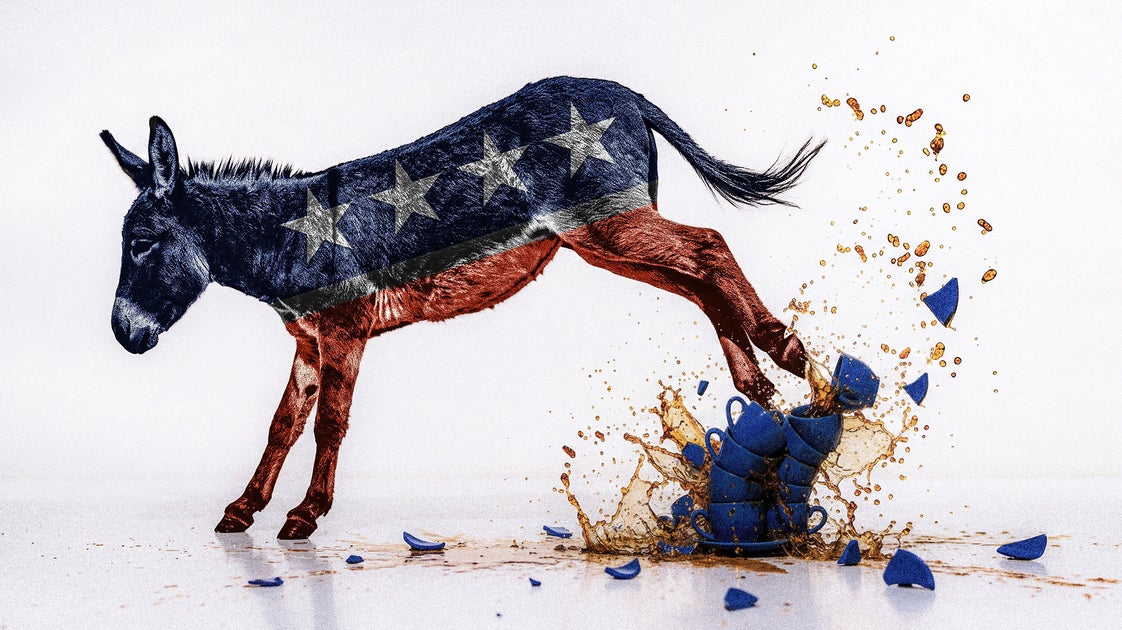
While progressives have often had a leg up on the Democratic establishment throughout the 2026 primary season, the potential victories for Hong, El-Sayed and Lawrence seem set to cement this year as the Democratic equivalent of the Tea Party movement that rocked the GOP in 2010. While Republicans benefited from massive political backlash to a president of the other party that year, the energy coursing through their party also resulted in the party nominating unelectable candidates in a host of critical races, allowing Democrats to maintain control of the Senate.
Democrats, who are opening up more significant leads in public polling even as the party’s national brand remains poor, now find themselves in a nearly identical situation. President Donald Trump’s unpopularity, linked to a failed war in Iran and an inability to focus on voters’ economic concerns instead of his pet construction projects, is presenting the party with golden opportunities. The fear is the party’s primary voters will fumble them.
There are limits to the progressive surge, which is also expected to lift Lt. Gov. Peggy Flanagan over Rep. Angie Craig in Minnesota’s Democratic Senate primary. House primaries between left-wing insurgents and incumbents backed by AIPAC in St. Louis and Detroit are seen as toss-ups, and most competitive seats in both House and Senate races saw establishment-backed candidates win with relatively little trouble.
The level of concern about each candidate’s ability to win in November is different: El-Sayed, a more established figure, draws the greatest electability worries from Democrats inclined to back his opponent, Rep. Haley Stevens, while many others note most polls of the race indicate both he and Stevens would face a tight matchup with Republican Mike Rogers.
With the race in its final days, Stevens’ allies are still hoping a surge in Black voter turnout could lift her fortunes, though others in the party have begun to question why her campaign — and the $50 million in support from super PACs funded by the American-Israel Public Affairs Committee and others — focused so narrowly on a group which is expected to make up a quarter or less of the primary electorate.
“Having a huge lead among Black voters does make for a great tweet if you’re looking for the moral high ground,” said one Stevens-supporting Democrat in the state who requested anonymity to protect personal relationships. “But it does not matter much if you’re getting crushed with the rest of the electorate.”
Other Democrats have long questioned the Democratic Senatorial Campaign Committee’s decision to back Stevens over state Sen. Mallory McMorrow, who dropped out of the race last month. The committee has long said Stevens’ track record of winning a GOP-held district made her the most attractive candidate.
In Wisconsin, Hong’s membership in the Democratic Socialists of America is seen as a significant drag on her appeal, though her relatively weak opponent — Rep. Tom Tiffany, the Republican nominee, is a member of the archconservative House Freedom Caucus — and focus on “permanent affordability” have convinced many Democrats in the state she can triumph regardless.
“I’m bullish on her ability to close the deal,” said Joe Zepecki, a longtime Democratic strategist in the state. “The voters are telling us they’re looking for something different, and they think Francesca Hong is that something different.”
Democrats in the state closely watched Hong’s appearances on Fox News and CNN on Friday, attempting to evaluate how she would stand up to relatively hostile questioning. Republicans, meanwhile, are salivating at the chance to run against her, with the Republican Governors’ Association spending millions on an ad campaign not-so-subtly intended to boost her name ID.
Wisconsin’s primary is not until Aug. 11, giving some members of the party establishment hope a last-ditch effort to convince Crowley to reenter the race with the backing of Gov. Tony Evers could still prove fruitful, especially since former Lt. Gov. Mandela Barnes’ exit from the contest on Thursday could help consolidate establishment support. Rep. Gwen Moore (D) endorsed Crowley on Friday morning.
Lawrence’s candidacy has caused the most consternation. A co-founder of the Sunrise Movement, he managed to sneak up on Washington, D.C., operatives who were focused on the competition between former Navy SEAL Matt Maasdam and former U.S. Ambassador to Ukraine Bridget Brink.
A focus on stopping data centers, a point of emphasis shared by Hong and El-Sayed, helped create runaway momentum for Lawrence’s candidacy. His first campaign ad featured a homeowner who feared a data center built in their town would destroy their property values.
“People are fearful that their towns will be destroyed by these hyperscale data centers,” Lawrence told HuffPost in a phone interview on Friday. “I mean, it is an existential threat for the people who are on the front lines, and people across the district see that we have corporate-funded Democrats and corporate-funded Republicans who are united in rolling out the red carpet for these Silicon Valley billionaires to decide the future of our communities.”
Lawrence and Hong have both said their opposition to the facilities has won them the support of Trump supporters who oppose the projects, arguing it shows how economic populist issues taken up by the left can win over working-class voters who have backed Republicans in recent years.
Moderate Democrats, however, contend their left-wing positions on other issues will ultimately matter more to those voters in November. “I think this race is 100% off the table now if Lawrence wins,”Cherniack said of the 7th District, which is expected to be one of the marquee races in the battle for the House.
In separate interviews, Maasdam and Brink both pointed to their backgrounds — he carried the “nuclear football” for former President Barack Obama, she was the first female ambassador in a war zone in American history — as key reasons for voters to back them. But both largely demurred when asked if Lawrence could win.
“Just looking at the Republican ads, they want to run against William Lawrence and it’s for a good reason,” Maasdam said.
“It’s a purple district,” Brink said.
However, the two candidates — whose surrogates have traded words over the past week about whether either candidate is a “spoiler” for the other – were much harsher on each other than on the progressive frontrunner.
“There are more non-Will voters than there are Will voters,” Maasdam said when asked if Brink should drop out of the race. “I hate to see that bloc split. It’s a tough decision for Bridget.”
Brink was unsparing in her criticism of Maasdam: “Matt has spent his entire campaign being dishonest to voters,” she said. “He’s been lying about me, smearing my record. He’s been hiding the truth about his Republican past, and his campaign is being propped up by more than $5 million in dark money super PAC ads from the data center industry.”
Cherniack said Democrats are ultimately working off a hangover caused by President Joe Biden’s political downfall and former Vice President Kamala Harris’ loss, causing the party’s voters to look anywhere else. She compared it to her own dating life, noting that after breaking up with a technology company vice president, she proceeded to date a man with no checking account and a motorcycle.
“Democrats had been told and forced to vote for these ‘sensible’ candidates,” she said. “Primary voters are in a rebound era.”