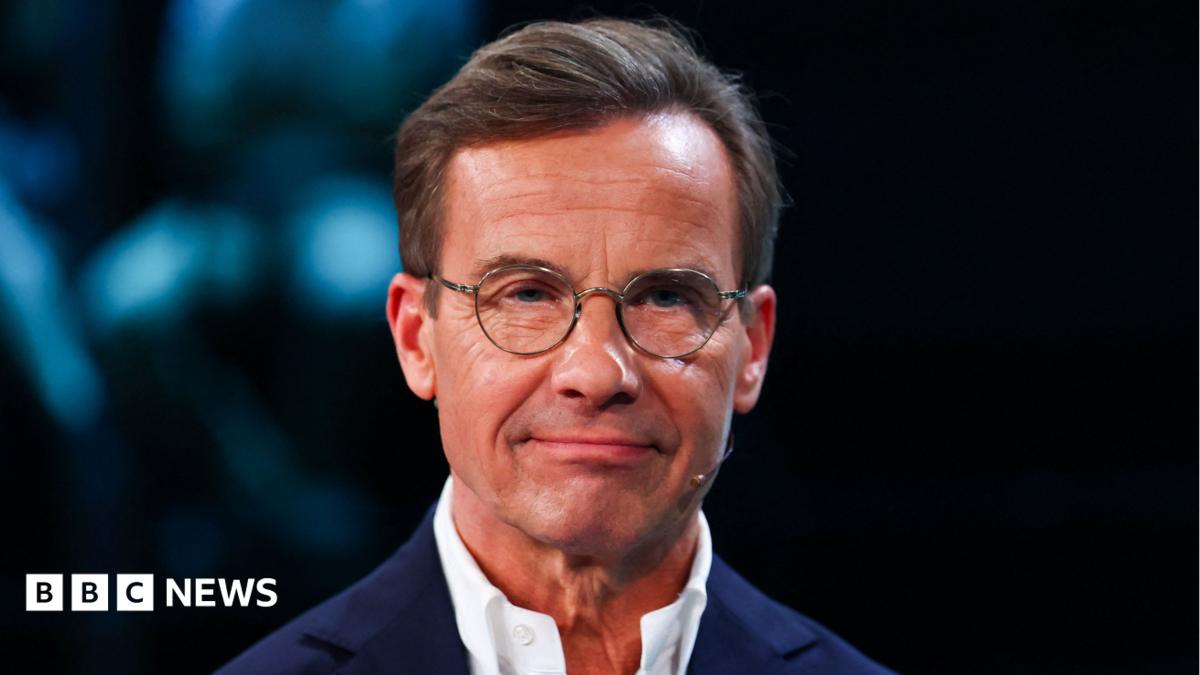
Sweden’s Prime Minister Ulf Kristersson has resigned after his ruling right-wing bloc was narrowly defeated by the centre-left opposition in the country’s general election.
He made the announcement in a post on X on Thursday afternoon, after preliminary votes from Sunday’s election showed about 50,000 votes separated the two blocs in the country of about 10 million people.
Opposition parties led by Magdalena Andersson of the Social Democrats look set to win 176 seats in the 349-seat Riksdag, Sweden’s parliament.
Kristersson, a conservative, had been supported in government by the anti-immigration hard-right Sweden Democrats (SD), and had promised them cabinet jobs if he won the election.
His right-wing bloc looks set to win 173 seats in the Riksdag, according to data from the Swedish Election Authority.
The results will be subject to formal certification in the coming days and are expected to finalised this weekend.
In Sweden, there are two major political blocs – with four parties on the right and four on the left, so Swedes are used to coalition and minority governments.
After a prime minister resigns, the Speaker of the Riksdag holds talks with all parties to proposes a candidate for the next leader, which is then voted on by MPs.
“Now it is the speaker who will lead the next stage of the way to a new government. I am herewith requesting that I be relieved of the office of prime minister to allow that work to start immediately,” Kristersson’s statement read.
In a speech posted on Instagram, Andersson said: “The Swedish people have voted for a new direction for our country”.
The Social Democrats have regularly led Swedish governments since World War Two and have been the country’s dominant political force for much of the last century.
Its leader, Andersson, is expected to return to power after four years in opposition, and has initiated talks with the other opposition parties – The Left Party, The Centre Party and The Green Party – about forming a government.
But discussions could drag on due to major differences between the parties on issues such as taxes.
After the 2022 election in Sweden, it took 37 days to form a government, while in 2018 it took 134 days.
In his resignation, Kristersson said the opposition faced “complicated” conditions for forming the next government, “because the parties’ various statements before election day could pose obstacles”.