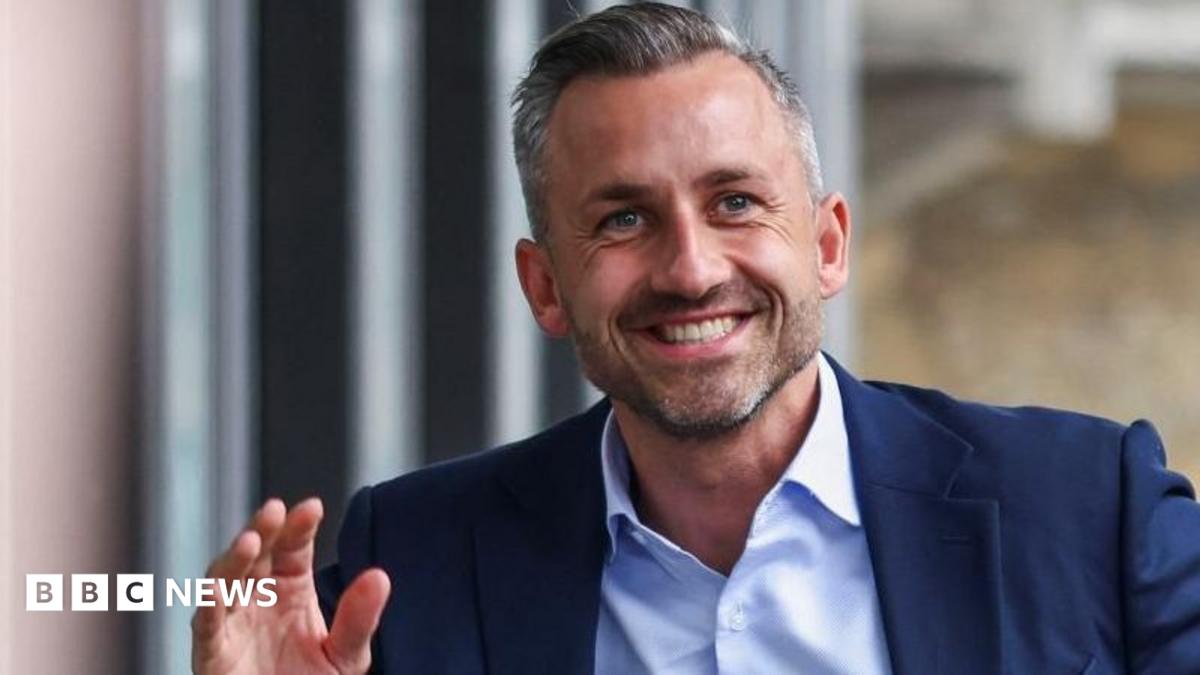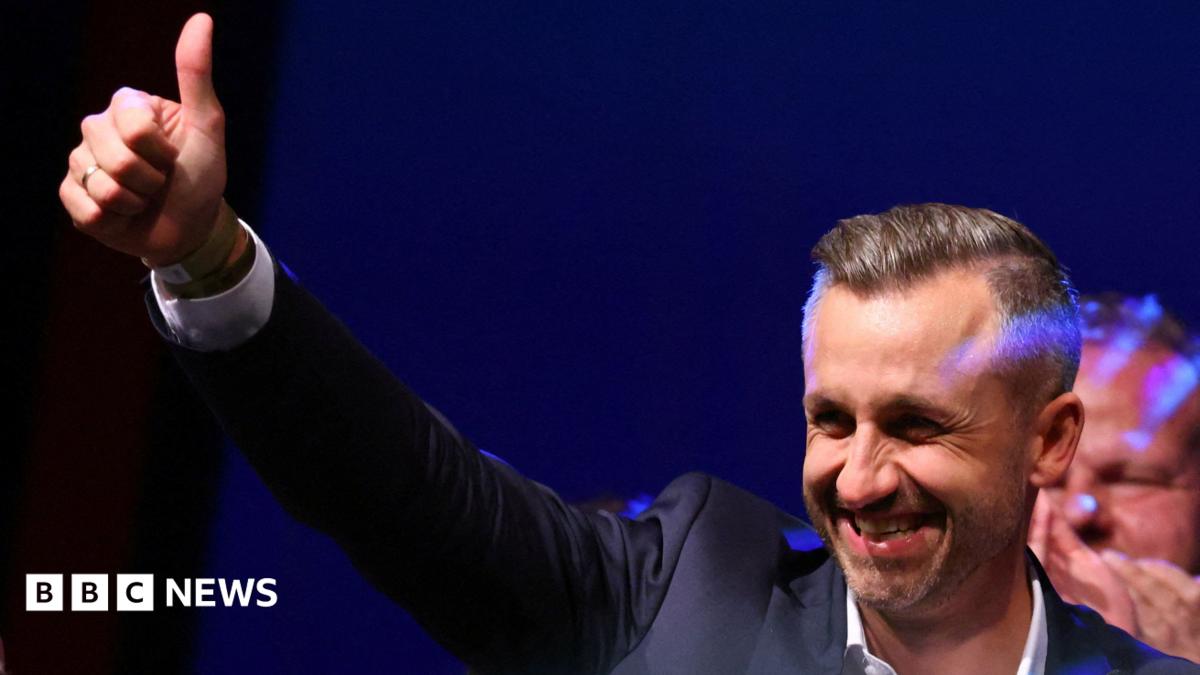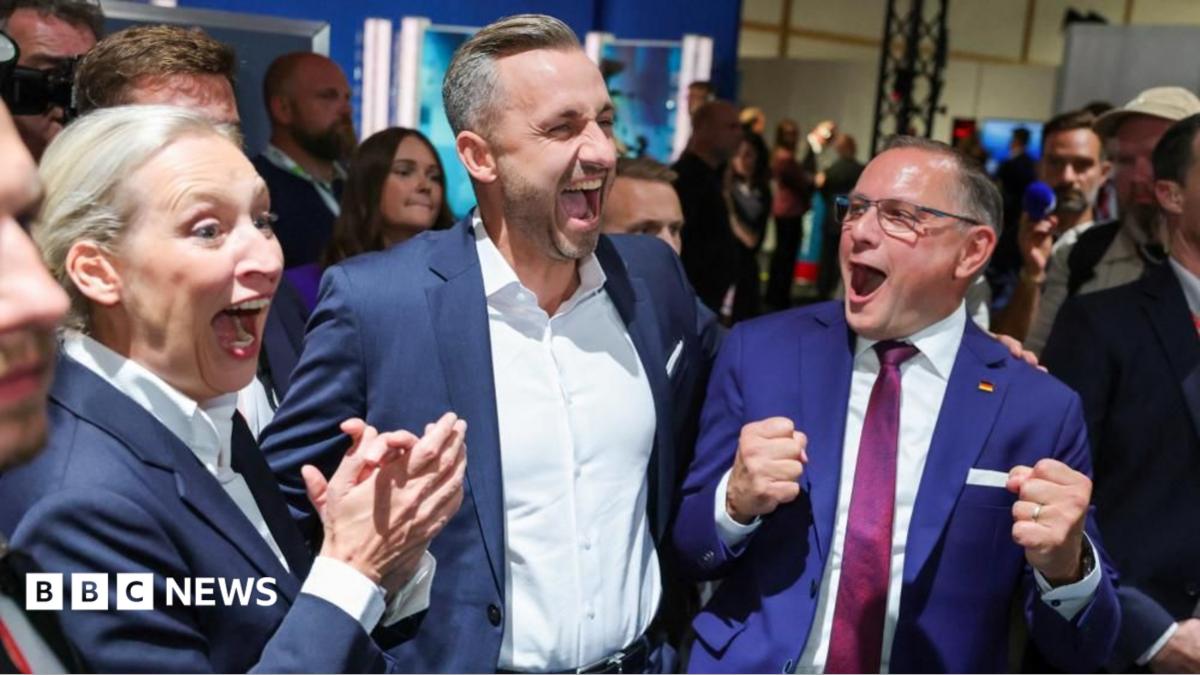
Turnout in Saxony-Anhalt was particularly high at an estimated 78%, and AfD supporters in Magdeburg praised Siegmund’s success in winning over voters.
One man called Ollie said: “This man gives us what no-one else can give.”
“No matter what government, they all just promise things to get better. This is a party for the working people. It is the alternative for Germany,” he told the BBC.
Another AfD voter called Bert said people in the east could sense things were not going well: “Things need to improve for us, for my family – I have three children. I’m in fear, I’m really in fear that safety erodes more and more.”
Other parties refuse to go into coalition with the AfD, operating a Brandmauer or firewall aimed at keeping the far right out of government. In Saxony-Anhalt, the BSW has offered to co-operate with the AfD on some issues if it gets into the state parliament.
The AfD leads the opinion polls nationally, ahead of the ruling conservatives of Chancellor Friedrich Merz and the Social Democrats, but their heartland lies in the eastern states.
They also won the 2024 state election in neighbouring Thuringia, but failed to secure enough seats to win power.
Among the AfD’s policies is a highly controversial plan for “remigration”, which is widely understood to mean mass deportations of migrants, although the party says it refers to deporting criminals and those in the country illegally. It would not be able to achieve either if it ran the government of one of 16 states.
But it would have significant local powers. The party has been particularly critical of the Bauhaus school of design which the Nazis shut down in the city of Dessau after they came to power in 1933. The AfD has called it “the dead-end of modernism”, prompting some to accuse the party of using similar language to the Nazis.
Responding to the news from Saxony-Anhalt, the veteran head of the Jewish community in Munich and Bavaria, Charlotte Knobloch, said it frightened her. “On days like this I find it hard to recognise my homeland any more,” the 93-year-old Holocaust survivor said, appealing for mainstream parties not to stand by and allow “this decline”.
One of the AfD’s top figures in Saxony-Anhalt, Hans-Thomas Tillschneider, has also been criticised for his approach to Russia. When asked why he had a Russian army mug in his office, he said it was just a souvenir, and “it’s not our war”.