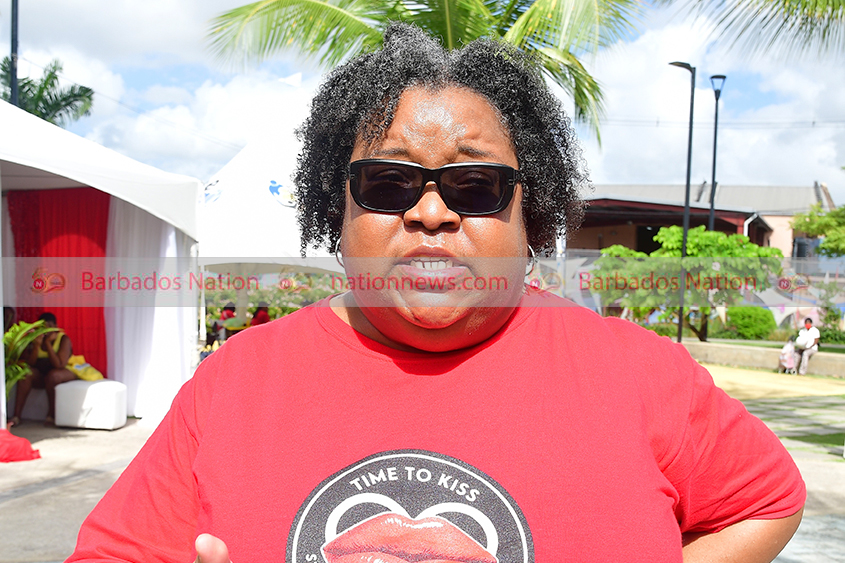
Fewer people among the LGBTQ Community are reporting being discriminated against, but deputy director of the National Wellbeing and HIV Commission Nicole Drakes says this can be misleading.
“We started the first Stigma Register Project in 2013-2014. We did the second in 2015, the third was done in 2019 and the last one was done in 2024. Now the purpose of this is to collect information on stigma among vulnerable groups,” she said.
Drakes explained that this comprised people from the LGBTQplus community, lesbian, gay, bisexual, transgender, queer, plus any other group that fell under that ambit, including sex workers and people living with HIV.
“We found that a lot of people figured there wasn’t anything they could do about being stigmatised. People were able to share stories as well about being stigmatised or victimised by their landlords, by persons providing public services, whether it be health or protective services, or even social services.
“Now, all these surveys, with the exception of the last one (the first one in 2014), about 99 per cent of the interviewed said they had been discriminated against. In the second and third iterations, it was 100 per cent. This time around, it was around . . . 60-something, 70-something per cent,” she said.
While this looked encouraging on the surface, Drakes, who was taking part in the Ministry of People Empowerment’s Love Health & Fitness Fair at Golden Square, The City, on Saturday, noted that there could be negative factors which caused the decrease.
“That is interesting compared to the other years . . . for two reasons. One, the populations were a little different. This time, for the first time in the history of doing the project, we got a lot of male sex workers. We also got a larger number of young respondents,” she explained.
The deputy director said after reviewing the results, questions were raised on whether it was that they were not being discriminated against or if the discrimination happened so often that it had become an accepted form of behaviour.
“Are they really aware? Or do they dismiss it because they feel they can’t do anything? That’s why a lot of people said they didn’t do anything about it because they didn’t feel it would go anywhere. They didn’t know that they could do something. And then too, because some of them are being stigmatised by persons of authority, a lot of them feel helpless, so they often feel the best thing to do is just keep quiet and do nothing, and hope everything will pass,” she said.
Drakes encouraged anyone suffering from stigma and discrimination to contact groups such as EQUALS, the Movement Against Discrimination Action Coalition, Jabez House or Community Education Empowerment and Development.
“These organisations have what is called a shared-incident database. So they record the instances of discrimination experienced by persons in vulnerable communities, and then they use that to lobby for the rights of those persons,” she said.
Drakes warned the sexually transmitted incidence of infections was on the rise, so their work was more important than ever to keep the message of safer sex fresh in the minds of people.