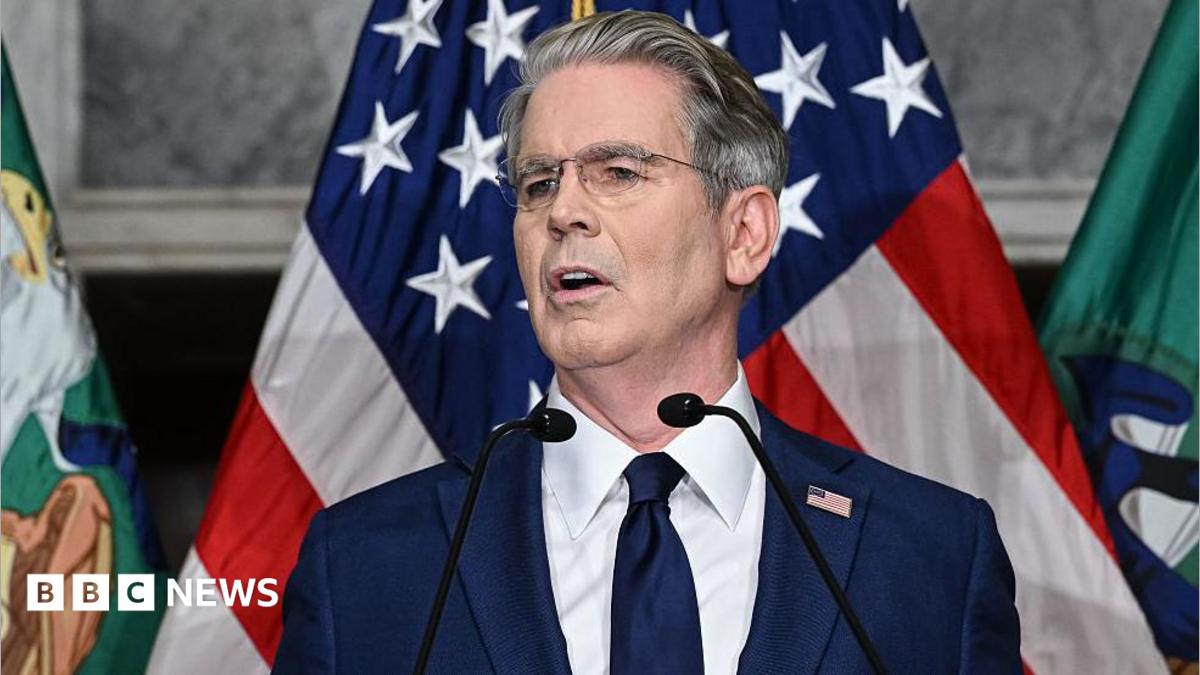
The US announced a host of sanctions against Iran and threatened its supporters in what Treasury Secretary Scott Bessent said was “the single greatest financial offensive ever”.
Labelling it an “economic D-Day” for Iran, Bessent said the US would sever all economic ties with the country and added that any nation financially partnering with Iran would also be isolated.
However, the latest threat to the Iranian regime follows several U-turns and extended deadlines from the White House in its efforts to end the conflict.
In response, Iran’s economy minister Ali Madanizadeh said there was a two-year plan to counter the sanctions, which would result in another defeat for Washington.
The war has led to hikes in global oil prices, and in response to the latest threat Iran warned it would shut down all oil exports from the region if the war continued
The Iranian regime has also issued a fresh warning to shipping to not pass through the Strait of Hormuz without its permission, according to Reuters.
One fifth of the world’s oil and gas usually passes through the strait, a narrow waterway south of Iran, but the flow has been effectively blocked by the country since the conflict began at the end of February, leading to higher oil prices globally.
At a press conference on Monday outlining what has been called “Operation Economic Outcast”, Bessent said the US was launching an “economic onslaught against Iran’s financial connections around the globe”.
“Iran now faces a very clear choice with only two paths before them: complete global isolation….or a path back to normalcy with an opportunity to rejoin the global economy,” he said.
The treasury secretary claimed America was “no longer managing the Iranian threat, we are ending it”.
Bessent said the Treasury Department had mapped networks, facilitators and financial channels used by Iran to evade sanctions to trade oil.
The department said it had issued determinations against five sectors: digital assets, technology, gold, aviation and shipping. The Treasury has also imposed sanctions on almost 60 entities, individuals and vessels.
Bessent said that such actions would “tighten the noose and block every potential source of revenue” for Iran’s Islamic Revolutionary Guard Corps and the wider Iranian regime.
In a warning to governments and entities assisting or trading with Iran, he said they could not “claim they are blind to enabling this activity”.
He declined to highlight specific countries, but said Trump would be phoning world leaders “with specific requests to cease their interactions with the regime”.
While he said it was important to give people time to understand the new sanctions, he added: “They should know that we will move very quickly and that we are serious.”
Madanizadeh said Iran was “fully prepared for the US sanctions”.
“We’ve been waiting for these plans for a long time, and the government is and was ready and has a two-year plan to manage these events,” he told state television.
He also said neither China nor Russia had “accepted” the US measures, and predicted other countries would resist them.
The Chinese Foreign Ministry said sanctions and pressure tactics did not help and Beijing would do what was necessary to protect China’s interests.