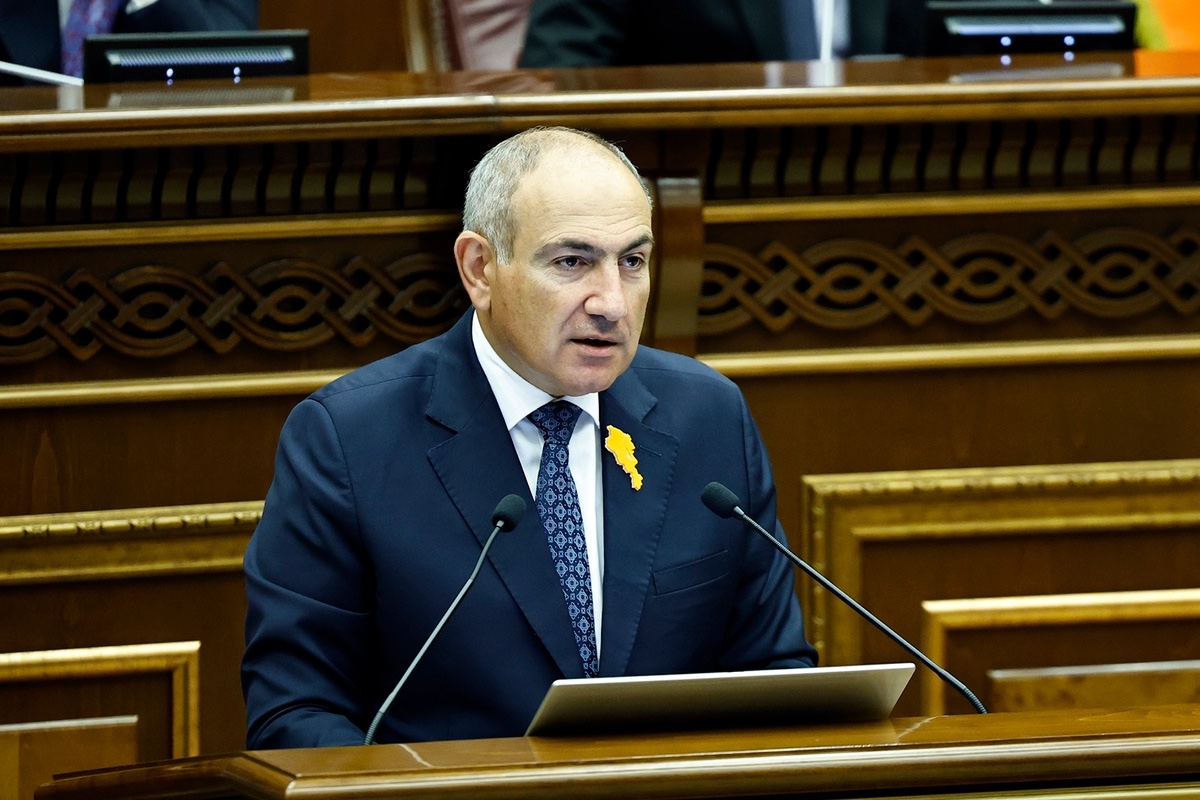
Armenia’s High Commissioner for Diaspora Affairs, Zareh Sinanyan, is reportedly seeking invitations from Armenian American churches and civic organizations for meetings across the United States. There is nothing objectionable about a government official meeting the diaspora. The question is what kind of meeting he seeks, and what our institutions are being asked to lend to it.
The Pashinyan administration cannot expect a warm reception to erase years of strained relations with Armenians abroad. Citizenship should bind Armenians more closely to their homeland, yet new obstacles have made it harder for many to formalize that bond. The government’s confrontation with the Armenian Apostolic Church has been especially damaging. For centuries, including when no Armenian state existed, the Church sustained national and communal life. Churches in America should not be presumed available as stages for an administration that has treated the institution with hostility.
The treatment of diaspora organizations raises similar questions. Armenia Tree Project has spent more than 30 years restoring Armenia’s forests, educating children and sustaining rural livelihoods; it reports planting more than 10 million trees. Reports that it was excluded from the main proceedings of COP17, hosted in Armenia, deserve a public explanation. An administration eager to display its environmental credentials should be equally eager to recognize decades of on-the-ground work.
And there is a question of the messenger’s own credibility. Sinanyan’s record in Glendale did not begin with his present office. During his 2013 City Council campaign, the Los Angeles Times reported racist, homophobic and threatening YouTube comments linked to him, along with a separate 2012 Facebook slur aimed at Mongolians. He initially declined to say whether he had written the YouTube comments and characterized the controversy as a political smear. Rep. Adam Schiff and Los Angeles City Councilman Paul Krekorian were among those who withdrew their endorsements. After winning the election, Sinanyan acknowledged authoring the comments, expressed regret and publicly apologized. In Glendale, acknowledgment came only after weeks of refusing to acknowledge authorship and of attacking critics’ motives. Today, as Sinanyan asks Armenian American institutions to trust him as a representative of a compromised and morally bankrupt government, it is entirely fair to ask what he has done to earn that trust and how he answers for the policies he now represents.
The larger contradiction remains. The diaspora is sought out for donations, investment, advocacy and professional expertise, yet too often finds its concerns brushed aside when they challenge government policy. When officials seek a welcoming audience, they return to precisely the churches and organizations whose independence and judgment ought to command respect. A photograph with community leaders is not evidence of dialogue, much less a repaired relationship.
Advertisement
That should matter to every organization considering an invitation. Hosts may intend courtesy and open discussion; visiting officials may instead use their names, halls and reputations to project communal approval. After the speeches and photographs, the officials return to Yerevan. The organizations stay here. Their leaders must continue to face the Armenian Americans whose contributions, membership and trust sustain them. They should be able to look those people in the eye and explain what was asked, what was answered and whose interests the meeting served.
None of this argues against contact with Armenia. It argues against mistaking access for accountability. If Sinanyan wishes to meet our communities, let him answer difficult questions publicly: Why have citizenship procedures become more burdensome? Why does the government disparage the Church while courting its parishes abroad? Why is the government letting our prisoners of war languish in Baku? What substantive role will independent diaspora institutions have in decisions affecting Armenia? And what will change after he leaves?
Supporting Armenia is not the same as endorsing its current government. The diaspora has supported the homeland through war, independence, reconstruction and loss. It deserves respect, not ceremonial attention on demand. Our institutions have earned their credibility over generations. They should not lend it lightly to an administration that has yet to demonstrate the same regard for them.