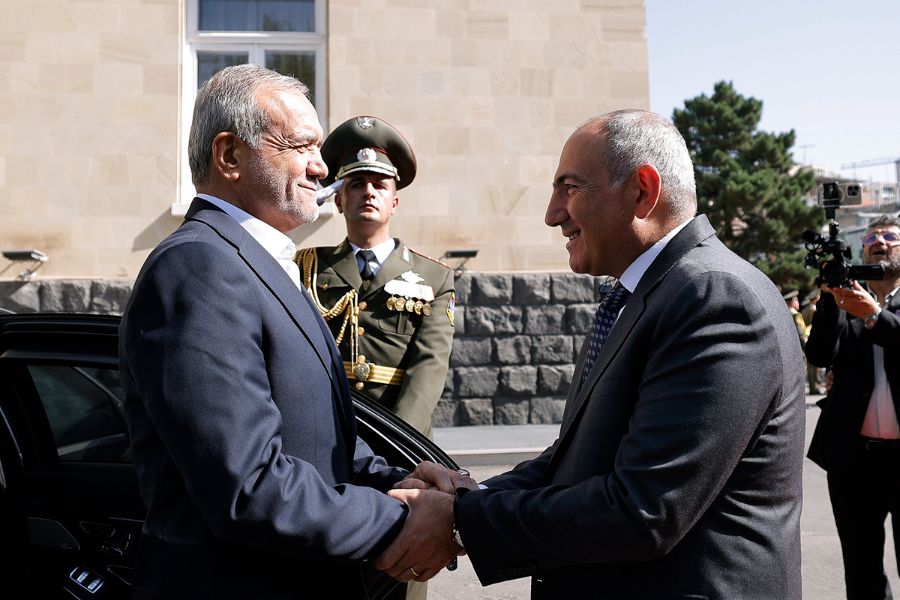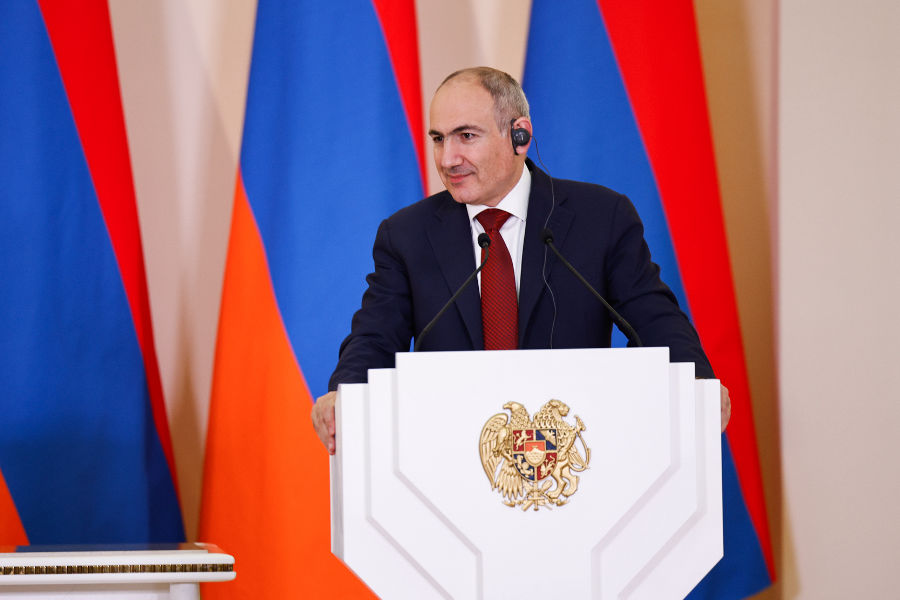
Yerevan in the winter of 2026 is a city gripped by profound dissonance. Inside government offices, a narrative of historic courage and strategic reinvention is assembled with clinical precision and broadcast through the prime minister’s increasingly self-aggrandizing televised monologues. Outside, a population drained by defeat and disillusionment moves through a landscape of national unravelling. The June 2026 parliamentary election, advertised by the ruling Civil Contract party as a cathartic break from a century of tragedy, is in fact a referendum on a project whose risks verge on the irresponsible.
Prime Minister Nikol Pashinyan’s “Real Armenia” doctrine, presented as a bold leap toward border normalization, Western integration and reconciliation with Baku and Ankara, is less a strategic plan than a cascade of concessions repackaged as sovereign awakening. The leader who presided over the collapse of Armenia’s three-decade state-building effort now attempts to recast himself as the author of its salvation, even as he trades institutional capacity and national confidence for promises from powers that have repeatedly demonstrated their readiness to abandon Yerevan when convenient.
The foundational premise of Pashinyan’s foreign policy has an undeniable logic. Russia’s security guarantee was exposed as hollow during Azerbaijan’s September 2023 offensive in Nagorno-Karabakh, which led to the displacement of more than 100,000 Armenians. Yet recognition of that failure has not produced a coherent strategy. Instead, it has given cover for a frantic pivot that concedes leverage before securing even minimal reciprocal assurances.
The White House framework deal of August 2025, celebrated by Pashinyan as a diplomatic masterstroke, is in reality a codification of Azerbaijan’s battlefield gains under the veneer of American sponsorship.
Having denounced the previous political elite for overreliance on Moscow, Pashinyan has tethered Armenia’s fate to the dynamics of Trump-era Washington and Erdoğan’s Ankara, a choice that reflects not strategic daring but strategic desperation.
Advertisement
The crisis of execution: From revolutionary to autocrat
The primary danger lies not in the geopolitical logic of diversifying away from Moscow, which is unavoidable, but in Pashinyan’s inability, or unwillingness, to execute such a transition responsibly. The reformist figure of 2018 has become an increasingly isolated and erratic ruler. His administration functions as a closed circle in which critical decisions on borders, peace and constitutional reform are crafted without debate and delivered to the public as final pronouncements. This is not the behavior of a democratic leader guiding a nation through trauma. It is the behavior of a politician who has mistaken personal authority for national legitimacy.
Institutions that might anchor a difficult transition have withered under his tenure. Government ministries behave as isolated fiefdoms whose effectiveness depends on favor rather than competence. The machinery of state has become so degraded that policy is often announced in a Facebook post, long before civil servants have been briefed.
The much-hyped “Trump Route for International Peace and Prosperity,” the centerpiece of Pashinyan’s economic rhetoric, illustrates the dysfunction. Publicly marketed as a symbol of regional renewal, the railway corridor remains entangled in bureaucratic paralysis. International partners, though careful in public, privately describe frustration with a government that cannot coordinate its own agencies, let alone mobilize a national reform agenda.
The manufactured vacuum and the resurgence of revanchism
Pashinyan’s preference for centralised control has created a political vacuum he now decries as evidence of malign influence. His instinct to denounce domestic criticism as treasonous — or the product of Russian manipulation — has destroyed the possibility of a constructive opposition. Legitimate societal anxiety is dismissed as sabotage. Citizens who question the pace or scope of concessions are branded enemies.
This is not an attempt to cultivate a healthier political culture. It is a deliberate strategy to silence dissent while avoiding accountability for the consequences of his own misjudgments.
The vacuum has been predictably filled by actors who do not share the government’s vision for the state’s future. Exiled billionaires linked to Moscow have aligned with nationalist factions in the diaspora. Their narrative resonates because Pashinyan has failed to articulate a vision that acknowledges the population’s psychological and historical trauma.
Instead of building consensus, he demands compliance with a technocratic agenda that promises Western integration while ignoring the sense of loss that defines the post-Karabakh moment.
The perils of unforced errors: Constitutional quagmire and diplomatic overreach
The peace process was always destined to collide with constitutional reform. Azerbaijan’s insistence on removing the preamble’s references to Nagorno-Karabakh was predictable. Yet, Pashinyan has approached the matter with a mixture of improvisation and pressure tactics, culminating in an ill-prepared referendum framed as a choice between peace and war.
A leader who once promised to elevate civic identity now relies on fear to secure compliance, a shift that exposes the hollowness of his earlier rhetoric.
Diplomatic positioning has been equally miscalculated. Yerevan’s appeal to the European Union for security guarantees disregards Brussels’ long-standing reluctance to provide hard commitments in the South Caucasus. Attempts to play Washington and Brussels against each other have created confusion rather than leverage.
Even more misguided is the assumption that Turkey can be persuaded to chart a course independent of Azerbaijan. The Ankara–Baku axis is foundational to Turkey’s regional strategy. Yet, Pashinyan continues to hint at near-term border openings despite the absence of meaningful movement from Ankara, setting the public up for further disillusionment.
The economic mirage and the hollow state
Economic policy illustrates a deeper problem: the disconnect between the administration’s rhetoric and its actual performance. Pashinyan promises an investment boom but has delivered, at best, cautious interest from foreign partners. Investors remain wary of Armenia’s entrenched oligopolies, inconsistent rule of law and the persistent risks tied to geography and security.
The government’s response has been a mix of subsidies, short-term incentives and highly publicized digital initiatives. None of it addresses systemic obstacles. Customs reform remains incomplete. The energy sector remains dependent on Russian infrastructure. Agriculture continues to suffer from the loss of Karabakh’s hinterland.
Most revealing is the demographic trend. Despite official claims of economic growth, the departure of young and skilled Armenians continues. This is not a judgment on the nation but on its leadership.
Pashinyan’s Armenia feels less like a state rooted in durable institutions and more like a political experiment demanding repeated leaps of faith from a population increasingly unwilling to make them.
Conclusion: Sovereignty as spectacle
Armenia is undergoing a voluntary dismantling of its previous state model without a clear or credible plan for what should replace it. Pashinyan is correct that the inherited framework of Armenian statehood is exhausted. His central error is believing he alone can construct a new one through personal diplomacy and televised exhortation. He has confused rupture with reconstruction and improvisation with leadership.
The “Real Armenia” he promotes is not a strategic blueprint but a political performance. It is shaped by foreign capitals, sustained by slogans and undercut by the decay of domestic institutions. The June 2026 election will force a traumatized electorate to decide whether to endorse a governing style that increasingly mirrors the arbitrariness it once rejected.
Pashinyan offers a bargain: surrender historical claims, endure economic strain and trust his private negotiations. In return, he provides the appearance of sovereignty — complete with high-profile summits and glossy frameworks — while the substance of statehood continues to erode.
The tragedy is stark. The strategic reorientation he champions may be necessary, but the leader implementing it is undermining the very foundations required for its success. Sovereignty cannot be imported from Washington or Brussels. It must be built in Yerevan through institutional strength, political inclusion and honest public discourse. On all three counts, the Pashinyan government has fallen dramatically short.
Armenia is walking a high wire. The danger lies not only in the abyss ahead but in the steady collapse of the platform behind it — a collapse accelerated by the very man who claims to be guiding the nation toward safety.