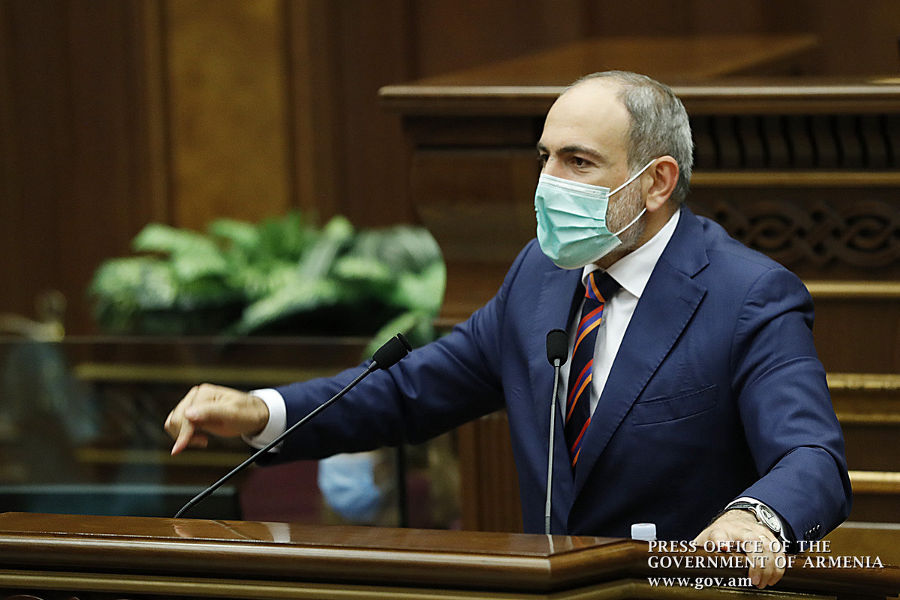
Since the 44-day war, the Armenian government has been frequently criticized for its foreign policy — especially toward Azerbaijan — with many skeptics calling it remissive. However, public debate tends to overlook one relevant detail: the radical shift in foreign policy endorsed by Prime Minister Nikol Pashinyan and his Civil Contract party.
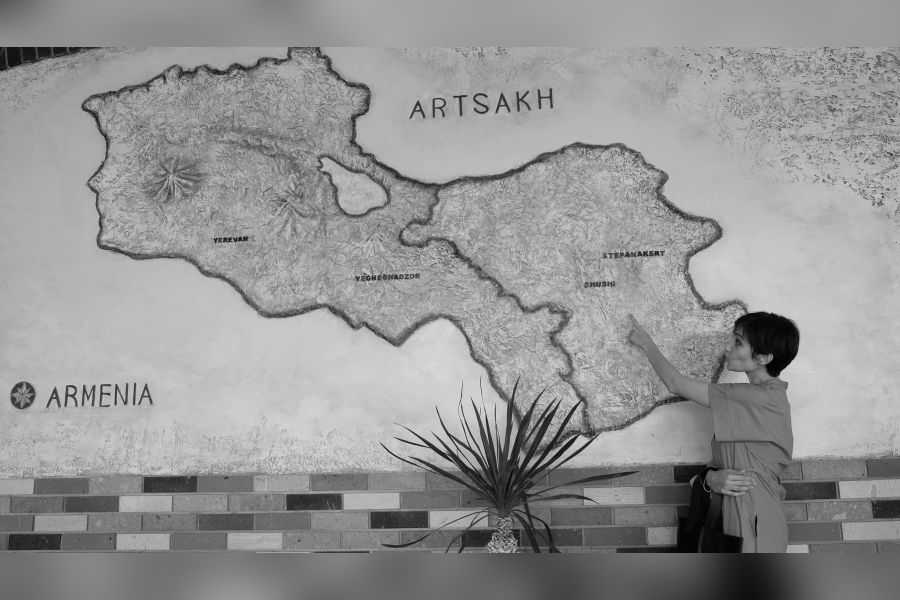
While the prime minister’s recent statements can be read as conciliatory — when not pusillanimous — toward Baku, his pre-2020 rhetoric was completely different. Just six years ago, Pashinyan declared, “Artsakh is Armenia, period,” during an hour-long speech in Stepanakert, the former capital of the Republic of Artsakh (Nagorno-Karabakh). This kind of political discourse was anything but conciliatory; rather, it reflected the maximalist attitudes widespread in Armenian society at the time.
While many Armenians may appreciate such statements for their passion and nationalism, the sad truth is that Pashinyan’s reckless behavior has proved disastrous for both Artsakh and Armenia. Indeed, his ill-considered approach not only didn’t bring Artsakh closer to international recognition or miatsum, but led to a geopolitical catastrophe that caused deaths, refugees and ultimately, the disappearance of an entire region.
In 2018 — when Pashinyan rose to power after the Velvet Revolution — Armenia was in an advantageous position, since it controlled not only the mountainous part of Artsakh, but also the seven surrounding districts and even a handful of Azerbaijani hamlets near Voskepar; nevertheless, the situation was far from secure.
Firstly, the military balance clearly favored Baku, which was investing heavily in building a modern, powerful army. Meanwhile, poor and isolated Armenia — devoid of significant natural resources — couldn’t close the gap.
Moreover, Heydar Aliyev and, later, his son Ilham established strong relationships with both Western and post-Soviet countries, making their nation a strong partner in the energy sector.
Azerbaijan gained leverage to influence the foreign policy of those countries, which had no intention of jeopardizing their trade with Baku. The infamous caviar diplomacy also bore fruit, allowing Azerbaijan to cultivate several pro-Azerbaijani lobbies in Western capitals. As a result, President Ilham Aliyev could rely not only on strong armed forces, but also on Western and Russian inertia toward his revanchist projects.
As if that weren’t enough, the Minsk Group-led peace process was at a standstill, as the two sides couldn’t reach a compromise. Azerbaijan sought to regain complete control of Karabakh at any cost and showed little willingness to make concessions. Armenia, on the other hand, was reluctant to return any of the occupied territories outside Nagorno-Karabakh, claiming they could be conceded only in exchange for Artsakh’s recognition.
In previous years, the Minsk Group presented several potential solutions, all of which were rejected. Armenia appeared largely untroubled by the stalemate, but Azerbaijan grew increasingly frustrated as talks stalled. Many Azerbaijanis came to see diplomacy as a tool used by their enemy to keep Karabakh under Armenian rule. That frustration was made evident in 2016, when Baku launched a military operation against the Artsakh Republic, widely known as the Four-Day War. The goals of that campaign remain unclear today, but it was unmistakably intended to warn Armenia that Azerbaijan could resolve the dispute through military means.
The situation was delicate and demanded skillful diplomacy from Armenia’s leaders. Unfortunately, after the Velvet Revolution, Pashinyan took the opposite approach, which led to provoking Azerbaijan and irritating mediators. The new establishment requested the inclusion of Artsakh’s representatives in the negotiation process, which angered both Baku and the Minsk Group co-chairs.
Pashinyan also rejected the documents previously drafted by the peace platform, insisting on Artsakh’s independence in exchange for territorial concessions. This was at odds with the general mood set by international mediators, who wanted to postpone Artsakh’s status to an unspecified future. To make the situation worse, high-ranking officials delivered inflammatory statements in different circumstances. In August 2019, during a visit to Shushi, Pashinyan proclaimed, “Artsakh is Armenia, period.”
The following March, Defense Minister David Tonoyan unveiled Armenia’s new military doctrine, summarized by the slogan “new war, new territories,” arguing that Armenia should seek to acquire more land if conflict resumed. In August 2020, both the president and the prime minister celebrated the anniversary of the Treaty of Sèvres, presenting it as a “historical fact that continues to be valid.” Such declarations were met with bitterness in Ankara and Baku, feeding calls for revanche.
Whereas Azerbaijan had long been criticized internationally for its uncompromising stance, after 2018, Armenia increasingly became viewed as the obstacle to the peace process. That perception was not unfounded: Yerevan was actively seeking the preservation of the status quo or securing recognition of Artsakh. Pashinyan rejected the plan proposed by Russian Foreign Minister Sergey Lavrov, which would have guaranteed Armenia control not only of Artsakh, but also the Berdzor/Lachin and Karvachar/Kalbajar districts. The proposal didn’t address Artsakh’s independence; however, it was clear that Armenia was unlikely to receive anything more favorable, as no international mediator was willing to satisfy maximalist Armenian ambitions.
Such aspirations were unrealistic, as neither Armenia nor Artsakh could contain Azerbaijan. The government knew of the enemy’s military superiority long before September 2020; after all, foreign observers had no difficulty detecting such an imbalance. Artur Vanetsyan, who headed Armenia’s National Security Service from 2018 to 2019, urged Pashinyan to temper his rhetoric, warning that it would only escalate the situation. By June 2020, the General Staff of the Armed Forces had identified a high risk of a new war, yet the post-Velvet Revolution leadership completely ignored those assessments.
Pashinyan also made a series of questionable defense decisions. He refused to purchase combat drones previously considered by the Serzh Sargsyan administration, opting instead to buy four Sukhoi Su-30SM fighter jets, which were not used during the 44-day war. Another controversial choice was the reduction in the number of officers, severely upsetting the balance among officers, petty officers and soldiers.
The recipe for disaster was ready. War became all but inevitable after skirmishes erupted in July 2020 near Tavush province, with each side accusing the other of initiating hostilities. Azerbaijan claimed Armenia attacked an outpost near Tavush, while Armenia said Azerbaijan attempted a breakthrough at the border. The clashes resulted in casualties on both sides, yet both governments framed the fighting as a moral victory. For Azerbaijan, the Tavush events represented a historical turning point: emboldened by decades of military buildup and pressured by his own public, Aliyev launched the war.
Pashinyan, however, insisted his nation faced no serious threat. He repeatedly claimed that the international community would not tolerate any military aggression from Baku, since Armenia is a democratic and free state. He also expected Russia to side with Yerevan in the event of a new war against Azerbaijan, showing a limited understanding of Russia’s foreign policy agenda. Unfortunately, these assumptions proved disastrously wrong.
On September 27, a new armed conflict broke out. Three days into the fighting, the General Staff of the Armed Forces asked Pashinyan to resume peace negotiations, warning that an Azerbaijani victory was the most likely outcome. The prime minister rejected the request and continued on his path, steering both Armenia and Artsakh toward geopolitical catastrophe.
The rest is history. The nation paid a staggering price for leadership that preferred slogans to strategy and wishful thinking to realism.
If Armenia is to move forward, it must first confront the errors that led to its current predicament. Armenians — when talking about their homeland’s political situation — should never forget the disastrous consequences of the populist policy pursued by Civil Contract and its leader, who has now rebranded himself as a peace-committed statesman.