
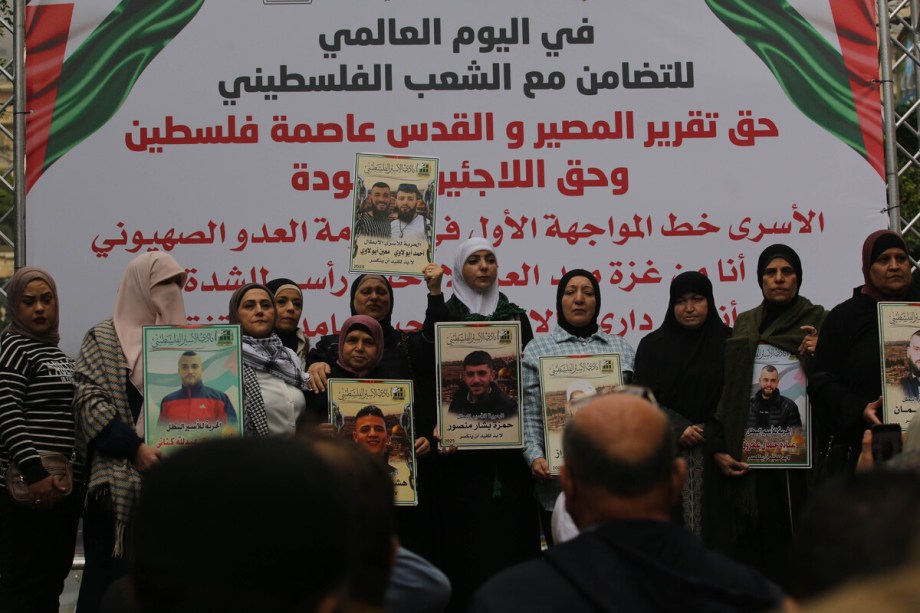
The Geneva Centre for Democracy and Human Rights (Geneva), the International Justice Forum (Istanbul) and the International Union of Jurists (Geneva Branch) on Friday 27th March submitted a formal request to the Swiss Federal Council and the Federal Department of Foreign Affairs to discuss the proposed Israeli law to execute Palestinian prisoners.
The request was submitted to the Swiss Government because of Switzerland’s primary legal role as the depositary state of the 1949 Geneva Conventions.
The letter read: “This request comes against the backdrop of the grave development represented by the approval by the Israeli Knesset’s National Security Committee of a draft law permitting the imposition of the death penalty on Palestinian prisoners. This development constitutes a highly alarming escalation within a broader pattern of systematic policies aimed at undermining the legal protections afforded to protected persons under international law.”
The signatories further noted that should the proposed legislation be enacted, it would constitute a flagrant violation of international humanitarian law, particularly the Geneva Conventions of 1949, which guarantee the protection of prisoners and persons under occupation.
It added: “The adoption of such a law would open the door to executions of a retaliatory and discriminatory nature based on national identity, representing a dangerous escalation in the treatment of Palestinian prisoners, who are considered protected persons under international law. Its implementation in the context of occupation and armed conflict may amount to a war crime.”
In light of the grave consequences of the proposed Israeli law, the signatories called on the Swiss Government to formally and urgently convene an extraordinary meeting of the High Contracting Parties to the Geneva Conventions. They emphasised the need to adopt a clear and unified international position to prevent the enactment or application of the proposed law; to activate international protection mechanisms for Palestinian prisoners as protected persons; and to consider appropriate legal and diplomatic measures to ensure compliance with international humanitarian law.


