I must begin with a confession: I am no expert on diplomacy or the Middle East. What follows is essentially the view of a layman who has, directly or indirectly, lived close to government planning for nearly half a century. Yet that distance from academic expertise perhaps also allows the luxury of some out-of-the-box thinking on why governments and people of Punjab must stop viewing developments in West Asia as something happening on another planet.
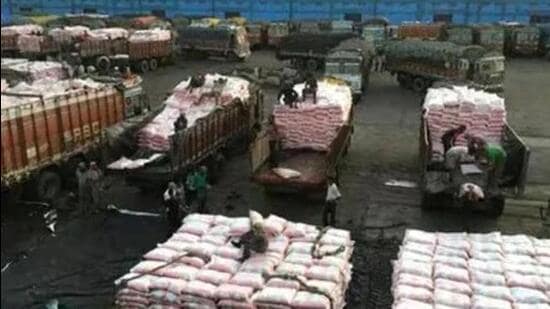
Even if the Hormuz tensions subside tomorrow afternoon, the aftershocks will continue to register on Punjab’s economic seismograph by the next paddy crop and beyond. (HT file photo)
In fact, if we cared enough, we should already be breathing easier over some recent developments. Though the danger of a sudden flare-up still looms, diplomacy appears to have regained quiet momentum. Tones have softened, arc lights dimmed and microphones lowered. That gives us the necessary space to reflect on how the crisis affects India generally and Punjab in particular.
Beyond stereotype
To begin with, the country — and Punjab itself — must get out of the tired “food bowl of India” stereotype. We are already late in realising a crucial fact: Agriculture is not merely about food. It drives or dampens the national economy far beyond the farm sector. Even a failed monsoon is enough to demonstrate this. Our planners acknowledge it in theory, but that acknowledgement rarely translates into economic planning.
Secondly, in a world where technology has blurred boundaries, our geostrategic experts and the media still insist on separating global events from their impact on economically critical zones such as Punjab, Haryana and western Uttar Pradesh. For much of our media, discussing Punjab in the context of a West Asia crisis appears almost laughable. No wonder India’s crucial border state still requires an external poke to wake up to why it must care.
But the reality is that the conflict in West Asia is already time-travelling into the economic future of our farms, mandis, shops and households. In the coming weeks, perhaps even sooner, it may begin to shape the future of the country’s granary more visibly. Even if the Hormuz tensions subside tomorrow afternoon, the aftershocks will continue to register on Punjab’s economic seismograph by the next paddy crop and beyond.
And this is apart from its long-term but critical implications for the security environment in the border state — a separate subject, but one not divorced from our socio-economic realities, as Punjab witnessed painfully during the eighties.
Economic seismograph
Our obsession with treating food merely as food and oil merely as oil robs us of an integrated view of our economy. Developments in West Asia have never been confined to petroleum alone. Diesel prices are only the most visible digit on the econometer. Fertiliser supply chains, pesticides, agro-chemicals and other farm inputs all begin to choke under prolonged instability. These variables shape cost structures and profit margins in agriculture. Ultimately, they define rural socio-economic stability in Punjab.
Beyond agriculture too, West Asia remains vital to the larger ecosystem embracing Punjab’s diaspora, remittances, employment and trade linkages.
Hard numbers first. Nearly 55% to 60% of India’s crude imports normally pass through the Strait of Hormuz. Add to this a substantial portion of the country’s fertiliser and pharma supply chain, besides a large share of the natural gas used for domestic fertiliser production. Any disruption there pushes up import costs sharply. That immediately fattens the subsidy bill and places fresh stress on Punjab’s already input-intensive agriculture through higher diesel costs, tighter fertiliser availability and growing dependence on a strained subsidy regime. The transport sector, the cardio-arteries of the economy, inevitably comes under pressure, too.
The story does not die at the farm gate. Rising input costs and supply uncertainties alter cropping decisions, compress margins and increase the risk of lower yields, particularly during critical kharif cycles. Reduced purchasing power, tighter credit and weaker demand begin to disturb the macro-economic comfort zone. In a state and country where farm and non-farm economies freely crisscross, stress in one sector inevitably radiates into the other.
Geography sharpens this logic further. Geopolitical tremors in West Asia can quickly send economic rumbles into our rural homes, affecting livelihoods and weakening the resilience of the agricultural heartland stretching from Attari to western Uttar Pradesh. That erosion of purchasing power gradually spreads across the wider economy, slowing demand and ultimately production. Factories, mills and offices feel the impact. Layoffs increase. Unemployment, already a spectre, threatens to harden into a nightmare.
Grand Trunk vision
Yet geography alone does not explain everything. Equally important is the prevailing mindset of decision-makers. These psychological factors may be invisible, but their impact is tangible. To hesitant planners, the Middle East often appears farther away than it really is. If a government’s planning-mindset is downcast rather than ambitious, everything lacking political will begins to appear “undoable”. In India, this fallacy has almost become a national pastime.
One such supposedly “undoable” idea is the possibility of an integrated economic corridor linking Iran, Pakistan and India, connecting the Far East on one side with Europe on the other. Today, such a vision is dismissed as fantasy. But in macro-planning, political will and daring often define the difference between fantasy and feasibility.
Punjab itself offers evidence. There was a time when the state suffered fourteen-hour power cuts, when even a domestic airport looked like a luxury, and when repairing a broken road appeared an extraordinary favour to the people. Yet within a few years, Punjab transformed itself into a power-surplus state with multi-lane expressways and two functioning international airports. That is one illustration of what is possible when political will meets economic vision.
The idea of a Middle East–Far East economic link running through Punjab on both sides of the current border did not seem fanciful even to Sher Shah Suri. His Sadak-e-Azam — later the Grand Trunk Road — linked Bengal to Persia through Punjab, Khyber and Kabul. Though conceived for military and commercial purposes, it became a civilisational artery connecting East Asia with West Asia.
But our modern minds still seem too timid to admit and realise Punjab’s immense potential as a cultural and economic corridor of prosperity. “Opening the border” is too simplistic and over-politicised a term to unveil the full range of this potential. What governments here need is a Grand Trunk vision on regional geo-economics. Geography is fixed but a vision for turning it into destiny needs to be daring and dynamic. What’s not attempted is not achieved. bains.bains@gmail.com
The author is a freelance writer and a long-time adviser to former Punjab chief minister late Parkash Singh Badal. Views expressed are personal.