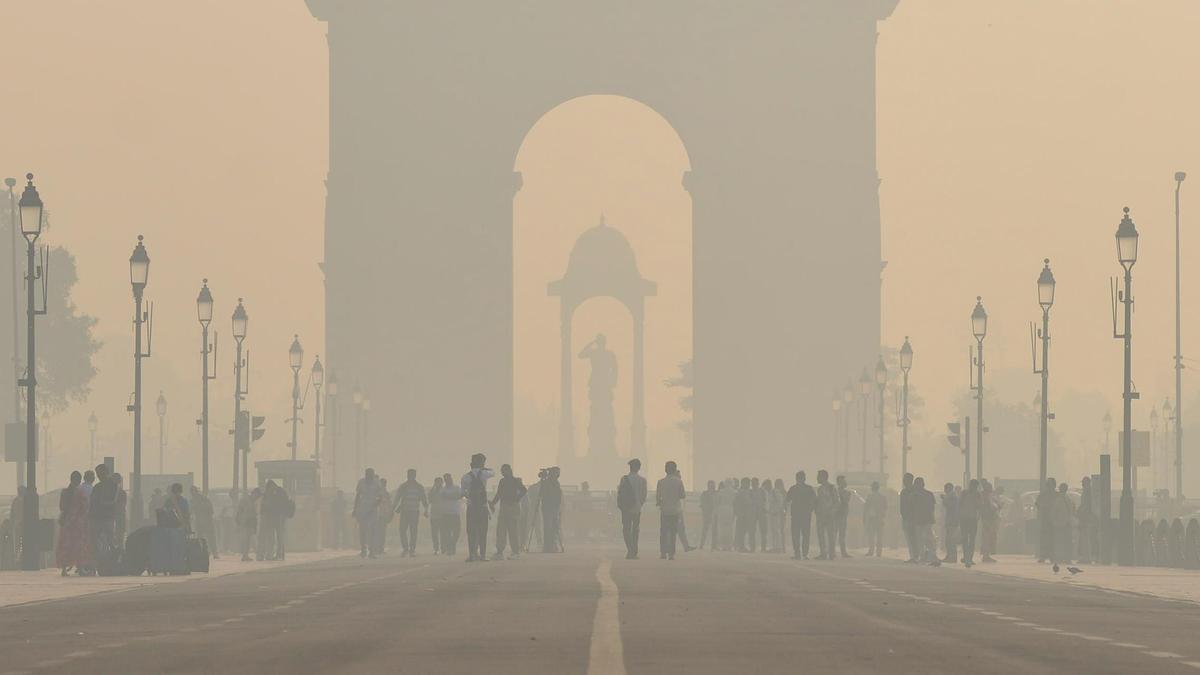
Each winter, as Delhi wakes under a grey sky and the air thickens with smoke, the city relives a familiar crisis. Schools close, flights are delayed, and citizens scramble for masks as the Air Quality Index (AQI) routinely breaches 400 — the “severe” mark. Deepavali prompts a fresh round of breast-beating as the spate of firecrackers adds more smoke and pollutants to the already-unbreathable air. But this is not a seasonal inconvenience; it is a chronic public health emergency. And yet, year after year, we treat it as a passing nuisance rather than a structural failure.
Since 2015, I have personally convened and conducted an annual Round Table on Clean Air with different stakeholders — public health experts, environmentalists, science journalists, Members of Parliament, and even Ministers. Every year I seek different institutional partners and a wider circle of attendees in the hope of enlarging the number of those determined to do something about the air we breathe. Yet, little seems to move.
The consequences of breathing the national capital’s foul air are devastating. Long-term exposure to Delhi’s toxic air can reduce life expectancy by up to 10 years, especially in areas with consistently high PM2
The complexity of Delhi’s problem
Air pollution costs India an estimated 1.36% of its GDP annually — roughly $36.8 billion — due to health-care expenses, lost productivity and premature deaths. Delhi’s reputation as one of the world’s most polluted cities deters international tourists and investors. And yet, resources are being diverted to emergency responses (such as cloud-seeding to precipitate rain, and domestic air purifiers, including for government offices), rather than investing in long-term sustainable solutions.
Delhi’s air pollution is not born of a single source. It is the sum of many small catastrophes — geographical, meteorological, and man-made — that together create a toxic haze. To solve it, we must first understand its complexity. Delhi’s geography itself is a liability. The city lies in a basin-like formation, flanked by the Aravalli hills, which restrict air flow and prevent pollutants from dispersing easily. During October to January, high-pressure systems settle over northern India, leading to temperature inversion — a phenomenon where cooler air near the surface is trapped beneath warmer air above. This inversion, coupled with low wind speeds, locks pollutants close to the ground, turning Delhi into a bowl of poison. This meteorological trap is not unique to Delhi. Cities such as Los Angeles, surrounded by mountains, have faced similar challenges. But they responded with aggressive policy, technological innovation and public engagement. Delhi must do the same.
In Delhi’s case, the natural disadvantages are compounded by human negligence. Delhi NCR has over 3.3 crore registered vehicles. Diesel trucks, two-wheelers, and ageing buses spew nitrogen oxides and PM2.5 particles into the air. Despite BS-VI (Bharat Stage 6) norms, enforcement remains patchy. Rapid urbanisation has also led to unregulated construction, with debris and dust contributing nearly 27% of PM2.5 levels. Covering sites and enforcing dust-control norms are routinely ignored. Factories and power plants in neighbouring States release sulphur dioxide and other toxins. Many still use outdated technologies and lack emission filters.
Also read | Unreliable air and noise data, real-time deception
And then there are the well-known villains everyone likes to blame. Stubble-burning is a hardy perennial: each autumn, farmers in Punjab and Haryana burn crop residue, sending plumes of smoke into Delhi’s skies. Despite court orders and subsidies for alternatives, the practice persists due to economic constraints and a lack of viable machinery. Deepavali celebrations and open waste burning add short-term but severe spikes in pollution. Even “green crackers” have proven ineffective when used en masse.
Delhi’s air crisis is a textbook example of a “wicked problem” — a challenge too complex, cross-cutting, and politically fraught for any single solution. The causes are interlinked, the stakeholders are fragmented, and the consequences are unevenly distributed.
Global measures to emulate
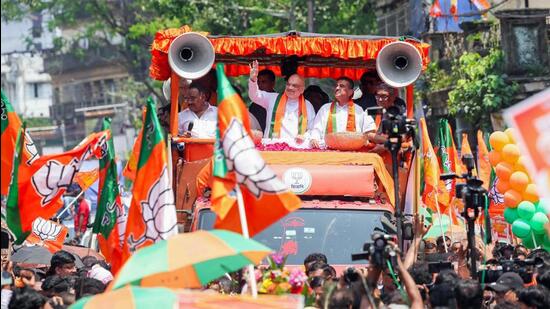
But this year presents a unique opportunity. For the first time, Delhi and its neighbouring NCR States — Haryana, Uttar Pradesh, Rajasthan — are governed by the same political party, the Bharatiya Janata Party. This alignment can end years of intergovernmental friction and enable a joint Clean Air Mission, backed by scientific expertise and empowered implementation and driven by the central government — which is from the same party. For an actionable plan, the three States need look no farther than those places that have resolved very similar problems successfully in the not-too-distant past. London, once known for its notorious “pea-souper” smog, introduced an Ultra Low Emission Zone (ULEZ), charging polluting vehicles and incentivising electric mobility. It also invested in green public transport and retrofitted buildings for energy efficiency. Los Angeles overcame its smog crisis through strict vehicle emission standards, clean fuel technologies, and regional coordination across counties. The worst was Beijing, once infamous for its “airpocalypse,”, where on a visit, two decades ago, I literally could not see out of my hotel window, so thick was the smog. It implemented a multi-year action plan: relocating polluting industries, banning coal in urban areas, and deploying real-time air monitoring. The result: a 35% drop in PM2.5 levels over five years.
Delhi must adopt similar measures — not as isolated experiments, but as part of a sustained, science-led strategy. Delhi urgently needs a Unified Airshed Management Plan that treats Delhi NCR as a single pollution zone. The three States must pool resources, align regulations, and coordinate enforcement across their borders. This must be accompanied by real-time monitoring and public “dashboards” announcing figures and achievements. Transparency builds trust. Citizens must know what they are breathing — and what is being done about it. We must also incentivise EV adoption, electrify public transport, expand metro networks, and deploy electric buses, to reduce reliance on private fuel-burning vehicles. With political will, it should not be impossible to regulate construction and waste: enforce dust-control norms, ban open waste burning, and penalise violators. True, farmers will need to be supported with alternatives: governments must scale up access to Happy Seeders and bio-decomposers, to make stubble management economically viable.
A behavioural issue
Citizen engagement is key. Pollution is not just a governance issue — it is a behavioural one. Campaigns, school programmes, and community initiatives must make clean air a shared responsibility. The persistence of Delhi’s air pollution is not an act of nature. It is a consequence of choices — and a reflection of priorities. If we continue to treat it as a seasonal inconvenience, with headlines every Deepavali and inaction thereafter, we will condemn millions to chronic illness, economic loss, and environmental degradation.
But if we act, with urgency, coordination and courage, we can rewrite the narrative. Delhi can breathe again. The question is not whether we know what to do. It is whether we will do it.
Shashi Tharoor is a fourth-term Member of Parliament (Lok Sabha, Thiruvananthapuram) from the Indian National Congress, and the author of 27 books, mainly about modern India
Published – November 17, 2025 12:16 am IST