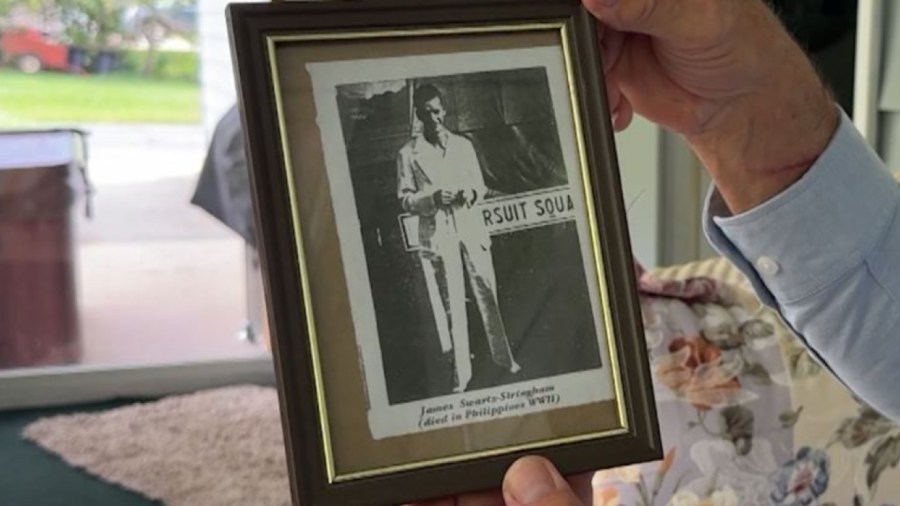
ALTO, Mich. (WOOD) — This Memorial Day weekend takes on a whole new meaning for one West Michigan veteran, as he is remembering a fallen hero much closer to home. After more than 80 years of unanswered questions, Bob Buys’ family finally got the closure they’ve been waiting for.
Buys grew up hearing stories about his great uncle, U.S. Army Air Forces Sgt. James W. Swartz of Webberville. Swartz served during World War II. He was captured in the Philippines and survived the brutal Bataan Death March, only to later die at the Cabanatuan POW camp in 1942 at just 21 years old.
“His mother searched frantically through the government to try to get his remains returned, but of course they didn’t know where he was buried, they just knew that he had died,” said Buys.
Years ago, Buys said the U.S. Army reached out, asking for a DNA sample to identify Swartz’s remains.
“I gave my DNA and then it became personal to me,” Buys said. “Maybe my DNA can help identify him and bring him home, something the family has wanted for over 80 years.”
Buys, a Navy veteran himself, submitted the sample, but never heard back. It wasn’t until last week, while searching online, that he learned his uncle had been officially identified in late 2024.
His remains were laid to rest earlier this month at Summit Cemetery in Williamstown Township.
“Personally, I wish I could’ve been notified,” Buys said. “I would’ve loved to have been at the funeral. But that wasn’t to be the case. I’m just glad he’s home.”
Swartz’s return marks the end of a long chapter for a family that spent generations searching for answers. In the 1950s, Swartz’s mother had written letters to the Army, pleading to know where her son might be buried.
“Dear sirs,” she wrote. “Would you please let me know if there’s any kind of cemetery or burial grounds for the boys who died in World War II in the Japanese prison camp?”
That question went unanswered for more than 80 years.
Through a combination of DNA, dental records, and historical evidence, the Defense POW/MIA Accounting Agency was able to confirm Swartz’s identity.
“Knowing that I supplied my DNA…that small act on my part helped identify his remains,” Buys said. “And now that he’s back, his remains are back on American soil. I feel like this story comes to a happy ending in a way.”
Now, Buys is looking forward to visiting the grave, finally connecting with his family’s history in person.
As we mark Memorial Day, he hopes we don’t forget the meaning behind it.
“He’s one of thousands of men and women that paid the ultimate sacrifice for our freedoms,” Buys said. “And Memorial Day, as much as we want to celebrate with cookouts and family get-togethers, in the back of our minds as Americans, we should remember that somebody paid a price for our freedom.”