GRAND RAPIDS, Mich. (WOOD) — The Big Beautiful Bill could make it more expensive for businesses to borrow funds, automotive manufacturers are dealing with uncertainties on multiple angles and consumers are cutting costs as wages fail to keep up with inflation, a local economic expert says.
Economics professor and associate dean at the GVSU Seidman College of Business Paul Isely stopped in on the News 8 Live Desk to chat about what consumers and local businesses need to know about current economic conditions.
For the full conversation with Paul Isely on West Michigan’s current economic conditions, watch the video in the player above.
Mid-high to high-income people will have more money to spend thanks to tax cuts in the Big Beautiful Bill, he said, so businesses that sell items like luxury goods may be in a better spot.
What to know as multiple West Michigan plants prepare to close
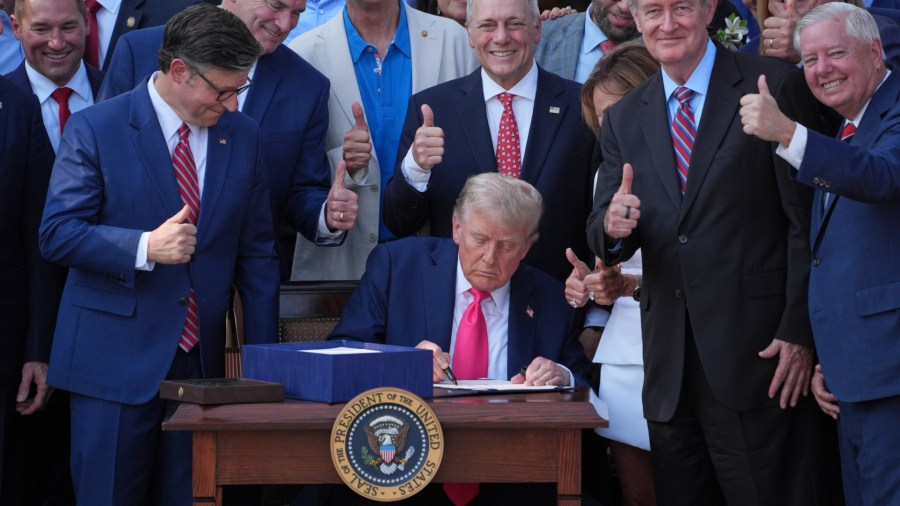
The bill, signed by President Donald Trump on July 4, will also continue to put pressure on interest rates, which will make it more expensive for businesses looking for loans, he said.
While he doesn’t expect Michigan automakers will be heavily impacted by the bill, they are dealing with uncertainty around both tariffs and regulations regarding electric vehicles versus gasoline cars.
“Because those keep moving around, the automakers don’t know what type of car to build and consumers really don’t know what type of car to buy,” Isely said. “So that’s slowing down car purchases. … We had a bubble of car purchases earlier this year as people tried to get ahead of the tariffs, but now we’re having a bit of a slowdown there.”
On Tuesday, the Labor Department said inflation in June was at about 3%, which isn’t as high as some had feared, Isely said.
“The bad news is people’s incomes are going up slower than that, particularly their take-home pay. Because their wages are going up not quite as fast as inflation, but they’re also losing the number of hours they get to work,” Isely said. “The combination of those two things means that the ability for consumers to purchase things went down this month compared to what happened last month.”
The tariff-driven inflation that economists feared begins to emerge
Consumers are already changing their habits by going for lower-priced goods, generic brands and sales, he said. They’re also not going out to eat as often.
“Much all of that has affected businesses here in West Michigan, as we’ve seen restaurants go out of business and we’ve seen shifts around things such as firms such as Kellogg looking for ways to remain competitive in today’s world, which has included combining with other companies,” he said.
The WK Kellogg Co. on July 10 announced Italian chocolate maker Ferrero is set to buy the Battle Creek-based cereal maker.