Chongqing, China – Cambodia has called for stronger cooperation between ASEAN and China in science, technology and innovation, highlighting artificial intelligence (AI), green energy, digital transformation and advanced computing as key drivers of regional economic growth.
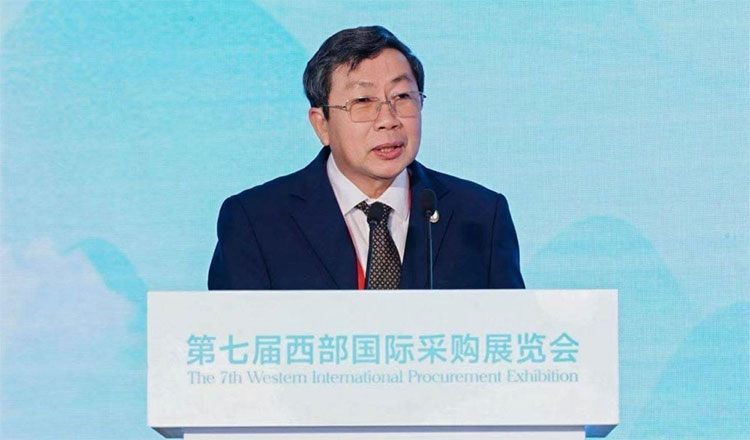
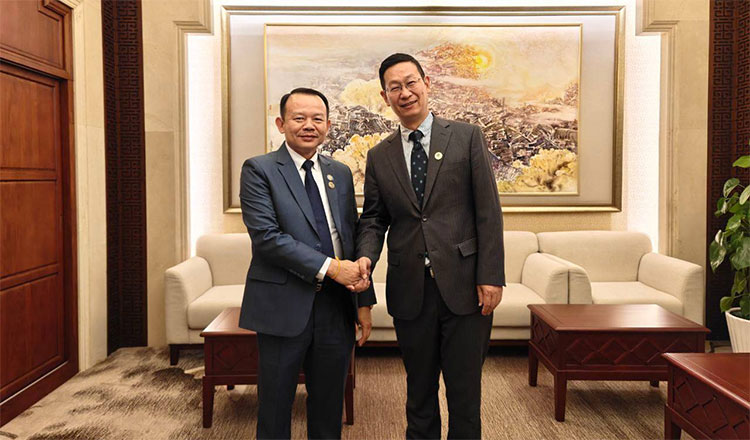
The call was made by Lay Nora, Undersecretary of State at the Ministry of Industry, Science, Technology & Innovation (MISTI), representing Minister Hem Vanndy at the China (Chongqing)-ASEAN Science and Technology Cooperation and Exchange Conference on November 23 during the 2026 ASEAN-China Week.
In his keynote address, Nora said the global industrial landscape was undergoing profound transformation driven by rapid technological advancements, innovation and increasing regional and global interconnectedness.
“For ASEAN and Cambodia, industrialization is no longer defined solely by physical infrastructure or low-cost labor. The future belongs to economies driven by productivity, technology adoption, high-performance computing, artificial intelligence, and sustainable green manufacturing,” he said.
He said Cambodia, guided by the Pentagonal Strategy Phase I, was accelerating its transition towards a technology-driven and sustainable industrial ecosystem.
Nora outlined four strategic priorities for strengthening Cambodia’s technological development and cooperation with ASEAN and China.
The first focuses on deepening science, technology and innovation (STI) collaboration, particularly between ASEAN and Chongqing, through joint research and development, technology transfers and capacity-building initiatives.
He highlighted the importance of stronger partnerships among research institutions, universities and industrial sectors in addressing technological and industrial challenges.
“Real innovation thrives when research institutions, universities, and industrial sectors collaborate,” he said, adding that cooperation could help foster technology startups and promote innovation across the region.
The second priority is accelerating an AI-driven energy transition in ASEAN, as industries increasingly require sustainable energy solutions to support modernisation and economic growth.
Nora said artificial intelligence and digital technologies could play an important role in improving industrial productivity while optimising energy consumption.
“Artificial intelligence and digital solutions are powerful engines not only for industrial productivity but also for optimizing energy consumption,” he said.
He added that Cambodia was actively exploring AI applications to support its national sustainable development goals and ensure that its green transition remained economically viable and technologically advanced.
The third priority involves strengthening regional cooperation in computing power, green computing and smart energy systems.
He stressed the importance of ensuring that emerging technology frameworks, including the ASEAN Digital Economy Framework Agreement (DEFA) and the China-ASEAN Computing Power Network, provide inclusive and non-discriminatory access to advanced computing capabilities.
Cambodia also supports integrating green computing infrastructure with smart energy grids to establish a resilient, low-carbon digital economy.
The fourth priority is empowering small and medium-sized enterprises (SMEs) through digitalisation and stronger national quality infrastructure.
“Small and Medium Enterprises (SMEs) form the backbone of our regional economy,” Nora said.
He said MISTI was committed to digitalising public service delivery and streamlining enterprise registration while strengthening Cambodia’s National Quality Infrastructure, covering standards, metrology and conformity assessment.
These efforts aim to help Cambodian businesses meet international quality and sustainability benchmarks and integrate more effectively into regional value chains.
Nora also highlighted Chongqing’s role as a major inland logistics and industrial innovation hub, noting that the Chinese city demonstrated how physical connectivity, advanced manufacturing and technological innovation could work together to drive regional development.
He called on ASEAN and China to translate their longstanding partnership into practical cooperation, including joint research, investments and projects that would benefit people across the region.
“As we celebrate 35 years of ASEAN-China Dialogue Relations, let us move beyond dialogue and translate our shared vision into tangible projects, joint research, and practical investments,” he said.
“Let us build partnerships that strengthen digital connectivity, promote green development, and generate shared prosperity for the people of ASEAN and China,” he added.
The 2026 ASEAN-China Week is being held as ASEAN and China commemorate the 35th anniversary of their dialogue relations, the fifth anniversary of their Comprehensive Strategic Partnership and the 15th anniversary of the ASEAN-China Centre (ACC).
The event, held under the theme “Strengthening Strategic Partnership to Address Challenges, Promoting Regional Connectivity for Shared Prosperity”, brings together representatives from ASEAN member states and China to strengthen cooperation across various sectors.
Cambodia was represented by senior officials from the Ministry of Foreign Affairs and International Cooperation, the Ministry of Commerce, the Ministry of Information, and MISTI.