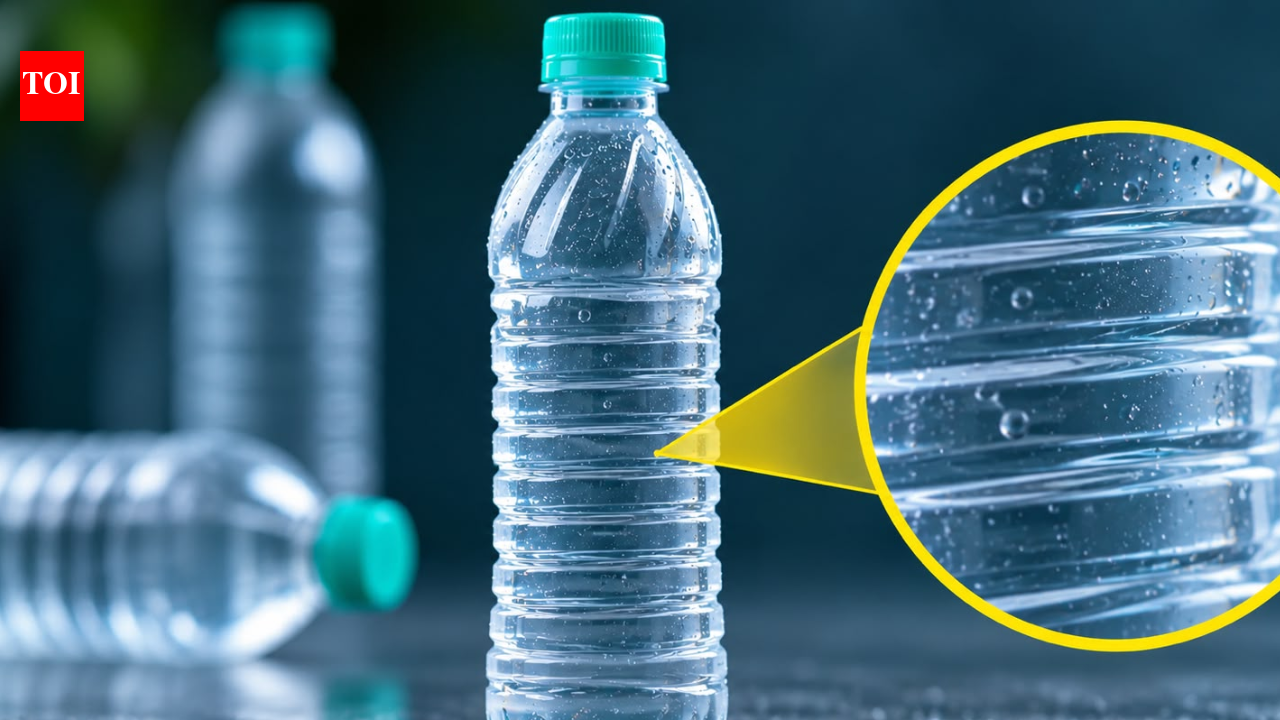
Pick up a plastic water bottle, whether it costs Rs 10, Rs 20 or Rs 40, and take a closer look. Most bottles have a series of ridges, grooves or indented lines running around their bodies. Some have a few prominent rings near the bottom, while others feature patterns that extend almost the entire length of the bottle. They may look like a simple design choice, but these lines serve several practical purposes. From making bottles stronger to reducing the amount of plastic required in manufacturing, these seemingly insignificant details are part of a carefully engineered design. They also help bottles withstand the physical demands of transportation, storage and everyday use. So, why do manufacturers put these lines on plastic bottles, and what would happen if the bottles had completely smooth surfaces? Scroll down to read more.
The lines make plastic bottles stronger
One of the biggest reasons behind the ridges is structural strength. Most disposable water bottles are made using polyethylene terephthalate (PET), a lightweight plastic that is widely used in food and beverage packaging.While PET is durable for its weight, thin plastic walls can easily bend, buckle or deform when pressure is applied. A completely smooth bottle may therefore be more vulnerable to dents and changes in shape, particularly when it is squeezed or stacked with other bottles.The ridges help address this problem. Much like the folds in corrugated cardboard or the curved surfaces used in certain architectural structures, these patterns improve the bottle’s resistance to deformation. They distribute pressure across different sections of the bottle rather than allowing the entire surface to collapse easily. This is particularly useful during transportation, when bottles are packed closely together in cartons, stacked in warehouses and moved across long distances.
They help manufacturers use less plastic
Another important reason is cost and material efficiency. Plastic manufacturers constantly look for ways to make packaging lighter without compromising its ability to hold liquids safely. Using thicker plastic throughout a bottle would make it more rigid, but it would also increase the quantity of raw material required.Ridges and grooves offer an alternative. By changing the geometry of the bottle, manufacturers can improve its structural performance without necessarily increasing the thickness of its walls. This allows companies to produce lightweight packaging while maintaining the strength needed for handling, distribution and storage.The difference may appear insignificant when looking at a single bottle. However, beverage companies manufacture millions of bottles, sometimes every day. Even a small reduction in the amount of plastic used per bottle can translate into considerable material savings across large production volumes.
The grooves also make bottles easier to hold
There is another everyday benefit that people often overlook: grip. A smooth plastic bottle can become slippery, particularly when condensation forms on its outer surface after being taken out of a refrigerator. The ridges provide small areas of texture that make it easier to hold the bottle securely.This is useful when carrying water while travelling, exercising or walking outdoors. It also makes bottles easier to handle when they are partially crushed or nearly empty. The placement and depth of these grooves vary depending on the bottle’s shape, capacity and intended use. Some manufacturers use subtle horizontal rings, while others incorporate deeper indentations or patterned sections.
Do the lines help bottles withstand pressure?
Yes, although their role depends on the type of bottle and the way it is designed. Plastic bottles experience different kinds of pressure during manufacturing, transportation and storage. Changes in temperature and atmospheric pressure can also affect the shape of a sealed container.The grooves provide flexibility in the bottle’s structure, allowing certain sections to bend slightly rather than transferring all the force to one area. This can help reduce unwanted deformation. However, not all ridges are designed for the same purpose. Some are primarily structural, while others are incorporated to improve grip or accommodate the requirements of a particular manufacturing process.For example, carbonated drink bottles generally have more specialised designs because they need to withstand the internal pressure created by dissolved carbon dioxide. Their bases and sidewalls are engineered differently from those of ordinary drinking water bottles.
Why don’t all plastic bottles have the same patterns?
If you compare different water bottles, you will notice that their grooves are not identical. Some have narrow rings around the middle, others have deep vertical indentations, and certain bottles have heavily textured bases.This is because bottle design depends on several factors, including the type of plastic, the quantity of liquid it needs to hold, its shape, manufacturing requirements and the conditions in which it will be transported. A small disposable bottle may need a different structural design from a large water container intended for repeated handling.Manufacturers also consider how much material they can save while ensuring the packaging remains functional and does not leak or become damaged during normal use.
Why do some expensive water bottles have a completely smooth surface?
Interestingly, not every plastic water bottle has visible ridges or grooves. Some premium bottled water brands use smooth, minimalist bottle designs, even though their containers are made from lightweight plastic. This does not necessarily mean these bottles are weaker or that they use more plastic. Their strength depends on several factors, including the quality and thickness of the material, the bottle’s overall shape and the way its walls are engineered. Manufacturers can also use different moulding techniques and carefully designed curves to achieve the required rigidity without prominent external grooves. In the premium segment, packaging is also an important part of brand positioning. A sleek, transparent bottle with a smooth finish can create a more refined appearance and make the product stand out on shelves. The higher price, therefore, is not necessarily a reflection of the absence of ridges. It can also account for branding, packaging choices, sourcing, distribution and the product’s overall market positioning.
Are the lines only for decoration?
Not entirely. Although bottle manufacturers may use ridges and patterns to create a distinctive appearance for their products, these features generally have practical engineering purposes. The next time you pick up a Rs 10, Rs 20 or Rs 40 plastic water bottle, those seemingly ordinary lines are worth a second look. They are not simply decorative marks. They are part of the design that helps keep the bottle lightweight, manageable and strong enough to perform its everyday job. From reducing material use to improving grip and structural stability, a small detail on an everyday object reveals how much thought goes into modern packaging.