Report by Suleiman Siri
Footage and reports of prisoners being executed have resurfaced, prompting renewed condemnation of serious violations committed during Sudan’s war. Yassir Arman has condemned the alleged executions by the Rapid Support Forces (RSF), warned that hate speech could tear the country apart, and called for an end to the war and efforts to rebuild national unity.
Images of grave abuses and horrific crimes, which have become a defining feature of Sudan’s war since it broke out on 15 April 2023, have once again come to the fore. They had briefly subsided following campaigns against such practices as the execution of prisoners, beheadings, disembowelment, and the severing of limbs – disturbing scenes to which Sudanese people had not previously been accustomed.
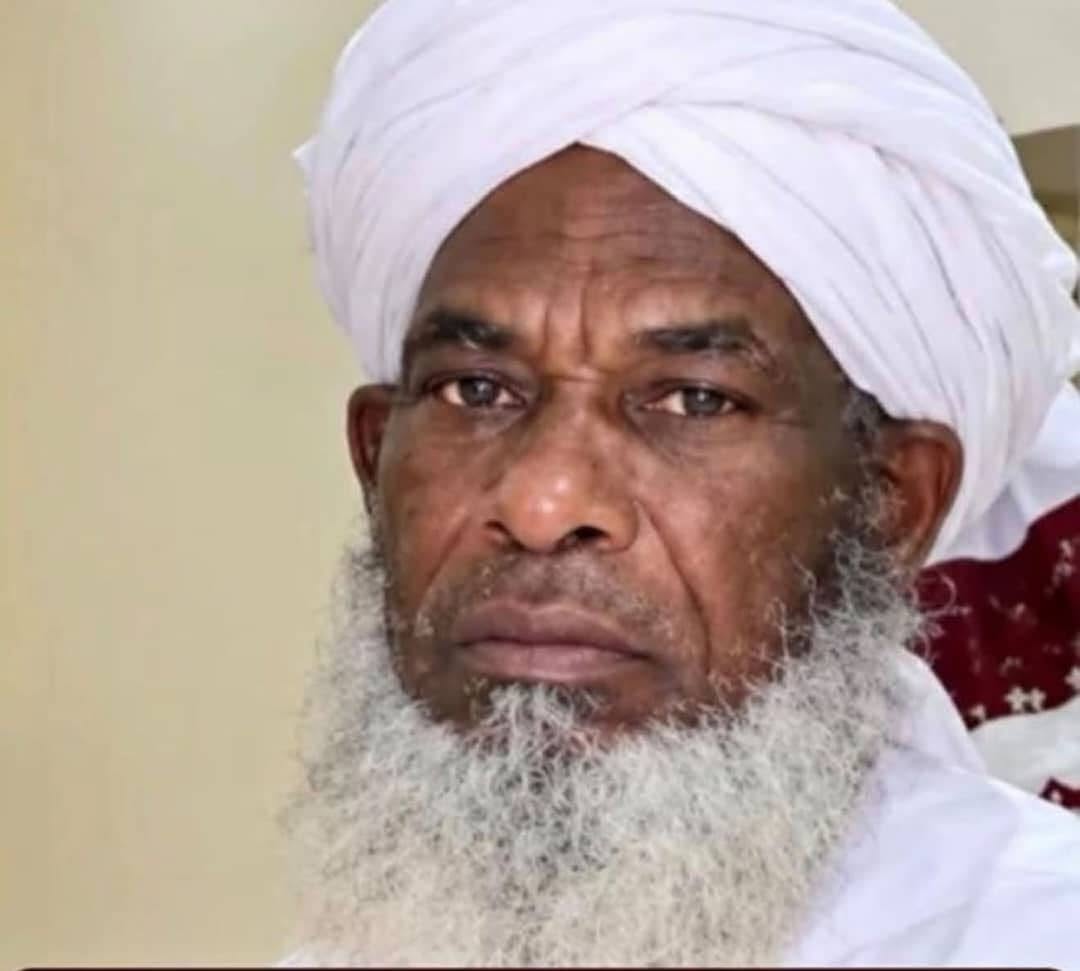
Yassir Arman (File photo: Suppied)
Since the beginning of the war, both parties to the conflict – the Sudanese Armed Forces and the Rapid Support Forces (RSF) – together with their respective allies, have continued to commit such abuses. These constitute clear violations of the rules of engagement, international humanitarian law, and international human rights conventions.
The scenes of physical executions, which have horrified civilians, have not been confined to military prisoners. Unarmed civilians have also been targeted on the pretext of so-called collaboration. Innocent people who remain in areas controlled by either the army or the RSF are accused of collaborating with the opposing side and subjected to trials on the basis of these allegations.
Evidence of this includes the continued detention and prosecution of large numbers of human rights defenders, members of emergency response rooms, resistance committees, and other civilians. They are being held in secret detention centres run by the security cell and military intelligence, as well as in Port Sudan Prison and the notorious Daqris Prison in Nyala, the capital of South Darfur.
Hate speech
In this context, Yasser Arman, head of the Sudan People’s Liberation Movement – Democratic Revolutionary Current, condemned the execution of prisoners by the RSF. He said that violations had spread across Sudan and called for opposition to hate speech and an end to its proliferation. He warned that the country was facing a catastrophic situation that could tear it apart permanently. He stressed the need to end the war and work towards building a Sudan founded on the unity of its people.
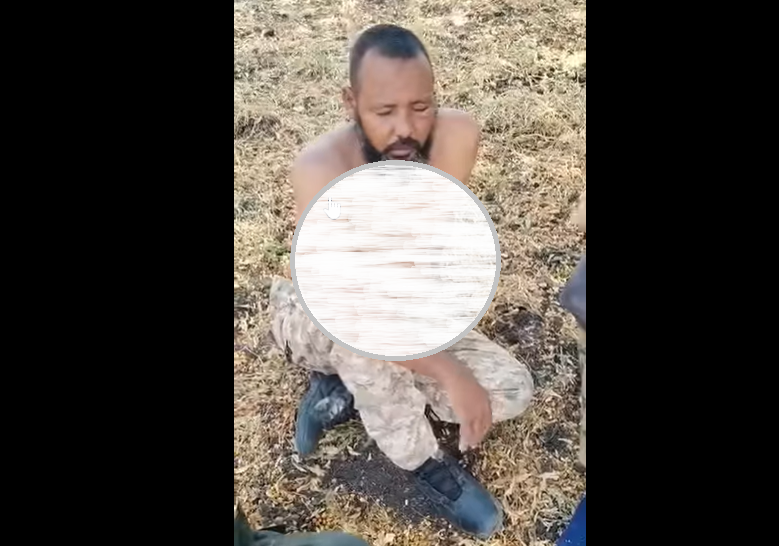
In an interview with Radio Dabanga, Arman said he had followed reports and images circulating in the media concerning the execution of Sudanese Armed Forces prisoners in Blue Nile, including Lieutenant Colonel Osama El Sadig, after their capture.
He said the allegations against the RSF, if confirmed, would constitute a fully-fledged war crime and a violation of international humanitarian law, adding to the other war crimes committed by both sides.
“The RSF and its allies must explain to the public what happened,” he said.
Arman held the RSF responsible for the crime, describing it as not the first of its kind. He recalled that numerous crimes had been committed in Darfur, Kordofan, Khartoum, Wad Madani, Sennar, and across Sudan. He called for an end to crimes committed by both parties, rather than just one side.
He warned that incitement against one tribe or another would do the country no good. Sudan, he said, now needed people who could unite the country, comfort its people, and, above all, protect civilians. He pointed out that human rights conventions and international humanitarian law oblige the parties to the war to protect civilians, ensure the delivery of humanitarian assistance, and confront the humanitarian catastrophe.
“War has existed for thousands of years in human history, and rules, regulations, and limits have been established to govern it,” he said.
Arman noted that if armies wanted to fight one another, they should not do so over the heads of orphans, bereaved families, women, and children. He said the current war had become more dangerous than previous conflicts, particularly because of the use of drones, which could reach anywhere and attack people in their everyday lives.
Direct dialogue
Yasser Arman, head of the Sudan People’s Liberation Movement – Democratic Revolutionary Current, said he believed the Sudanese Armed Forces needed to reconsider their position on a ceasefire.
“Even in the absence of a ceasefire, I see no justification for their failure to engage in direct dialogue with civilian forces opposed to the war, both inside and outside Sudan,” he said.
“I also see no justification for the Sudanese Armed Forces failing to put forward a comprehensive and objective position, with clear demands for ending the war, and presenting these to the Sudanese public, as well as to the RSF, at regional and international levels. War is not the only means of achieving demands.”
Arman questioned whether it would not be easier and quicker for the parties to the conflict to engage in dialogue rather than communicate through drones, in order to address the humanitarian catastrophe, provide food for those in need, and protect civilians.
He warned that developments between Sudan and Ethiopia were damaging the prospects for peaceful coexistence.
“Although we recognise that current regional alliances are making dialogue between the two sides more difficult, why do the African Union and the Intergovernmental Authority on Development (IGAD) not take action to open channels of dialogue between them? Geopolitical and regional wars will lead to the erosion of state sovereignty, the security of citizens and territory, and the destabilisation of borders. We need dialogue before it is too late,” he said.
Humanitarian catastrophe
In the interview with Radio Dabanga, Arman stressed that Sudan deserved better than the tragic conditions people were witnessing these days. He called for opposition to hate speech and an end to its spread among the country’s tribes, which, he said, deserved far better than what was happening. He noted that these tribes, communities, and geographical regions had made significant contributions to Sudan’s history.
“Incitement against one tribe or another will do our country no good,” he said.
He appealed to all Sudanese, both inside and outside the country, to unite to avert the humanitarian catastrophe. He said civilians were living in poverty and displacement, having been unjustly driven from their homes. He stressed the need to end the war and establish foundations and ethical principles rooted in the values of the Sudanese people.
“It pains us to see Sudanese people being humiliated, degraded, and stripped of their dignity in all areas affected by the war, whether through displacement or seeking refuge elsewhere. These are issues to which we must all pay attention,” he said.
Arman warned that the war would eventually end, but that hatred which had taken root in people’s hearts would not disappear easily and would prevent Sudanese people from building a shared future.
“We want to build a shared future, a future belonging to all Sudanese men and women. What unites us is greater than what divides us, despite everything happening now. The war will end through negotiations, but the victims will not return, nor will those who have been driven from their homes, impoverished, and forced to leave their possessions behind,” he said.
Arman dismissed the promotion of the conflict as a so-called “War of Dignity”, saying it was not a war for dignity but one that had stripped citizens of theirs. He also rejected the claim that it was a war to establish Sudan, arguing that it was instead a war to destroy the country.
He said Sudan was now weaker than at any previous time and that its citizens had been impoverished on an unprecedented scale. The overriding slogan, he said, should therefore be: “How do we stop this war?”
Sufi orders
Yasser Arman called on leaders of Sufi orders and tribal elders to establish contact with one another. He said he was directing appeals to all of them, particularly senior traditional and religious leaders.
“I am sending messages to all of them. I ask the senior leaders, for example, for Nazir Mahmoud Madibo to contact Nazir Saad Bahr El Din, and for Nazir Saad Bahr El Din to contact all the tribal leaders in Darfur. All Sufi leaders, without exception, should contact one another to strengthen peaceful coexistence,” he said.
He called for an agreement to allow any Sudanese citizen, in any area of the country, to obtain official documents. He said anyone wishing to perform the Hajj pilgrimage, whether a woman or a man, should be given the opportunity to travel and return, regardless of whether they came from Nyala or Khartoum.
“Families must be given the opportunity to meet one another in all areas affected by the war,” he said.
Arman said freedom of movement and residence were among the rights guaranteed under international humanitarian law. He called for students wishing to sit the Sudanese Certificate examinations to be allowed to do so in all parts of Sudan, noting that this would help unite citizens who wanted to preserve the unity of the state.
“The state is not united simply by travelling to Um Dafug or returning to Khartoum. It is united by allowing all citizens, who are all victims of a war in which they played no part, to exercise their natural and constitutional rights,” he said.
Arman explained that before discussing political issues, citizens wanted the right to life, security, food, water, shelter, and medical treatment. He stressed that these were the important priorities, rather than the approach adopted by officials on both sides of the war. He cited the actions of Kamil Idris, whom he described as a humanitarian catastrophe for Sudan.
Arman addressed both parties to the conflict, saying:
“You have gone too far in this war. It has destroyed our society and humiliated our people on both sides. We are all one family, and we cannot separate ourselves from one another along tribal lines. Many of us are married to people from other tribes.”
Rebuilding Sudan
Through Radio Dabanga, Yasser Arman sent greetings to all Sudanese people living in areas affected by the war, where they are enduring severe hardship as famine threatens their communities. He called for an end to the war and for unity to build a new country that embraces all its people.
Arman expressed confidence that Sudan would be rebuilt.
“We must unite, whether we come from the west or east, the north or south, or the centre. This is our country, and we must preserve it and move it forward towards a bright future,” he said.
Arman observed that many countries had experienced wars, but argued that the most important thing was for people to learn consciously from conflict and understand the reasons behind its outbreak. He attributed the causes of Sudan’s war to the collapse of rural society.
He continued:
“As a result, people in rural areas have come to speak according to the length of the gun they possess. In the countryside, if you have a Kalashnikov, you eat for free. These are the slogans that govern people’s lives.”
He said rural areas should instead become places for agriculture, pastoralism, education, roads, and infrastructure, with strong connections to the cities.
“We must address these issues. Sudan must be a country of equal citizenship without discrimination, belonging to everyone. What unites us is greater than what divides us,” he said.