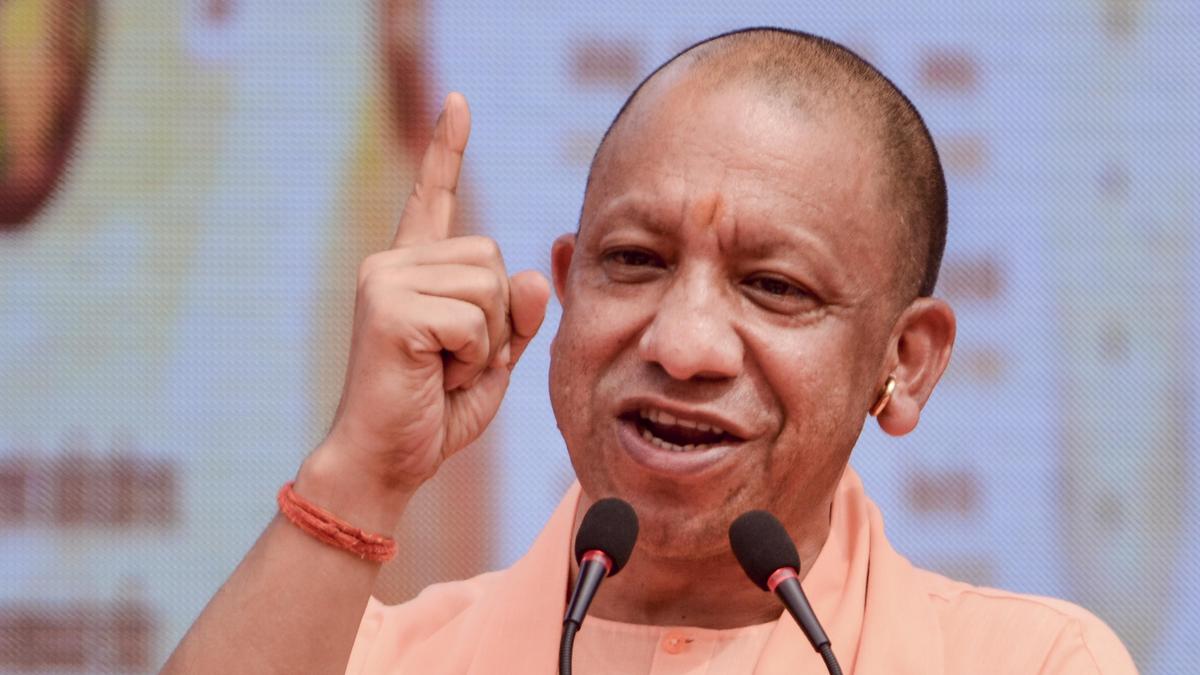
Uttar Pradesh Chief Minister Yogi Adithyanath
| Photo Credit: PTI
With hardly two months left for Uttar Pradesh assembly polls and the 18th Uttar Pradesh Legislative Assembly (May 2022- March 2027) nearing completion, question marks have been raised over the fewer days/meetings of the Legislative Assembly in the last five years.
Editorial | Stoop to conquer: On the Opposition’s seat-sharing ahead of U.P. polls
As the 18th Uttar Pradesh Legislative Assembly functioned for only 84 days, an average of 17 days a year, Opposition parties and constitutional experts in the State said fewer functioning days directly limit legislative oversight, and MLAs lose opportunities to raise constituency-centric issues.
They added that in a State having a population of over 25 crores (250 million people), at least 50 days of Assembly sessions per year, similar to the Lok Sabha, are necessary.
As per the data accessed by The Hindu and reverified through the data available with PRS Legislative Research as well as the U.P. Legislative Assembly Official Website, the State Assembly functioned for 16 days in 2022, 20 days in 2023, 16 days in 2024, 18 days in 2025 and 14 days in 2026 till now. The Assembly functioned for only over 500 hours in the last roughly five years in 15 sessions. In comparison, the 17th Lok Sabha, which functioned between June 2019 and May 2024, functioned for 274 days, across 15 sessions, averaging 55 sitting/days per year.
“The nearing conclusion of the tenure of the 18th Uttar Pradesh Legislative Assembly presents an unsettling indictment of legislative governance in India’s most populous State. A House entrusted with representing more than 25 crore citizens reportedly sat for only 84 days over its five-year tenure, averaging just 17 sitting days a year. Such infrequent sittings are not a matter of administrative convenience; they strike at the heart of the constitutional scheme of accountable government. For a State grappling with enormous developmental challenges, law-and-order concerns and a population larger than that of most countries, such limited legislative engagement is indefensible. If the Lok Sabha can meet for around sixty days annually, Uttar Pradesh should institutionalize at least fifty sitting days every year as a constitutional minimum. Democracy is not sustained merely by periodic elections; it survives through continuous legislative vigilance. A Legislature that seldom meets risks converting representative government into a constitutional ritual and reducing executive accountability to an illusion. Such a trend ought to alarm every citizen who values constitutionalism, democratic oversight and the rule of law,” said Syed Mohammad Haider Rizvi, an expert on Constitutional Law and Legislative Processes and practicing advocate based in Lucknow.
Sudhir Panwar, a senior Samajwadi Party (SP) leader said, “the Constitution distributed power and responsibility between legislature and executive for efficient working of democratic system. The legislature is responsible for oversight on functioning of executive and budget scrutiny. There is a fine balance between executive and legislative; fewer sitting disturb that balance in favor of the executive. The other dimension is relationship between fewer sitting and concentration of power in political system and those at helm of affairs as Chief Minister. In state assembly for continuous working, the committee system like Parliament needs to be introduced,”.
Highlighting the Constitutional provisions, Mr. Rizvi added that when the Assembly sits for barely a handful of days each year, legislative oversight becomes diluted, financial scrutiny under Articles 202 to 207 becomes truncated, and the representatives of the people are deprived of sufficient opportunities to raise constituency-centric concerns, and the inevitable consequence is an unhealthy concentration of power in the Executive, contrary to the spirit of constitutional checks and balances.
“The Constitution of India envisages a Legislature that is not a passive spectator but an active constitutional check upon executive authority. Articles 163 and 164 make the Council of Ministers collectively responsible to the Legislative Assembly, a responsibility that can be meaningfully enforced only when the House meets frequently enough to question, debate, scrutinize, and hold the Government to account. Likewise, Article 174 requires the Legislature to meet at regular intervals and clearly contemplates a living, functioning institution rather than one that assembles merely to satisfy the minimum constitutional formality. In constitutional theory and democratic practice alike, the Legislature is the foremost forum through which the sovereign will of the people finds expression,” he said.
Published – November 23, 2026 02:20 am IST