Sovereign wealth funds are stateowned investment vehicles established to advance macroeconomic objectives through the management and investment of public asset The International Monetary Fund classifies these funds into five broad categories: stabilization funds, savings funds, reserve investment corporations, pension reserve funds, and development funds. The Syrian Sovereign Wealth Fund is most likely to fall into the final category, serving as an instrument to support economic development and reconstruction.
In a white paper presented as a national contribution to the establishment of the Syrian Sovereign Wealth Fund, Strategic Visions and Necessary Steps for the Syrian Sovereign Wealth Fund, the central premise is clear: public wealth is a national trust that must be managed professionally, efficiently, and transparently. The paper advocates drawing on international expertise, adopting the Santiago Principles, and pursuing associate membership in the International Forum of Sovereign Wealth Funds (IFSWF) as part of a broader institutional capacitybuilding effort at a time when Syria faces the immense challenge of economic reconstruction, investment mobilization, and resource optimization.
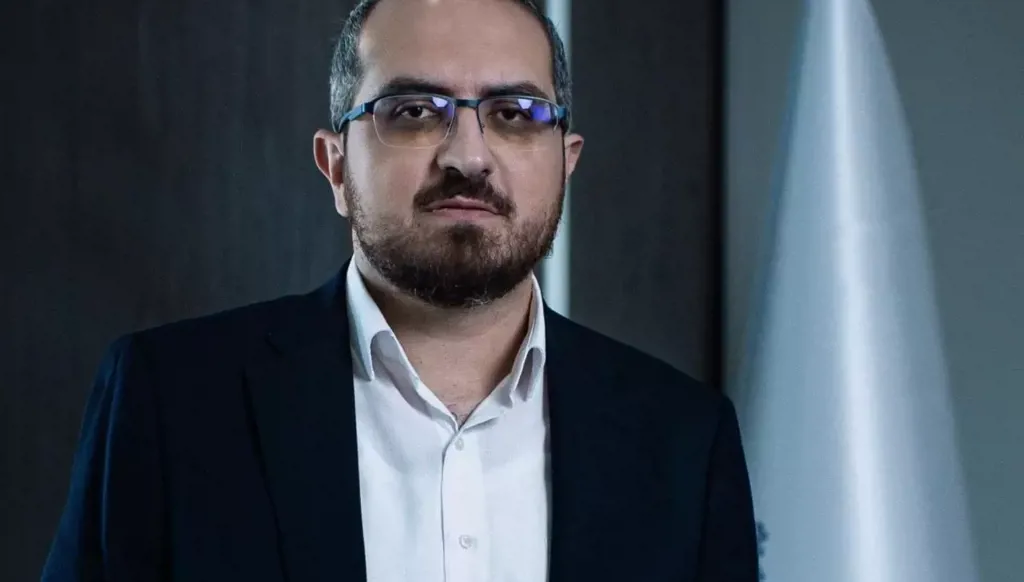
Established by Presidential Decree No. 113 on June 24, 2025, and later reinforced by Presidential Decree No. 191 of 2026 appointing Engineer Omar Samer AlHalabi as Chairman of the Board of Directors, the Syrian Sovereign Wealth Fund is among the newest sovereign wealth funds in the world. According to an April 2026 report by IE University and Spain’s ICEX, 109 sovereign wealth funds collectively manage approximately $15.1 trillion in assets worldwide.
Why Syria Should Embrace the Santiago Principles
As the prospective 110th sovereign wealth fund, Syria has little reason to reinvent established international practices. Instead, it should make an unequivocal commitment to the Santiago Principles, the globally recognized governance framework adopted by sovereign wealth funds around the world.
Developed in 2008 with IMF support and named after Santiago, Chile, where the agreement was finalized, the Santiago Principles consist of 24 Generally Accepted Principles and Practices (GAPP). Their purpose is to promote transparency, accountability, sound governance, and prudent investment management.
For Syrian citizens, these principles address many of the questions surrounding the new fund. They establish clear standards regarding legal foundations, organizational structures, and the relationship between the fund and the state. They require transparency concerning the fund’s objectives, sources of capital, withdrawal and expenditure rules, governance arrangements, managerial responsibilities, and operational independence. They also call for regular financial reporting, internationally recognized accounting standards, external oversight, and clear disclosures regarding investment objectives and decisionmaking processes.
At their core, these principles aim to ensure that sovereign wealth serves the public interest while maintaining institutional credibility and investor confidence.
Preserving Wealth While Driving Economic Transformation
The principal objectives of any sovereign wealth fund are generally well understood: preserving wealth for future generations, generating sustainable financial returns, managing public assets efficiently, supporting financial stability, and financing economic transformation.
To strengthen its institutional standing, the Syrian Sovereign Wealth Fund should pursue associate membership in the International Forum of Sovereign Wealth Funds. Such a path would follow precedents established by countries including Ethiopia, Brazil, Mongolia, the Philippines, India, Guyana, Indonesia, and Malaysia, all of which initially engaged with the forum through associate membership arrangements.
For Syria, participation would not merely confer international recognition. It would provide access to professional networks, governance expertise, peer learning, and best practices that could help accelerate institutional development.
Turning Dormant Assets into Economic Engines
The Syrian Sovereign Wealth Fund represents a rare opportunity to create an institution capable of protecting and expanding national wealth while transforming underutilized public assets into engines of production, income generation, and employment.
Whether that opportunity is realized will depend on several factors: the clarity of the fund’s mandate, the effectiveness of its management, the independence of its investment decisions, and above all its ability to earn public trust.
Sound governance begins with a comprehensive inventory of the assets entrusted to the fund. Establishing a unified digital asset register should therefore be treated as a foundational priority. Such a database would record ownership structures, legal status, economic valuations, financial obligations, and operational conditions.
Different assets require different solutions. A dormant industrial facility, an undeveloped parcel of land, and a financially distressed state enterprise each demand distinct forms of assessment and intervention. Independent asset valuations would enable policymakers to determine which assets should be rehabilitated, leased, restructured, developed through partnerships, or divested when doing so serves the public interest.
Governance as the Cornerstone of Success
A successful sovereign wealth fund requires more than financial resources. It requires institutions.
The fund’s board should bring together expertise spanning investment management, finance, law, industry, and risk management, while operating under publicly disclosed conflictofinterest rules. Executive management should be appointed exclusively on merit and governed by clearly defined performance indicators.
This governance structure should be reinforced by independent external audits, periodic financial and operational reporting, and transparent disclosure practices that allow citizens to understand how public assets are being managed, while safeguarding commercially sensitive information where necessary.
In this context, the Santiago Principles offer a practical benchmark for governance, accountability, investment discipline, and risk management. Associate membership in the IFSWF would enable Syria to benchmark itself against international standards while conducting institutional gap assessments, implementing targeted reforms, and engaging in peertopeer exchanges with more established sovereign funds.
Ultimately, however, institutional credibility will depend not on membership status but on the consistent application of sound governance practices.
Lessons from India: Leveraging Public Capital
Useful lessons can be drawn from the experience of India’s National Investment and Infrastructure Fund (NIIF), an associate member of the IFSWF.
The NIIF operates as a coinvestment platform that combines government capital with funding from institutional investors while maintaining professional management and operational autonomy. Its investment activities span infrastructure, private markets, and strategic sectors, illustrating how public resources can be leveraged to attract additional capital, expertise, and privatesector participation.
For Syria, a similar approach could involve developing bankable projects and offering them through competitive frameworks supported by independent asset valuations. Specialized platforms in sectors such as energy, industry, logistics, and infrastructure could combine sovereign fund resources with private investment, technology transfer, managerial expertise, and market access.
Success would be measured not merely by public spending but by the amount of additional investment attracted, the quality of strategic partners secured, and the longterm viability of projects without perpetual government support.
Another valuable model is Malaysia’s Sarawak Future Generations Wealth Fund, which became an associate member of the IFSWF after its establishment in 2024.
Designed to transform nonrenewable resource revenues into sustainable financial wealth, the fund emphasizes capital preservation, diversification, profit reinvestment, and strict limitations on withdrawals.
Its experience offers an important lesson for Syria: a portion of sovereign wealth returns should be protected and reinvested to generate prosperity not only for current citizens but also for future generations.
Ethiopia Investment Holdings (EIH), which joined the IFSWF as an associate member in 2022, provides another instructive example.
Its approach focuses on improving the governance of stateowned enterprises, attracting coinvestment, and implementing international financial reporting standards.
The key lesson for Syria is the importance of developing tailored restructuring plans for individual enterprises. Such plans should include financial normalization, management reform, financing assessments, operational modernization, and executive compensation linked to measurable performance outcomes.
The fund’s investment strategy should prioritize projects capable of restoring Syria’s productive capacity, maximizing the efficient use of domestic resources, strengthening links between agriculture and industry, and expanding export opportunities for Syrian products.
Investment decisions should be guided not by shortterm considerations but by their ability to generate sustainable economic activity, create jobs, raise productivity, and strengthen longterm national competitiveness.
Building Public Trust Through Results
Ultimately, the Syrian Sovereign Wealth Fund’s legitimacy will depend on the confidence of the people whose wealth it manages.
Syrians have a fundamental right to know how public assets are administered, where investments are directed, and how the returns generated benefit society. They expect the fund to support projects that create livelihoods, improve living standards, and provide future generations with reasons for optimism.
The fund will fulfil its purpose only when public assets are transformed into productive investments, when those investments generate employment and income, and when the resulting returns contribute meaningfully to development across the country.
The greatest test of the Syrian Sovereign Wealth Fund will not be the scale of its assets, but its ability to convert national wealth into sustainable prosperity, institutional credibility, and longterm economic renewal.
This article was translated and edited by The Syrian Observer. The Syrian Observer has not verified the content of this story. Responsibility for the information and views set out in this article lies entirely with the author.