After a year marked by flooding, drought and fire, New Mexico farmers are calling on state officials to take action they say is needed to preserve agricultural land and better manage the Rio Grande.
ALBUQUERQUE, N.M. – After a year marked by flooding, drought and fire, New Mexico farmers are calling on state officials to take action they say is needed to preserve agricultural land and better manage the Rio Grande.
Speaking ahead of an open house hosted by the New Mexico Office of the State Engineer, farmers said river management issues have contributed to challenges facing communities and agricultural operations along the Middle Rio Grande.
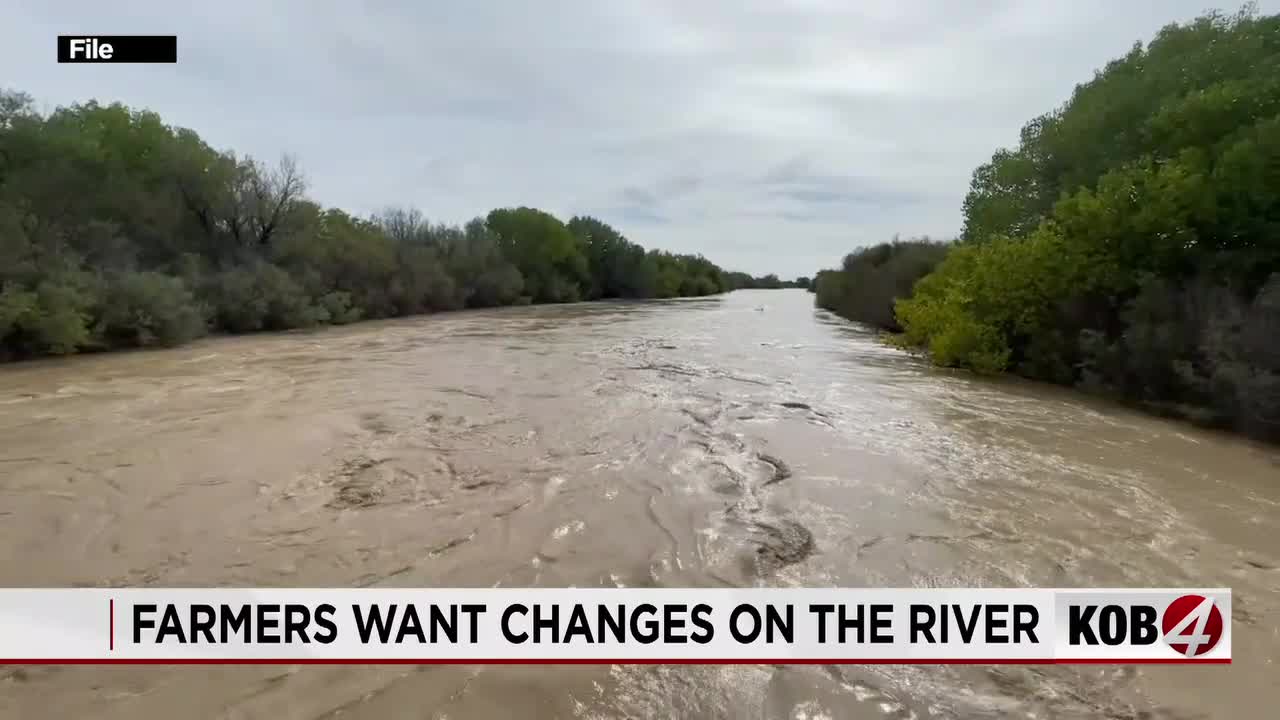
The farmers contend invasive species growing along the Rio Grande have helped fuel fires near their land. They also argue flooding has been worsened by elevated levels of sediment in parts of the river system.
“We see that it is the government’s responsibility. It is governmental agencies that are responsible for it,” farmer Martin Haynes said.
The group is asking the Office of the State Engineer to remove invasive species along the Middle Rio Grande, prevent unauthorized diversions of river water, reduce and eliminate New Mexico’s water debt to Texas, and end water restrictions affecting the Middle Rio Grande and Albuquerque.
Among those advocating for changes is 84-year-old farmer Nettie Jones of Socorro County.
Jones said she and her husband moved from Albuquerque to Socorro County to grow alfalfa and spend more time with their children.
“My son started a business, and we started a farm,” Jones said.
According to Jones, crops had grown on the land since 1830, producing food and livestock feed for generations.
She said drought conditions left farmers with too little water for irrigation.
“This past year, we were able to water twice. That’s not enough for the fields. And then we get flooded. That took care of our fields. They’re basically dead,” Jones said.
Jones said flooding that reached Socorro County on Oct. 26 was worse than expected. She said water rose to 4 feet inside her living room about 15 minutes after a warning was issued.
“The emergency people wouldn’t come down in the water and get him,” Jones said while discussing efforts to evacuate her husband, who was bedridden. “We got him out in the van. Did $8,000 of damage to the van, but we got him out.”
Jones’ husband died five days later.
Jones believes flooding near her property was made worse because a culvert near her home she says had not been maintained for nearly 100 years. Other farmers at the gathering said they see similar problems with management of the Rio Grande.
Haynes said vegetation growth in the river has altered how water moves through the channel.
“Vegetation has grown in the river, and in turn entraps the sediment, and now the river is this wide meandering again body of water that is ineffective, inefficient, and evaporates,” Haynes said.
Farmers say drought conditions limit their ability to irrigate fields, while floodwaters are not moving efficiently through the river system when high-water events occur.
They’re also asking for the state to control and clean up the Low Flow Conveyance Channel, for water credits for the River Mile 60 diversion and for the state to clean up displaced sediment.
- For Related Stories: Laura Ullman