For years, living in Meerut and working in Delhi meant making a daily compromise. Long hours on the road, unpredictable traffic and exhausting journeys often made the two cities feel much farther apart than their geographical distance suggested.
That equation is beginning to change.
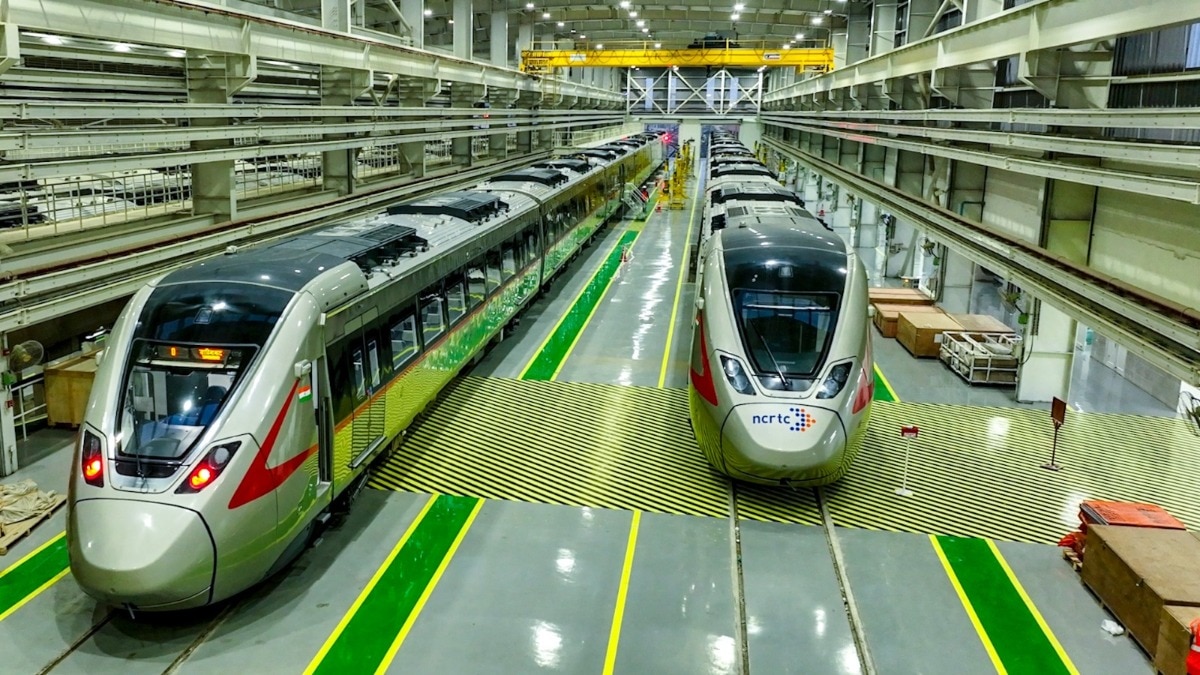
With the introduction of the Rapid Rail and Metro, Meerut is gradually finding itself closer to the economic opportunities of Delhi and the National Capital Region (NCR). What was once a city many people travelled out of for work, education and business is increasingly becoming a destination in its own right.
The transformation is being felt in homes, markets, educational institutions and property offices. Students are travelling to colleges in neighbouring cities without having to rent accommodation. Traders are finding it easier to bring customers from Delhi and beyond. Professionals can consider living in Meerut while working elsewhere. And property investors are beginning to look more closely at areas around transport corridors.
The bigger change, therefore, is not simply about faster trains. It is about how a city begins to function when the distance between home and opportunity becomes shorter.
Meerut District Magistrate Dr VK Singh believes improved connectivity is helping the city evolve into a modern, cosmopolitan centre.
For working professionals, the biggest benefit is perhaps the ability to separate where they work from where they live.
Earlier, travelling between Meerut and Delhi could consume several hours, with traffic congestion often making daily commuting difficult. Now, the Rapid Rail has made it possible for people to travel between the two cities in considerably less time.
People working in Delhi, Noida, Ghaziabad and even Gurugram can increasingly consider Meerut as their residential base.
The change is equally important for students. Those attending Delhi University and educational institutions in Ghaziabad and Muradnagar have found daily travel easier, reducing the need to rent rooms or stay in paying guest accommodation near their colleges.
For Meerut resident Vikas Gupta, this change has made a tangible difference at home.
Both his daughters are pursuing BTech studies in Muradnagar. Earlier, they had to stay in paying guest accommodation or rent rooms near their college. With the Rapid Rail service available, they can now leave home in the morning, attend college and return in the evening.
Gupta said the change has brought both financial and emotional relief to the family. His daughters can continue their education without having to live away from home.
It is a small but telling example of what improved connectivity can mean beyond transport statistics: families can make different choices about education, accommodation and everyday life.
The benefits are also reaching the business community.
For traders from Delhi, Ghaziabad and Sahibabad, visiting Meerut for business was once a time-consuming exercise. Improved connectivity has made same-day business trips easier.
Vijay Anand, associated with Meerut’s trade association, said the change has reduced the practical distance between the two cities.
He pointed out that even traders flying into Delhi from Mumbai and other cities can now travel to Meerut, complete their business engagements and return in time for a flight later in the day.
That opens up possibilities for a city whose commercial identity extends well beyond its immediate neighbourhood.
Meerut has established businesses in sports goods, jewellery, pharmaceuticals, scissors manufacturing and traditional brass-band instruments. Better connectivity could help these sectors attract customers from a wider geographical area.
The impact is already being felt in the jewellery trade, according to Manoj Kumar, president of the Meerut Bullion Association.
Kumar described the new transport links as a major advantage for the city’s bullion and jewellery market. Traders who previously preferred to remain in Delhi rather than travel to Meerut can now reach the city more easily. Local customers from distant areas, including Pallavpuram and Delhi Road, are also finding it easier to visit the market.
He claimed business in the sector had increased by around 30%.
The opportunity is not limited to established traders. Meerut has more than 80,000 micro, small and medium enterprises (MSMEs), employing around 5.5 lakh people, according to District Magistrate Singh.
The city’s sports goods, scissors, brass-band instruments and other traditional industries could benefit from access to new customers and markets. Improved transport can also make it easier for workers to reach industrial areas.
Perhaps nowhere is the impact of better connectivity more visible than in Meerut’s property market.
Areas around Rapid Rail and Metro stations, including Shatabdi Nagar, Partapur, Mohiuddinpur and parts of Delhi Road, are attracting growing interest from investors and homebuyers.
The logic is straightforward: when a city becomes easier to access, the value of living there can change. Properties that once seemed far from major employment centres may suddenly become attractive to people working across the NCR.
Singh said property prices along parts of the RRTS corridor had risen significantly. According to him, some properties that were valued at around Rs 2,000 per square metre seven to eight months ago are now fetching Rs 5,000-Rs 6,000 per square metre. Several areas have recorded appreciation of 20-30%, although the increase varies by location.
Kumar, meanwhile, claimed that property prices in certain areas along the Rapid Rail and Metro routes had increased by 50-75%.
But there is a catch.
As properties around stations become more expensive, local buyers are finding it harder to afford homes in these locations. Some are now looking towards colonies a little further away from the transport corridors, where prices remain relatively affordable.
The same infrastructure that makes a neighbourhood more attractive can also make it less accessible to the people who have lived there for years.
Meerut’s changing prospects are also tied to infrastructure projects beyond the transport network.
The Ganga Expressway is expected to support the development of an industrial corridor, while the Meerut Development Authority (MDA) is working on an integrated township project. The Chief Minister has already laid its foundation stone, according to the District Magistrate.
Private developers are also showing interest in the city.
Singh believes Meerut is emerging as an attractive alternative as land availability becomes increasingly limited in several other NCR districts. The ability to reach Delhi in approximately 50 minutes is encouraging people to consider settling in Meerut while continuing to work elsewhere.
This could have a wider impact on the local economy. People who work in Delhi, Noida or Gurugram but live in Meerut are likely to spend on healthcare, education, food, entertainment and everyday services in their home city.
The pharmaceutical trade is among the sectors seeing benefits from easier movement between Meerut and Delhi.
Rajneesh Kaushal, general secretary of the Drug Traders Association, said Rapid Rail had made business travel considerably more convenient. He also believed greater use of public transport could ease road congestion and help reduce vehicle-related pollution.
For industrial workers, Metro connectivity offers another commuting option. Those who previously relied on motorcycles or bicycles for long journeys can now consider public transport.
Meerut’s transformation is still unfolding. Better connectivity has created new possibilities, but whether those possibilities translate into sustained economic growth will depend on more than transport infrastructure.
The city will need to attract investment, create jobs, strengthen its industrial ecosystem and ensure that local residents benefit from the development taking place around them.
Rising property prices are already a reminder that infrastructure-led growth can bring its own inequalities. The challenge will be to ensure that improved connectivity does not simply make Meerut more attractive to outside investors, but also makes it a better place to live and work for its existing population.
For now, the change is visible in the lives of students travelling home after college, traders reaching customers across the NCR and professionals considering a different place to live.
Meerut is no longer looking at Delhi only as a city people must travel to for opportunities. With faster connections and new investment possibilities, it is increasingly positioning itself as a place where people can build their homes, businesses and careers.
The most significant measure of the Rapid Rail and Metro may ultimately not be how quickly they take people to Delhi, but how much opportunity they bring back to Meerut.
– Ends