QUNEITRA — It was around 3 a.m. last year when a knock at the door woke Ahmad in his home. At first, he thought they were thieves. Then came a voice: “Don’t be afraid, this is the IDF. Calm down. Five hours and you’ll be back home.”
Soldiers entered the house. A female officer accompanied by a dog followed, took his ID and phone from the table and inspected them. Outside, Ahmad estimated that more than 100 soldiers and 10 armored vehicles were waiting. His children were terrified. They took him outside and blindfolded him. Others stood beside him, their wrists were zip-tied. They took him to an elevated location in the occupied Golan Heights.
“I couldn’t see anything,” he told Syria Direct, “but it was cold.”
At around 5:30 a.m., an officer speaking broken Arabic began interrogating him about his family and daily activities. He also asked about Ahmad’s cousin, who remains in Israeli detention.
“Tell the truth only and don’t lie,” Ahmad recalled the officer saying. “Keep eye contact and don’t look away. If you look away, you’re lying.”
Then came a question: “Why are you observing us?”
“I’m not. I wouldn’t want a confrontation with you.”
Ahmad suspects the questioning was linked to information residents share in WhatsApp groups about Israeli military movements. He believes these groups have been infiltrated.
“Where are you from?” one of them asked.
“I’m from Beisan, Palestine,” Ahmad replied.
The soldier seemed upset by Ahmad’s answer. He felt the soldier was about to strike him. But the soldier just looked at him and said: “You’re Syrian, not Palestinian.”
Ahmad felt insulted. He was not in a position to contradict him. “As you wish,” he replied.
The questioning lasted just five minutes, and he was released later that morning. This happened in Bassali, a small village in Quneitra governorate, southwestern Syria, last year.
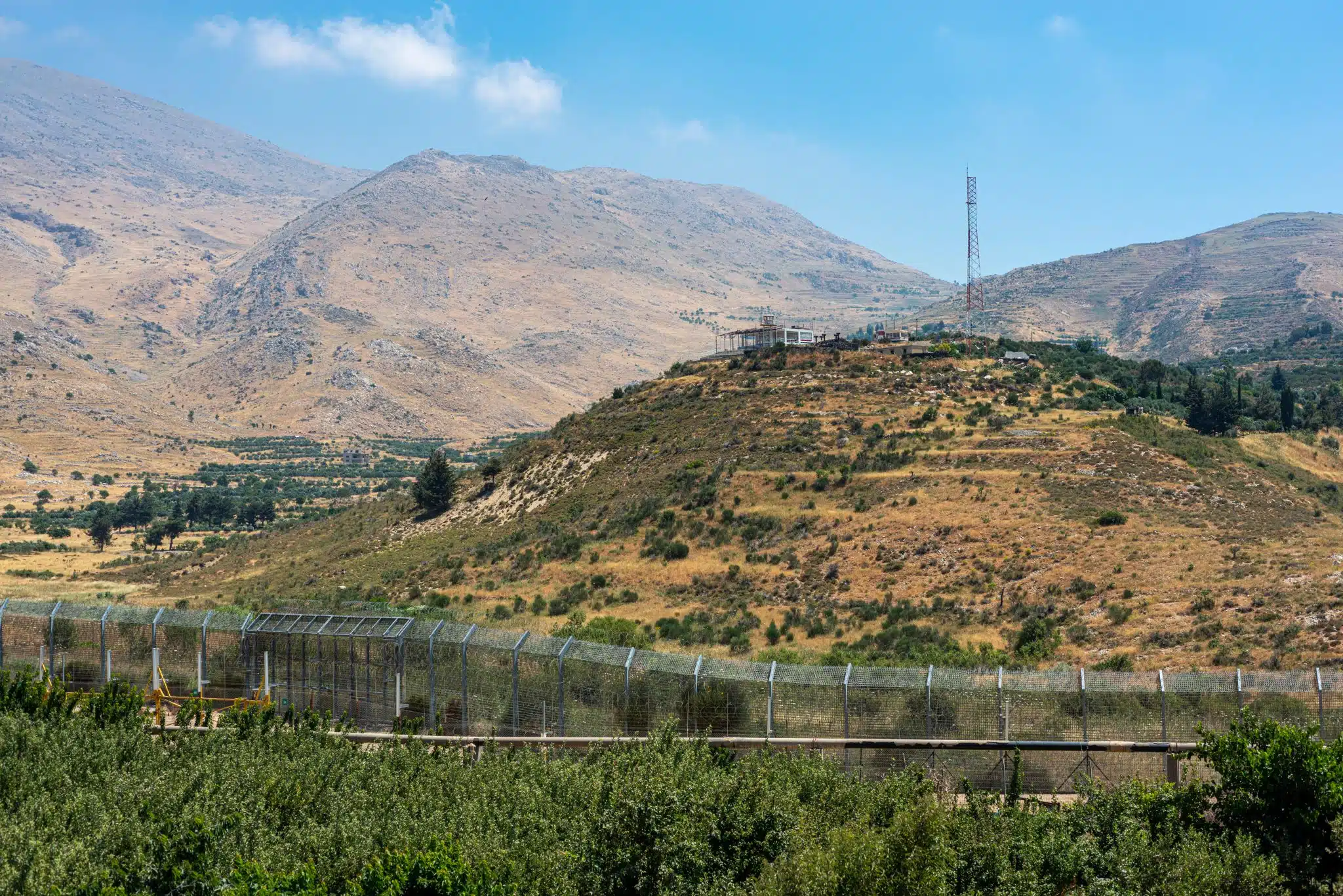
After the fall of Bashar al-Assad in December 2024, Israeli troops crossed beyond the UN-monitored buffer zone and have regularly raided villages here and in western Daraa, searching homes and detaining residents.
“Israel’s expanding military presence has raised fears of renewed displacement among Palestinian families who fled their homeland in 1948 and rebuilt their lives in southern Syria.”
Israel’s expanding military presence has raised fears of renewed displacement among Palestinian families who fled their homeland in 1948 and rebuilt their lives in southern Syria. For families like Ahmad’s, the possibility of being uprooted again has revived memories of the Nakba, known to Arabs as “the catastrophe,” when their parents and grandparents were forced to flee Palestine as a result of the Arab-Israeli war of 1948.
Under the 1974 Disengagement Agreement, signed after the 1973 war, no military forces other than UN peacekeepers could operate in a strip of land about 75 kilometers long separating the occupied Golan from the rest of Syria. The United Nations Disengagement Observer Force (UNDOF) monitors it. Bassali lies outside that strip, on the Syrian side.
Israel says the deal collapsed after Assad’s fall, prompting it to deploy troops into the buffer zone and establish a security zone beyond it. Initially described as temporary, the deployment has become open-ended, with Israeli officials citing jihadist threats and the protection of Syria’s Druze.
The UN rejects that reading. In June 2026, the UN Security Council extended UNDOF’s mandate to December 31. A September report by the UN Secretary-General recorded continued violations and said Israeli forces held 11 positions on the Syrian side as of August 12, 2026. US-brokered talks on a security deal have not changed the situation on the ground. Damascus wants a deal based on the 1974 lines, while Israel links any withdrawal to a comprehensive peace agreement, according to Israeli public broadcaster Kan. The area is home to Palestinian families displaced in 1948 from what is now northern Israel, as well as their descendants, including Ahmad.
A homeland preserved on paper
This is particularly true for people like Abdul Karim Kheder, one of Ahmad’s relatives. Abdul Karim was born in 1946 in Kafr Misr, in the Beisan area of historic Palestine, now Israel. Two years later, his family fled during the Nakba. They took their livestock, spent a short time in Lebanon and eventually settled in Bassali. He was too young to remember the home they left behind.
“My family used to tell me about Palestine, how the British came and a revolt broke out and failed,” he said, referring to the 1936–1939 Arab Revolt against British rule.
He grew up hearing that, as the family prepared to leave, people in the village had said: “Whoever wants to surrender can surrender, and whoever wants to leave can leave!” His family chose to leave. His late father spoke of wanting to return, but never did.
Ahmad, 41, was born in Bassali and grew up with that same expectation of return. “Our grandparents left, and we were deprived of our land,” he said. “We were fooled into thinking it would be a day or two and we would go back.”
“Our grandparents left, and we were deprived of our land. We were fooled into thinking it would be a day or two and we would go back.”
Beyond the stories passed down, there are papers to hold on to. Abdul Karim’s family, including his nephew Mohammad, keeps land-registration documents more than 80 years old in a binder. The paper has browned and the ink has faded, but the words “Government of Palestine” remain clear at the top. Some forms are printed in English, Arabic and Hebrew; one bears the British royal crest. Among them is a Barclays Bank slip dated 1941, carrying the name of Abdul Karim’s father, Ibrahim Kheder.
“These documents are so precious we haven’t shown them to anyone,” a relative said as Mohammad opened the binder.
General security checkpoint at the entrance of Quneitra. 25/10/2026 (Photo: Fadi Ibrahim)
Although the family has kept the papers for land in Palestine they cannot reach, in Syria, they remain “temporary residents,” unable, they say, to own or register land in their own names.
Under Syria’s longstanding policy toward Palestinian refugees, granting citizenship was seen as undermining the Palestinian right of return. It would give tacit legitimacy to the “Zionist entity,” as Israel is referred to in Syria and the broader Arab world.
A 1956 law gave those registered with its refugee authority the same rights as Syrians in work, trade and military service, while letting them keep their Palestinian nationality. Property was the exception. Palestinians can own a house, but not agricultural, industrial or commercial real estate, according to the European Union Agency for Asylum.
Read more: In southern Syria, echoes of the US-Israeli war with Iran hit close to home
Mohammad and other villagers in Bassali work on other people’s farmland as laborers. They are neither tenants nor sharecroppers. For them, the law sets a ceiling: they can earn a wage from the land, but never own it.
Ahmad feels a strong attachment to his Palestinian identity, yet he sees Syrians and Palestinians as sharing the same reality. “There is no difference between us,” he said.
For a younger generation born and raised in Syria, that sense of belonging exists alongside ties to a Palestine they have never seen. Hamzeh, 30, was born in Daraa’s Palestinian refugee camp to a family originally from Tiberias, in present-day Israel. He runs a small shop, has a gentle smile and chooses his words carefully.
In the camp, he said, nationality rarely entered everyday conversations. “When we talk to Syrians, we don’t ask them what their nationality is.”
The authorities, however, treated them differently, he recalled. Under Assad, traveling from Daraa to university in Damascus meant passing through checkpoints where being Palestinian could bring additional scrutiny. “There was harshness toward some Palestinians in the regime’s days,” he said.
In 2016, Hamzeh left for Germany through Turkey and Greece, adapting quickly to life there. Yet his registration as a stateless person, not as a Syrian citizen, remained a reminder of his unresolved status. After the fall of Assad, he withdrew his citizenship application and returned to Daraa to see the people and places he had left behind.
Abandoned T52 tank from the former regime in Quneitra. 25/10/2026 (Photo: Fadi Ibrahim)
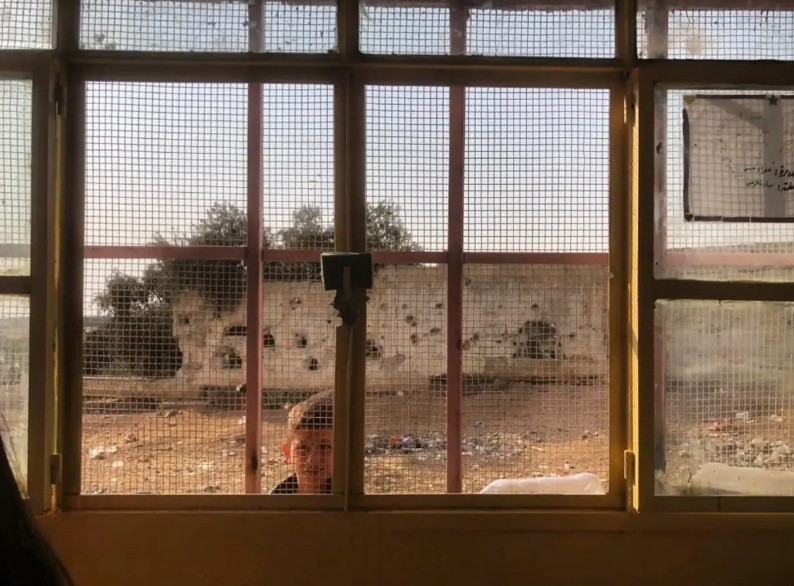
The camp he returned to was heavily damaged, with roofless buildings riddled with bullet holes. But the soul of Palestine remains alive: residents still organize events celebrating Palestinian heritage, bringing out traditional clothing, food and carpets. Some families preserve belongings passed down from their grandparents, while others even keep the keys to their homes in Palestine.
Asked about Israel’s expanding military presence in Syria, Hamzeh said that in the camp, residents often joke about it and do not take the threat too seriously. But in Bassali, the fear is harder to laugh off.
“People fear they [the Israelis] will reach us,” Ahmad said.
Since November 2022, Israeli forces have been building a road and an earthen berm known as Sufa 53 through southern Quneitra. Syria’s Foreign Ministry called the work a “flagrant breach” of the 1974 agreement.
But Ahmad still believes that his family’s future remains tied to Palestine. “We are certain this land will be liberated and we will return to it, perhaps not us as individuals but the generations after us, our children or our grandchildren.”
“We are certain this land will be liberated and we will return to it, perhaps not us as individuals but the generations after us, our children or our grandchildren.”
For Abdul Karim, the prospect of being forced to leave raises a question he has faced before. Palestinians once kept out of Syrian politics, he said, only to be told, when trouble came, “to go somewhere else.”
But where will they go?
Note: Ahmad and Hamzeh are pseudonyms, as our sources did not want to use their real names.