Antonio Cremasco contracted Covid at a dinner party on 6 March 2020. Four days later, as Italy became the first European country to go into nationwide lockdown, he was fighting for his life. “I spent 20 days in intensive care, followed by another 20 days in a hospital ward,” said Cremasco, from Bassano del Grappa in the northern Italian Veneto region.
After leaving hospital, he needed oxygen therapy for another six months. Cremasco’s ordeal was such that when Covid vaccines became available in Italy in early 2021, he had no qualms about being vaccinated, and he believes the decision saved his life once again.
“All those who had been in intensive care with me died,” he said. “Without the vaccine, if I had caught Covid again, I had a high risk of dying too.”
Doctors treating Covid patients in an intensive care unit at a Rome hospital in March 2020. Photograph: Antonio Masiello/Getty Images
But Cremasco, who is now 76 and recently received his annual Covid and winter flu jab, has struggled to convince his vaccine-sceptic son, a father of two, of the drugs’ safety. He said he and his wife were wary of having their potentially unvaccinated grandchildren in their home whenever the children were ill, fearing for their own health. “They always seem to be sick,” Cremasco said.
His family rift mirrors a wider divide over vaccination in Italy, which has been brought back to the political spotlight by a controversial bill approved in October in the lower house of parliament.
The measure allows healthcare workers who were struck off their professional registers during the pandemic for serious violations connected to their anti-vaccination beliefs – for example, promoting treatments that lacked a scientific basis – to apply to be reinstated.
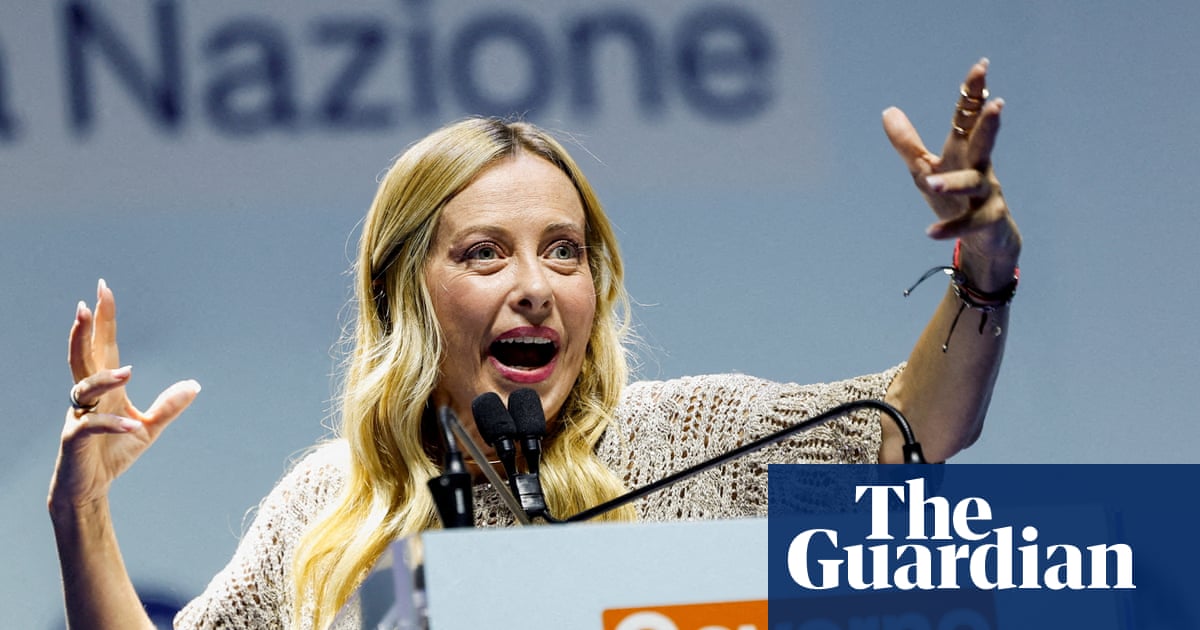
The bill is being championed by the prime minister Giorgia Meloni’s Brothers of Italy party and is strongly backed by its far-right coalition partner, the League. But with allies in Forza Italia split, its approval in the lower house hinged on support from National Future (FN), a rival far-right force led by the former army general Roberto Vannacci, whose emergence is shaping the political landscape before general elections next year. Vannacci has voiced opposition to vaccine mandates, and his rhetoric frequently targets the vaccine-sceptic audience.
Roberto Vannacci, president of Futuro Nazionale, attends a rally in Milan on 2 November. Photograph: Alessandro Bremec/NurPhoto/Getty Images
The measure still needs to clear the senate, with a vote scheduled in January. But its progress has alarmed medical experts, less because of the number of healthcare workers involved – it is believed to be very small – and more because of the risk of further eroding trust in vaccines.
Nearly one in two Italian adults are hesitant about vaccination, according to a report by the department of public health and paediatric sciences at the University of Turin published in the Lancet Regional Health Europe in February. The report, which sampled 50,000 adults across Italy, found the ambivalence was driven more by misinformation and lack of institutional trust than by fears over vaccine safety.
“Political communication and the lack of trust among Italians in institutions carry a significant weight,” said Roberta Siliquini, the head of the school of hygiene and preventive medicine at the University of Turin and the report’s chief researcher. “There really is a disinformation campaign in this sense – and those who want to disinform are very good at communicating.”
The implications are being profoundly felt: this year there has been a resurgence in measles, with 472 infections reported during the first five months, compared with 322 in the same period last year, according to health ministry figures. More than half of the cases were reported in young adults. Take-up of the flu vaccine among people aged 65 and over so far this season has dipped to 49.81%, the first time it has fallen below 50% since the winter of 2014-15.
In August, a four-year-old child in Palermo, Sicily, died of diphtheria. Her parents reportedly told doctors they had not vaccinated her because her cousin was autistic and they were convinced vaccines were the reason. There is no evidence of any link between autism and vaccines.
Demonstrators clash with police officers during a protest against the government’s introduction of the Covid ‘green pass’ in Rome on 9 October 2021. Photograph: Remo Casilli/Reuters
Siquilini said the tragic case was a reminder of the responsibility that everyone, “but especially politicians”, had to deliver the correct message on vaccines. She warned that the rehabilitation of those who rejected scientific evidence could have a “devastating” impact on how people perceived vaccines.
The message has been repeatedly undermined. On 28 October, a day after the lower house vote, Claudio Borghi, a League politician, came under fire for hosting an anti-vaccine seminar in the senate.
Later in the day, in what was believed to have been an indirect rebuke, the Italian president, Sergio Mattarella used a speech during a high-profile cancer research gathering to condemn the spread of anti-vax messages while warning against “irrational beliefs” and “destructive fake news”.
Borghi has proposed revising a law introduced in 2017 by the then leftwing government that extended the number of obligatory childhood vaccinations from four to 10, adding, for example, one against pertussis, or whooping cough. He has defended his position, arguing he is not anti-vaccine but that mandatory vaccines “lead to resistance”.
A group protesting against the use of the green pass and the restrictions that were to come into effect for unvaccinated people in July 2021. Photograph: Lorenzo Palizzolo/Getty Images
As for the reinstatement of the medics struck off during the pandemic, he told the Guardian that the proposal’s aim was “to foster reconciliation after all these years”. He said: “In our view, nobody should lose their job because of a personal belief.”
Scepticism over vaccinations took root in Italy in the late 1990s, as in many other countries, mainly driven by now debunked claims of a connection between the combined measles, mumps and rubella (MMR) vaccination and autism.
The arrival of social media accelerated the spread of vaccine misinformation, contributing to a drop in immunisation rates against preventable diseases. The 2017 move to make childhood vaccinations obligatory further emboldened anti-vaccine groups while creating fertile ground for rightwing populist parties, including the Five Star Movement (M5S), which continued to spread misinformation about vaccines after coming to power in 2018, and before the realities of the pandemic forced a shift in tone. Now in opposition, M5S is highly critical of the move to re-embrace anti-vax healthcare workers.
Lorenzo Mattia Signori, a nurse in Veneto, said politicians were “opportunists” and Meloni’s coalition was simply trying to draw votes from anti-vax voters as it eyed a second mandate.
Signori, who is also a regional secretary for Cittadinanzattiva, an association focused on patient advocacy, including pushing for campaigns to inform citizens about vaccine benefits, said: “Ensuring that people get vaccinated is the largest prevention system we have. If everyone gets sick instead, the Italian healthcare system would not hold.”
He hopes that Mattarella will use his power as president to stop the anti-vaccine medics measure from being signed into law. “We cannot have them in hospitals,” he said. “It would be like going to church and hearing a priest who says he doesn’t believe in God.”