At the end of Ted Lasso season 3, when Keeley Jones proposed a Richmond women’s team, Rebecca Welton, gleefully agreed. That was a bold bet, perhaps made on “belief” after the men’s team’s success. But getting anyone to watch it was the hard part.
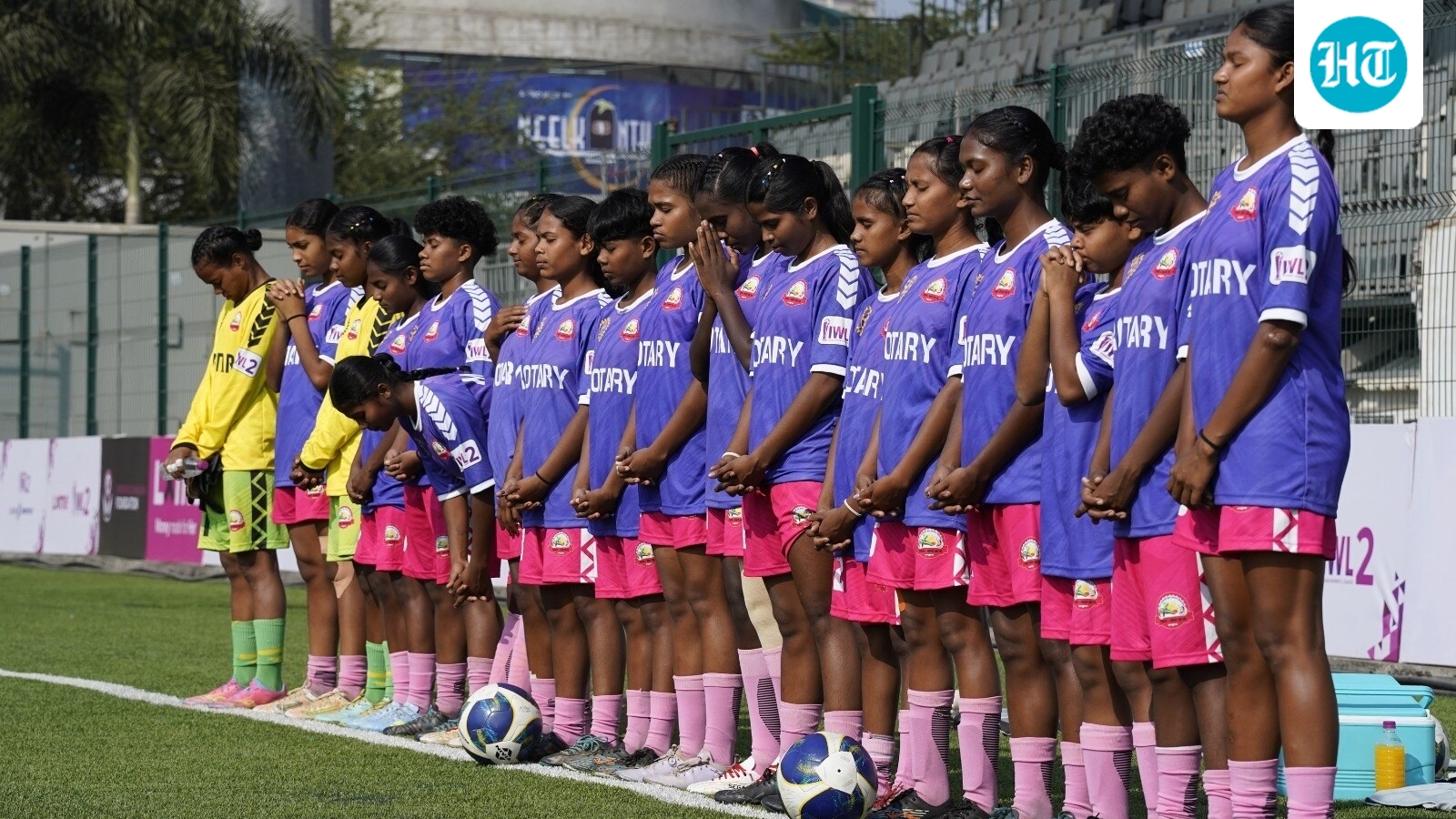
The 10th season of IWL will get underway in Kalyani on Friday
That job fell to Jones, marketing chief of AFC Richmond’s new Lady Greyhounds, in a town that barely noticed them.
Capri Sports has taken on Jones’s role, only this is real not reel.
On September 22, the owners of WPL franchise UP Warriorz signed a 15-year deal with the All India Football Federation (AIFF) to commercially develop and market India’s top two tiers of women’s club football, the Indian Women’s League (IWL) and IWL 2. Although the latter was established in 2024, the top-tier league, which will get underway in Kalyani on Friday, is into its 10th season. Yet, few follow it.
Riding the women’s sports tailwind
That didn’t deter Capri Sports. They were eyeing the IWL’s commercial rights since November 2025. When AIFF had floated a fresh, long-term 15-year Request for Proposal (RFP) in March 2026, with an option for a five-year extension, covering the commercial rights of the IWL and IWL 2, Capri Sports was again the sole bidder.
“Globally, there have been significant tailwinds for women’s sports, and women’s football in particular, in terms of valuations, viewership and stadium attendance. We felt there were opportunities to bring about similar growth in women’s football in India, and that’s where we decided to take the leap,” said Capri Sports director and promoter, Jinisha Sharma told HT.
The numbers back the optimism. According to figures cited by UN Women, seven in 10 people now watch women’s sports, with nearly 73 per cent tuning in at least a few times a year. The commercial opportunity is catching up with the audience. Deloitte’s 2026 report had projected that women’s elite sport will generate at least $3 billion in revenue this year, a 340 per cent increase over 2022.
Football is riding the same wave, earning more than a third of all women’s sport revenue globally. Capri wanted to test whether India would follow.
Capri’s understanding of women’s football came from the ground up. In July 2025, it acquired Mumbai club Rudra FC and relaunched it as Warriorz FC. That move “really helped us understand the landscape of women’s football in India”, said Sharma. A year later, Capri felt the time was right to take on the league itself. In between, Capri also added Nova Sports, a girls-only football programme for players aged eight to 18, to their portfolio.
Fixing visibility
Despite the global trend, a report Capri commissioned with KPMG last year argued that women’s sport in India is still treated more as a social cause than a business. It’s survey found that 43% of sports fans miss women’s events simply because they don’t hear about them in time.
That’s the gap Capri Sports CEO – Football, Apurv Gupta wants to close. “This is not a league being designed from scratch. It has existed for almost a decade, with 2016 being its inaugural year. One of the major gaps we identified was visibility.”
Prior to the start of the IWL, Capri Sports launched two social media campaigns: a photo series, ‘Built to Shine’, and a video campaign, ‘Meet the Unstoppables’.
The right streaming platform was the other priority. IWL 2, which began on October 23, streams on SportVot, while the IWL will be available on YouTube.
“In the first year, accessibility will be very important,” said Gupta.
Sharma said Capri Sports also understood from its other sporting properties, including the Pro Kabaddi League, Ultimate Kho and ILT20, that the only way to build long-term connection with fans is to “invest in the right things that can convert interest into fandom.”
Mission-aligned brands
Capri had less than two months between signing the deal and the first match. “We are still processing the fact that this has all come together in less than two months,” said Sharma.
With so little time, Capri went after mission-aligned brands. Title sponsor Lxme was the first to sign. Its investment model in women, said Sharma, is built around a similar ethos. For now, most of the interest has come from brands that target women.
No season-one target
Capri Sports won’t put a number on its first season on board. Instead, Gupta wants three things: the clubs and the AIFF feel they have the right partner, fans acknowledge the progress, and players to feel “they are being seen and heard, and that they have a future in women’s football.”
“People are discovering that Delhi has three clubs in the IWL, which has surprised many. If we can drive discovery, increase awareness and encourage meaningful conversations this year, we would consider that a huge success,” said Sharma.
For Capri Sports, this is not just momentum investment, it’s a long-term bet wrapped in patience and “belief.”
“Fifteen years may not even be long enough for the vision we have for the growth of football. All major leagues have taken that kind of time to become commercially successful,” she said.
Perhaps, then, the fourth season of ‘Ted Lasso’ was a “good omen” after all. Not because it offered Capri Sports a playbook, but because it brought into popular conversation the very challenges that the company is now taking on in India.
The real test will be whether Capri can turn curiosity into connection, and audiences into fans.
Because, as Keeley and Welton discovered, “belief” may get a women’s team off the ground, but building a community around it is an entirely different ball game.