Three Cambodian ministries have agreed to strengthen cooperation in flood damage assessment and prepare plans to restore roads and other infrastructure affected by recent flooding.
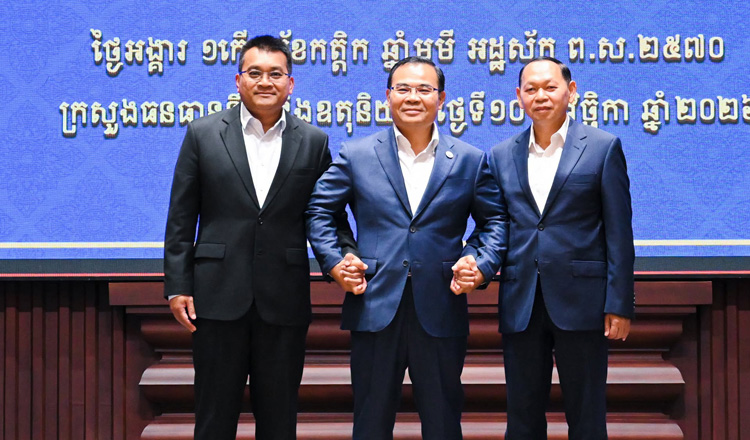
Thor Chetha, Minister of Public Works and Transport, Peng Ponea, Minister of Water Resources and Meteorology, and Chhay Rithisen, Minister of Rural Development, co-chaired an inter-ministerial meeting on post-flood infrastructure conditions on Tuesday at the Ministry of Water Resources and Meteorology, attended by ministry officials and relevant technical experts.
According to a joint statement, Chetha said the meeting was important for assessing damage, identifying restoration priorities and preparing action plans to ensure recovery work is carried out promptly, on time, to a high standard and in a practical manner.
He emphasised the need for coordinated and inclusive cooperation among the three ministries, commending working teams, local authorities and relevant ministries for their efforts to assist residents during recent flooding.
Rithisen highlighted the ministries’ joint contribution to implementing the government’s Pentagonal Strategy – Phase I, stressing that closer cooperation would help improve rural road infrastructure and assist development needs in local communities.
He said the coordinated efforts would also contribute to Cambodia’s ambition of becoming a high-income country by 2050.
Ponea expressed confidence in cooperation among the three ministries, particularly in implementing Prime Minister Hun Manet’s recommendation to use this year’s flood experience as a basis for reviewing weaknesses and addressing technical shortcomings to make infrastructure more resilient.
He also stressed the importance of developing effective drainage systems to prevent flooded roads and damage. Technical officials from the three ministries were urged to work together on construction planning, infrastructure restoration and natural disaster prevention.
The meeting also discussed the need for common approaches to assessing infrastructure resilience and economic efficiency, while improving the quality of roads and irrigation systems.
Following presentations and recommendations from technical officials, the three ministers reached agreement on six key areas of cooperation:
Technical officials from all three ministries will jointly participate in studies of road development and irrigation projects to ensure their effectiveness.
Infrastructure restoration projects in border areas will be prepared jointly for submission to the Ministry of Economy and Finance.
Tri- ministerial technical teams will work together to conduct comprehensive technical assessments, drawing on lessons from this year’s floods.
The ministries will coordinate efforts to communicate their cooperation arrangements to subnational authorities.
Relevant data and maps will be shared to support studies of road infrastructure and irrigation development projects.
A joint technical working group will be established to conduct field inspections at locations where infrastructure has been damaged.