- New research indicates that more than 40% of terrestrial vertebrates could see a portion of their habitats inundated due to sea level rise by the end of the century.
- The global study, which examined roughly 90% of known amphibian, reptile, bird and mammal species, found reptiles, narrow-ranging species and already threatened species are particularly vulnerable to sea level rise.
- The Amazon River delta and Southeast Asia are expected to experience the most significant losses. However, the researchers also identified multiple refugia habitats across these regions that could help species adapt to sea level rise, although 96% of these areas lie outside of existing protected areas.
- The authors say their findings highlight the need for coordinated, international action to safeguard critical habitats and help species survive.
See All Key Ideas
Sea level rise driven by climate change could see more than 42% of terrestrial land vertebrates lose parts of their habitats to the ocean by the end of the century, according to new research.
The global study, recently published in Science, overlaid habitat suitability maps calculated for 34,120 land vertebrates — roughly 90% of all known amphibian, reptile, bird and mammal species — with sea level rise projections associated with five Intergovernmental Panel on Climate Change (IPCC) climate change scenarios, ranging from low to high emissions outlooks.
“Conservation planning needs to consider not only where species occur today, but also which parts of their habitat are projected to remain above water in the future,” co-author of the study Zhong-Wen Jiang, a postdoctoral researcher at Sun Yat-sen University in China, told Mongabay in an email.
The study found between 14,325 and 15,324 of the species examined would be exposed to habitat loss due to coastal inundation by the year 2100, depending on the climate scenario. Yet only 5.9% of these species are considered at risk from climate change, according to their IUCN Red List assessments.
Up to 63% of birds, 52% of mammals, 36% of reptiles and 24% of amphibians will likely be affected, the study found, with reptiles, narrow-ranging species and already threatened species particularly vulnerable. Overall, reptiles are likely to experience nearly double the amount of habitat loss of birds or mammals.
The finding that such a significant number of species will be affected by sea level rise highlights why climate action and conservation need to proceed together, Jiang said. “Reducing emissions does not remove the need to also protect remaining habitats.”
The study also identified “refugia” habitats within species ranges that are likely to avoid future flooding. However, 96% of these areas that potentially provide animals the opportunity to respond to sea level rise are located outside of existing protected areas, the authors found.
According to Jiang, the findings indicate “a gap, not only in recognizing future risks, but also in protecting the places that could help species persist.”
After its coral islet habitats were inundated by rising sea levels, the Bramble Cay melomys attained the dubious honor of being the first mammal officially declared extinct due to human-caused climate impacts. Image by Ian Bell, Department of Environment and Heritage Protection, State of Queensland via Wikimedia Commons (CC BY 4.0).
Amazon delta and Southeast Asia of key concern
Climate change impacts sea levels through thermal expansion and the melting of glaciers and polar ice sheets. Global mean sea levels are rising at an accelerating pace, an average rate of 4.7 millimeters (0.19 inches) per year between 2015 and 2024, more than twice the rate recorded during 1993-2002, according to the World Meteorological Organization.
Under the highest emissions climate scenario, the number of species predicted to lose more than 10% of their habitat to the sea rises from 18 species in 2050, to 109 by 2100, more than half of which are reptiles, according to the study. Three species — the Catalina chuckwalla (Sauromalus klauberi), the Restinga toadlet (Melanophryniscus setiba) and a worm lizard found in Brazil (Amphisbaena littoralis) — are projected to lose more than half of their global available habitat to sea level rise by the end of the century.
A total 395 species are projected to lose more than 1% of their suitable habitat by 2100 under low emissions scenarios, Jiang said, a figure rising to 1,180 species under high emissions scenarios.
According to Jiang, the increasing severity of habitat losses with emissions and time underscores why climate action and conservation decisions are required sooner rather than later. “Stronger climate mitigation could reduce both the number of species exposed and the severity of habitat loss,” she said.
The Amazon River delta region is expected to suffer the greatest extent of terrestrial vertebrate habitat loss, according to the study, partly due to its exceptionally high biological diversity. More than 100,000 hectares (247,100 acres) of riparian forests and coastal wetlands in the low-lying Amazon delta could be inundated by 2050. Other regions at high risk include the coasts of Central America and Southeastern Africa.
The Catalina chuckwalla lizard is one of three species projected to lose more than half of its habitat by the end of the century. Image by Chris Earley via Flickr (CC BY-NC-SA 2.0).
Southeast Asia is also of particular concern, despite having proportionally less habitat at risk of inundation than the Amazon delta. This is due to the coastal distribution of many range-restricted and threatened species in Southeast Asia, meaning habitat losses have particularly “serious consequences for biodiversity,” Jiang said.
Inundated habitats in Peninsular Malaysia, Borneo and Sumatra support “nearly three times as many threatened species” as the rest of the world, the researchers found. The study highlights Myanmar, Vietnam and Indonesia as having particular potential for expanding protected areas into sea level rise refugia habitats.
Already an existential threat
Across the world, species are already feeling the effects of even small increases in sea level.
In Europe, shorebirds that feed and breed along coastlines are facing existential challenges due to the loss of their habitats and nest flooding. In the Bangladesh Sundarbans, the Bengal tiger, a population of the Panthera tigris tigris subspecies, is expected to lose the majority of its mangrove habitat to the ocean by 2070. And in 2016, scientists declared the Bramble Cay melomys (Melomys rubicola), a species of rodent that once inhabited a tiny coral islet in the Torres Strait, the first mammal to go extinct due to habitat loss as a result of human-caused rising sea levels.
Jiang and her co-authors note their findings are conservative estimates. The true impacts on species are likely to be much greater when the additional climate impacts of increasing salt spray, intensifying hurricanes and storm surges that carry sea water inland and degrade habitats are taken into account. The study only considers the terrestrial portions of species habitats. It doesn’t consider marine and intertidal habitats.
A female Bengal tiger photographed in India, a subspecies projected to lose significant swathes of coastal habitat in the Bangladesh Sundarbans due to rising sea levels. Image by Rhett A. Butler/Mongabay.
Jennifer Magel, a conservation scientist at the University of British Columbia who was not involved in the study, said the findings contrast with what’s been found for more intertidal species, such as shorebirds like plovers, sandpipers and oystercatchers. “I expect that all but a handful of shorebirds will be exposed to future sea level rise,” Magel told Mongabay in an email.
In a 2026 review paper, Magel and her colleagues found rising sea levels risk squeezing shorebirds out of critical coastal habitats that are trapped from naturally shifting inland due to fixed human infrastructure, such as roads, dykes and seawalls.
This “coastal squeeze” can erode vital coastal habitats, such as mudflats, saltmarshes and mangroves, Magel said, presenting risks for migrating shorebirds that depend on chains of healthy coastal ecosystems to complete their long journeys. The loss of even a small number of key migration stopover habitats can have significant impacts on entire populations, she said.
Giving coastal wetlands the space they need to move inland with sea level rise, by limiting infrastructure development and reducing the use of permanent coastal defenses is vital, Magel said. “Decision-makers need to factor the impacts of future sea level rise into land use and conservation decisions that are being made now, so that key areas can be protected while there is still time to act.”
However, many of the regions identified as hosting important land vertebrate refugia, such as Myanmar, Indonesia and Vietnam, suffer from a lack of conservation funding and limited technical capacity. For Jiang, this underscores the need for international cooperation to channel resources and skills to where they could achieve the most impact before species are pushed beyond their limits.
“We should not wait until habitats are inundated to decide how to protect the species that depend on them,” Jiang said. “Early action, supported by international cooperation and resources for countries with limited conservation capacity, is essential.”
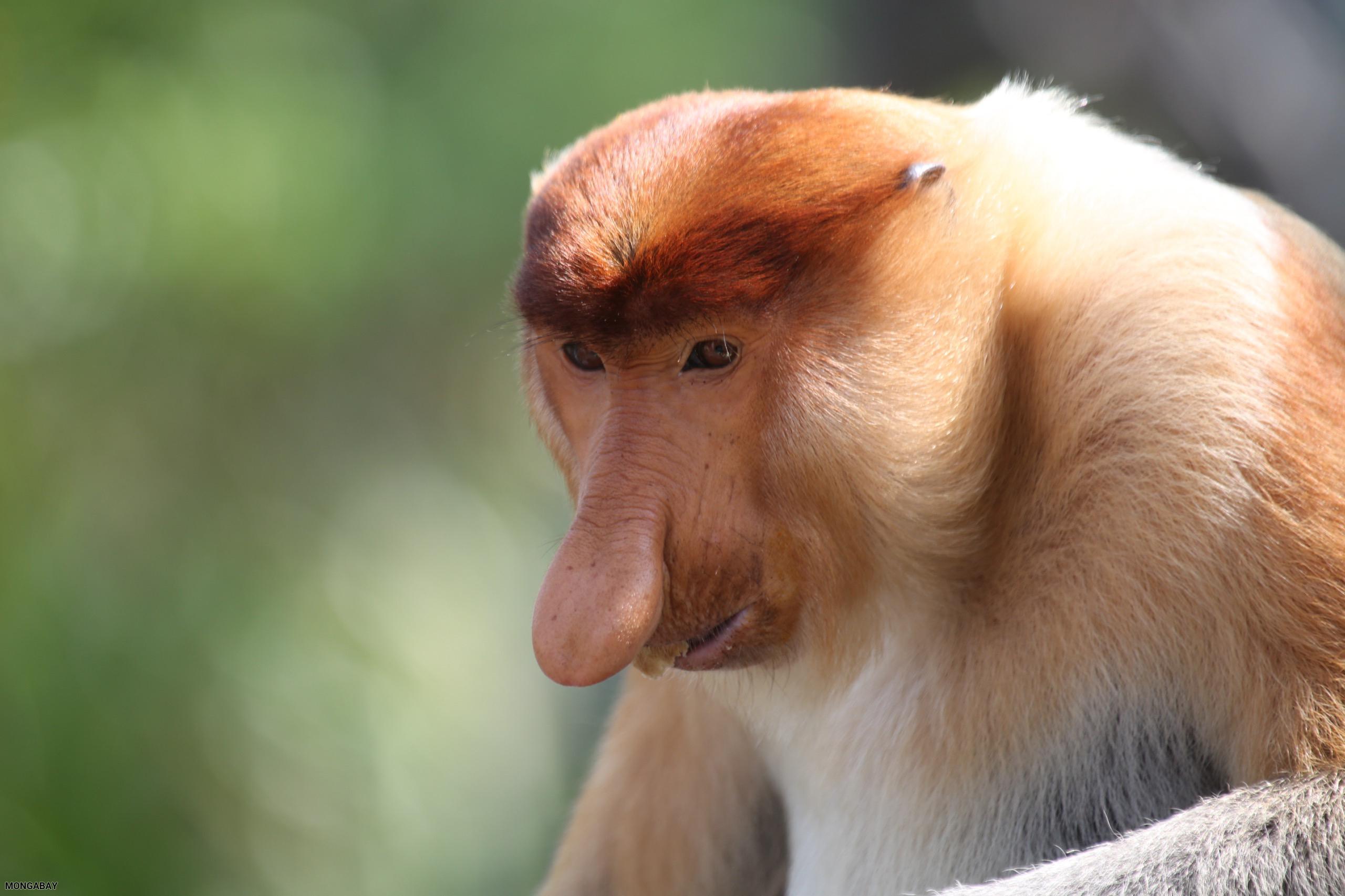
Banner image: Proboscis monkeys depend on Borneo’s coastal mangrove forests, ecosystems impacted by rising sea levels. Image by Rhett A. Butler/Mongabay.
Carolyn Cowan is a staff writer for Mongabay. Her reporting focuses on wildlife, ecology, and communities responding to environmental challenges across Southeast Asia.
Citations:
Ma, L., Jiang, Z., Xiao, H., Hanson, J., Zeng, Y., Wilcove, D., … Chen, Y. (2025). Safeguarding global terrestrial vertebrate species from future sea-level rise. Science, eaed5772. doi:10.21203/rs.3.rs-6972835/v1.
Van de Pol, M., Bailey, L. D., Frauendorf, M., Allen, A. M., Van der Sluijs, M., Hijner, N., … Ens, B. J. (2024). Sea-level rise causes shorebird population collapse before habitats drown. Nature Climate Change, 14(8), 839-844. doi:10.1038/s41558-024-02051-w.
Mukul, S. A., Alamgir, M., Sohel, M. S., Pert, P. L., Herbohn, J., Turton, S. M., … Laurance, W. F. (2019). Combined effects of climate change and sea-level rise project dramatic habitat loss of the globally endangered Bengal tiger in the Bangladesh Sundarbans. Science of The Total Environment, 663, 830-840. doi:10.1016/j.scitotenv.2019.01.383.
Magel, J.M., Wilson, S. & Martin, T.G. (2026). Impacts of sea level rise on the world’s shorebirds. Biodiversity Conservation. 35 (10), 236. doi:10.1007/s10531-026-03431-8.
See related story:
Seabird guano and native trees keep islands above rising seas: Study
FEEDBACK: Use this form to send a message to the author of this post. If you want to post a public comment, you can do that at the bottom of the page.