Photo: Save the Children Solomon Islands
For four decades, Save the Children has worked alongside the Solomon Islands Government and communities to support children’s rights, education, protection and development.
The international child rights organisation marked its 40th anniversary, reflecting on a journey that began in 1986 when it arrived in Solomon Islands to support the government and communities in responding to the devastation caused by Tropical Cyclone Namu.
What began as support during a major humanitarian crisis has developed into a longstanding partnership involving government ministries, churches, civil society organisations, communities and international development partners.
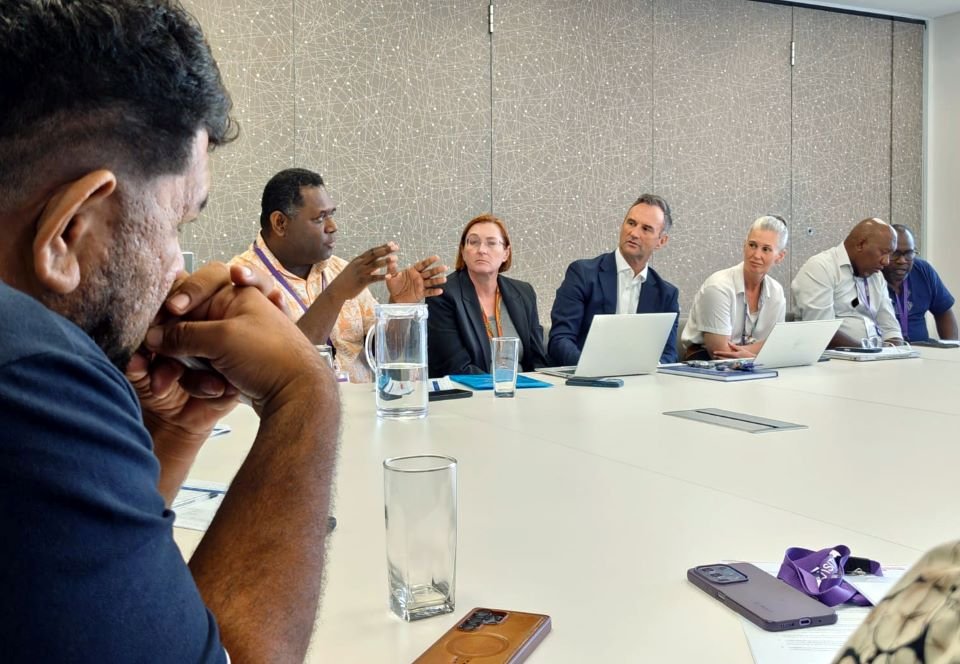
Speaking with Tavuli News during the anniversary celebration, Save the Children Solomon Islands Country Director Tory Clawson said the organisation was proud to reach the milestone and reflect on four decades of work in the country.
“We are super excited to be celebrating our 40th anniversary. We arrived in Solomon Islands in 1986 to help support the government and communities in the response to Tropical Cyclone Namu,” Clawson said.
She said the organisation had maintained strong relationships with the Ministry of Women, Youth, Children and Family Affairs, other government ministries, civil society organisations and United Nations agencies.
Over the years, one of its key areas of work has been supporting the advancement of children’s rights and strengthening the systems and institutions responsible for protecting them.
“We were part of the group that worked together with the government to get the Convention on the Rights of the Child ratified in 1995,” Clawson said.
Save the Children also worked with the Ministry of Women, Youth, Children and Family Affairs to establish the National Advisory Committee for Children, providing another platform to support the coordination and promotion of children’s rights.
Clawson said these efforts, together with the work of government and other partners, had contributed to progress in areas such as child health and education.
The infant mortality rate in Solomon Islands has dropped by almost half since 1994, while the primary school completion rate increased from 50 per cent in 1984 to 80 per cent in 2023.
Save the Children said it had been among the organisations working alongside government and other partners to contribute to progress in these areas.
However, Clawson said the organisation’s work continued to respond to changing challenges affecting children, including climate change, child protection and digital safety.
She described digital safety as an emerging issue that required greater attention as children increasingly faced risks in online spaces.
Another important area of advocacy involves the proposed change to the legal age of marriage from 13 to 18. Save the Children has been working with other partners to support the reform, which aims to strengthen protections for children.
“The government has committed and has made good progress towards changing the legal age to 18. And we’re quite excited about the prospect of that passing sometime in the near future,” Clawson said.
She described the proposed change as a significant step towards protecting children’s rights and choices.
The anniversary celebration was also linked to International Children’s Day, placing children’s participation at the centre of the occasion.
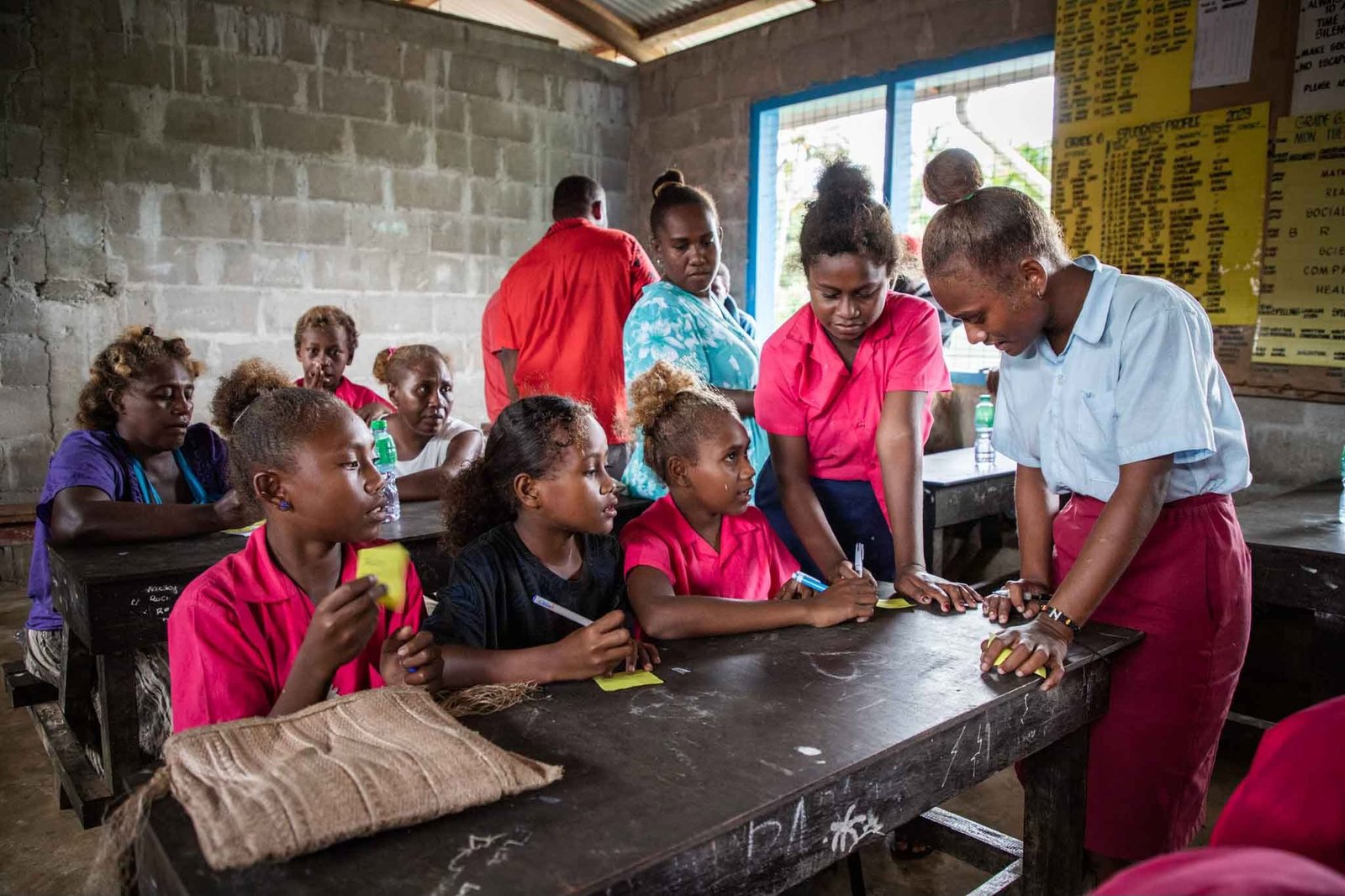
As part of the programme, children prepared a call to action for the Ministry of Women, Youth, Children and Family Affairs, giving them an opportunity to present their views, concerns and aspirations.
Clawson said ensuring children were heard and had opportunities to contribute to decisions affecting their lives remained an important part of the organisation’s work.
“Save the Children is extremely committed to ensuring children have a voice and that leaders are able to hear it. And we try to amplify that opportunity,” she said.
Looking ahead, Clawson said the organisation would continue working with government and communities to ensure children could learn, remain protected and participate in decisions affecting their future.
She said climate change was an increasingly important part of that work, particularly as its effects placed pressure on essential services such as education.
Clawson pointed to water shortages linked to El Niño, which have affected schools, as an example of the challenges communities and children were facing.
“We’re seeing today right now with the El Niño crisis, schools are closing because of the lack of water,” she said.
She said strengthening community resilience, protecting access to education during climate-related disruptions and responding to humanitarian crises would remain among the organisation’s priorities.
Speaking on behalf of the government, Minister for Women, Youth, Children and Family Affairs John Manenearu acknowledged Save the Children’s 40 years of partnership and service in Solomon Islands.
He said the organisation’s work reflected the importance of ensuring children had opportunities to survive, learn, grow and thrive within their communities.
The Minister called on government agencies, provincial governments, churches, civil society organisations, communities and families to work together to protect children’s rights and support their development.
“The true measure of our nation’s progress is not only found in economic growth or infrastructure development, it is found in the well-being, safety, the opportunities we provide for our children,” Minister Manenearu said.
He said the anniversary should serve not only as a recognition of past achievements, but also as a renewed commitment to the next generation.
“To Save the Children Solomon Islands, thank you for the 40 years of partnership, service and dedication to our nation,” he said.
After four decades in Solomon Islands, Save the Children says it will continue working alongside the government and its partners to advance children’s rights, strengthen protection and support opportunities for every child to learn, develop and participate in their communities.