Synopsis: Ministry officials outline priorities for technology adoption and international cooperation at an international gathering in Beijing.
Cambodia has highlighted three key considerations for the media sector in the age of artificial intelligence, calling for stronger professional journalism, inclusive technological innovation and capacity building, and deeper dialogue to promote development and cultural understanding.
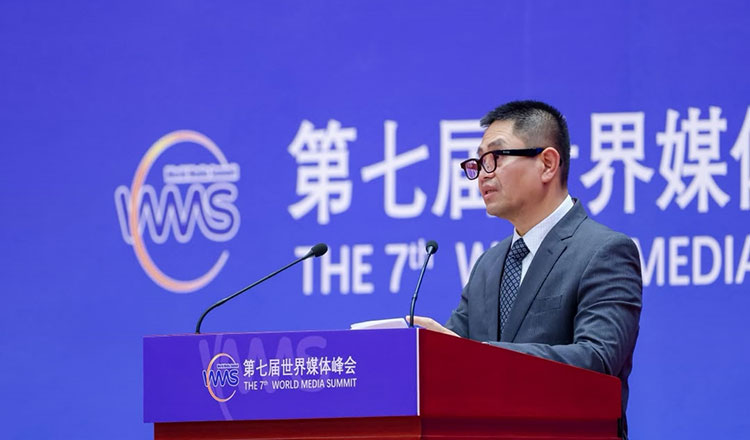
Speaking at the 7th World Media Summit on Saturday, Undersecretary of State at the Ministry of Information Prak Thaveak Amida said artificial intelligence is creating new opportunities for news gathering, production, translation and dissemination, while also presenting challenges related to content verification and unequal access to technology.
The summit is held in Beijing from November 5 until tomorrow. It is co-hosted by China’s Xinhua News Agency and the People’s Government of Beijing Municipality under the theme “Media in the Intelligent Age: From Consensus to Action”.
Thaveak Amida said Cambodia attaches importance to ensuring technological progress supported professional and responsible journalism and contributed to the public good.
He outlined three considerations for collective discussion, beginning with the need to reinforce professional and responsible journalism by upholding accuracy, editorial accountability and professional ethics in the application of artificial intelligence.
He said human oversight, careful verification, protection of confidential sources and personal data, and transparency in artificial intelligence use are essential to maintaining public confidence in the media.
He added that greater exchanges of experience among media partners in content verification and the responsible use of technology are needed, alongside cooperation in addressing false information and promoting media literacy.
On inclusive innovation and capacity building, Thaveak Amida said artificial intelligence opportunities should be made more accessible to media organisations in developing countries, particularly those working in languages with limited digital resources.
He said he welcomes opportunities to strengthen cooperation with Xinhua News Agency and other partners in professional training, news and content exchange, and digital media innovation, including through joint workshops and professional exchanges.
The third consideration focuses on deepening dialogue on development and cultural understanding, with media playing an important role in helping people understand economic and technological changes and their implications.
He said the summit’s discussions on China’s economic growth and its contribution to global development through trade, investment and connectivity are valuable, noting that informed and balanced reporting could deepen appreciation of these opportunities and the experiences of different countries.
He added that intelligent technologies could facilitate translation and cultural exchange, allowing different societies to share their histories, traditions and perspectives with wider audiences.
The summit brought together media organisations, governments, think tanks, businesses and international organisations to discuss global media development and the opportunities and challenges presented by artificial intelligence.
Thaveak Amida said he is confident the summit would provide further impetus for cooperation among participating institutions, particularly in professional development, responsible innovation and reporting on shared development.
He congratulated Xinhua News Agency on its 95th anniversary, acknowledging its contribution to international news exchange and its cooperation with Cambodia’s Agence Kampuchea Presse.
He said the Ministry of Information remains committed to continuing cooperation with international media partners to strengthen media institutions and contribute to peace, mutual understanding and shared prosperity.
- Tags: artificial intelligence, Cambodia