Overview:
Palau has concluded a series of Community Visioning Workshops under the Green Climate Fund Readiness project, gathering local perspectives across all 16 states to shape future climate resilience and food security initiatives.
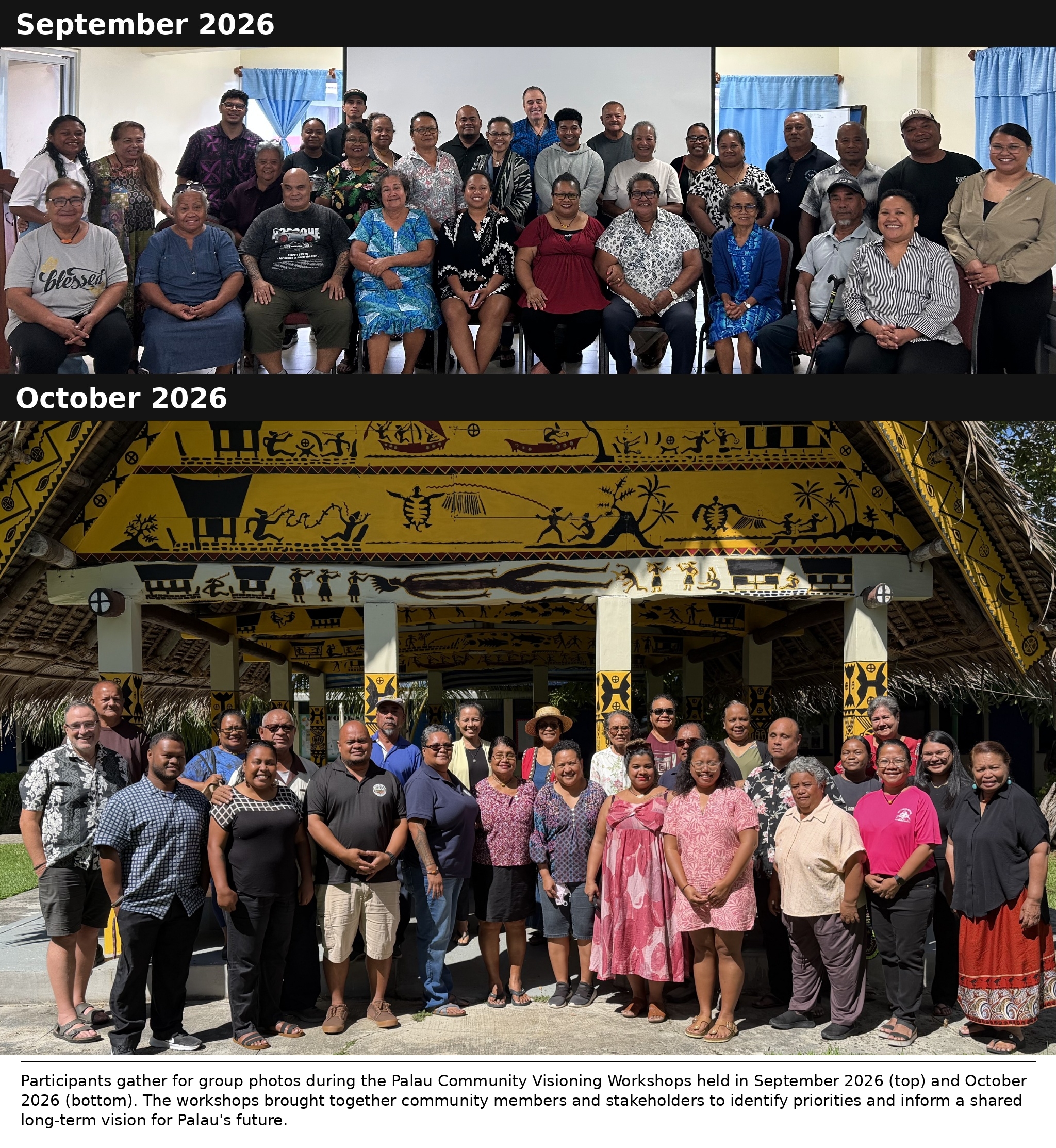
KOROR, Palau — 4 November 2026 — Community participants from across Palau’s 16 states completed a series of four Community Visioning Workshops on Thursday, 29 October 2026, identifying priorities for a climate-resilient future and bringing local voices into the early stages of climate project planning.
The workshops form part of the Green Climate Fund (GCF) Readiness project, “Developing an enabling environment for low emission and climate smart and resilient agriculture in Palau.” The Food and Agriculture Organization of the United Nations (FAO) serves as the delivery partner, working with Palau’s Office of Climate Change, which serves as the National Designated Authority for the GCF, and the Ministry of Agriculture, Fisheries and the Environment (MAFE) as the national executing agency.
Through its Readiness support, the GCF is helping strengthen the skills, policies, information and cooperation needed to develop climate solutions and access climate financing. The community visioning process provides an opportunity for participants to share their lived experiences, traditional knowledge and aspirations while project priorities are still taking shape. The project places community knowledge and priorities at the center of planning for more resilient agriculture and food systems.
Throughout the four workshops that started in September, participants considered what matters most for Palau’s future, the changes affecting their communities, and the actions needed to achieve their vision for 2050. Discussions explored connections between food and agriculture, water security, the environment, health and well-being, energy, governance, and economic opportunities.
Building on earlier discussions, participants refined key action areas, identified priority measures, and discussed indicators for tracking progress. They also identified potential lead agencies, partners and community responsibilities to help turn their vision into practical action.
This process is intended to translate the priorities expressed by communities into project ideas suitable for climate financing, while keeping their knowledge and needs central to the design. Related priorities may contribute to one coherent project, while other promising ideas can be retained to inform future concept notes. In this way, the workshops are intended to give local voices a continuing influence beyond the visioning process itself.
“The communities have spoken, and we are ready to move forward. We have shared our vision, identified priorities, and we are committed to supporting solutions that will strengthen our food systems, water security, environment, and livelihoods. We now look forward to seeing these ideas carried forward into government planning and future climate investments so that together we can build a more resilient Palau for future generations,” said a workshop participant
The community priorities identified through the workshops will help inform future GCF concept notes and climate financing proposals. Further project development training, technical assessment and consultation will build on these results, keeping community knowledge, needs and aspirations central to the climate solutions proposed for Palau.
Workshop Participants & Represented Entities
The Community Visioning Workshops brought together key representatives across Palau, including:
ParticipantEntityParticipantEntityAndrew RengechelAngaur StateLtelakt FritzPalau Chamber of Commerce / POGA / FPCCharlene MersaiOffice of Climate ChangeMarcia InacioNgiwal Collin JosephMelekeok StateMary Frances Ilolang Remengesau-VogtNgeremlengui State (Governor)Cory RamaruiDebedebokel NGO, Ngchesar StateMelanie Blelai IslamPeleliu StateDebora IsaacBungelkelau Women Club, NgchesarMesiwal MadluktNgeremlengui Diramei InawoKayangel StateMichael KyotaNgatpang StateDonna JM TitimlPalau Public Utilities Corporation (PPUC)Mirang SubediangVolunteerDoreen OngelungelAimeliik Mycellne E. GastAirai State – Planning CommissionEdith ElbelauNgarchelongNgirbachat ArsenioKoror StateElchung HideyosPalau Community College – CRENoel NgiratmabNgeremlengui StateEleanor ManorBANGOPaul LakobongNgiwal StateFaustina Rehuher-MaruggPalau Resource InstituteRose OngalibangPalau Livestock Association / BungelkelauFelix SengebauPalau Community College – CRESeth TechitongIndividual Farmer – NgatpangGoran VanoosterweyckDivision of Livestock, Bureau of Agriculture, MAFEStella PatrisSonsorol StateHuana NestorHatohobeiStephanie MinorVolunteerIseko WillyanderEbiil Society, NgarchelongTanya O. RengulbaiBANGO / Debedebokel NGO Jodean RemengesauBureau of Agriculture, MAFEToluk SakaziroNgardmau StateKelly NgirturongBANGOToyomi ChokaiBelau Modekngei School, NgatpangKeraskes MasaharuBANGOUong YalapPalau Resource InstituteLeonard BasiliusPalau Organic Growers AssociationVivien N. ProtinePalau Chamber of CommerceLisa HideosNgaraardYvonne UedaThe Nature Conservancy (TNC)
See attached photo
Media Contact for further information:
Ilebrang U. Olkeriil
Palau Consultant – Stakeholder Engagement and Communication
Food and Agriculture Organization of the United Nations
Email: ilebrang.olkeriil@fao.org Cellphone: 775-1279