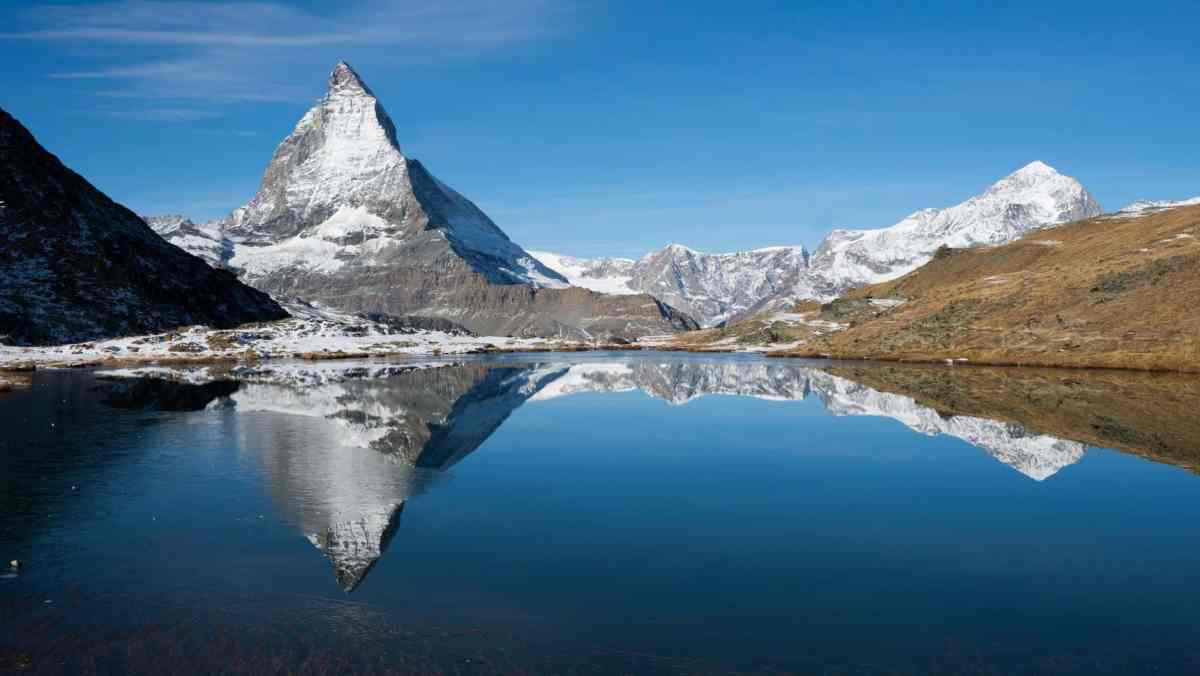
The Matterhorn is famous for its silhouette. Its geology now has global recognition, too. The mountain has joined the International Union of Geological Sciences’ (IUGS) list of geological heritage sites, the Swiss Academy of Sciences announced on Friday.
Photo by Jachen Dorta on Pexels.com
The 4,478-metre peak above Zermatt is the third Swiss site to make the list. Established in 2022, the register recognises places of worldwide geological importance. It now includes 300 sites.
The rock glaciers of the Engadine were among its first entries. The Glarus thrust followed in 2024. This great geological fault provides a striking example of older rocks pushed over much younger ones.
The Matterhorn’s appeal extends beyond its elegant profile and its pull on tourists. It also holds exceptional geological interest, according to Jürg Meyer, a member of the Swiss Commission on Geoheritage.
Glaciers sculpted its distinctive pyramid. The rocks that make up the mountain tell a much older story: they include fragments of the Earth’s crust that once lay hundreds of kilometres apart. Some belonged to the African continent; others formed part of Europe’s ancient continental margin. They now meet in one of Switzerland’s most recognisable landmarks.
The Swiss Commission on Geoheritage submitted the Matterhorn’s nomination. The commission promotes the study, conservation and public appreciation of Switzerland’s rich geological diversity. The listing gives fresh recognition to a mountain whose familiar outline conceals an extraordinary past.
For more stories like this on Switzerland follow us on Facebook and X.