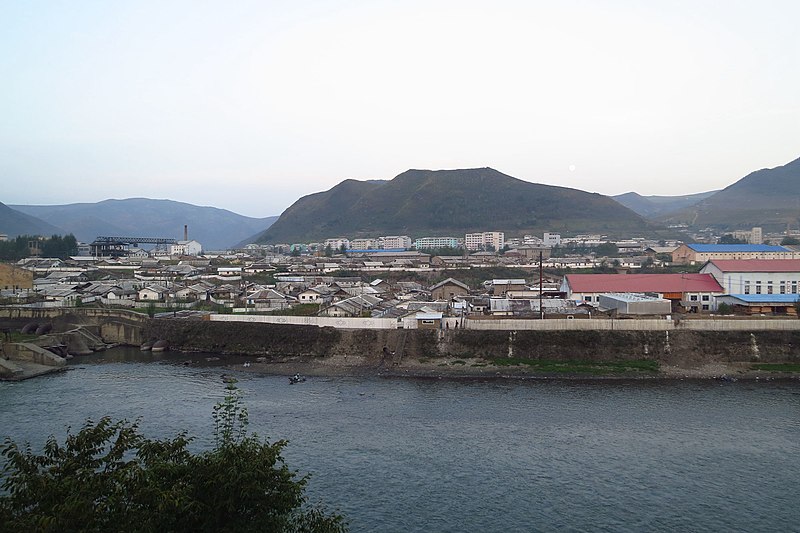
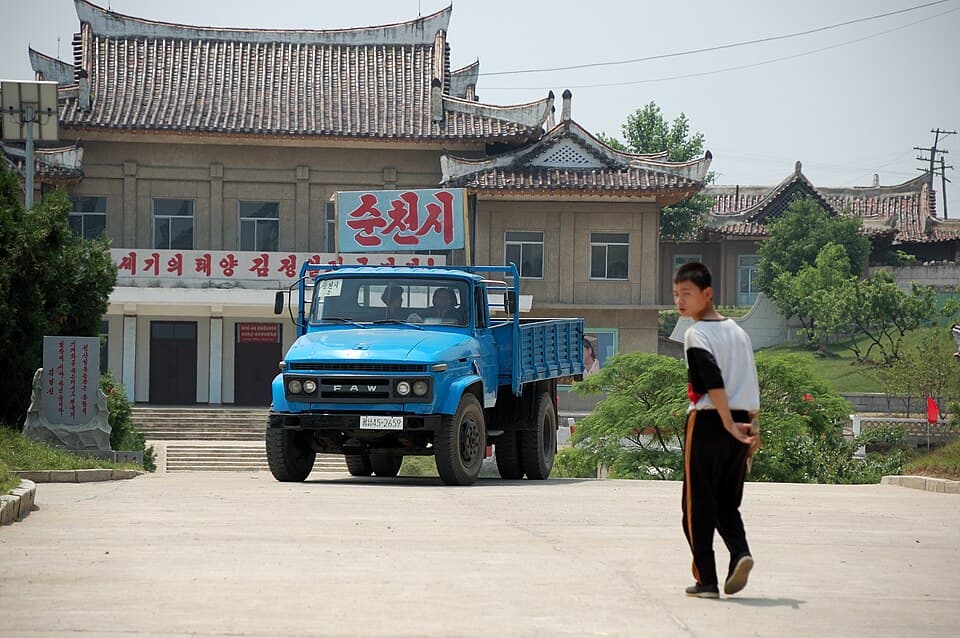
A view of Chongsan-ri Farm in Kangso, North Korea. Photo: Stephan (CC BY-SA 2.0)
Farm workers in South Hwanghae province are flooding local markets to buy rice in November 2026, with tighter state grain procurement leaving them with almost nothing from this year’s harvest. The rush has pushed market rice prices past 50,000 North Korean won per kilogram, and some areas have hit 60,000 won.
“Forced state grain procurement has stripped the province’s farms of every last grain,” a source in South Hwanghae province told Daily NK on Tuesday. “The year-end distribution has all but collapsed, so hungry farm workers are busy buying up rice at the markets.”
South Hwanghae, on the west coast, is North Korea’s largest grain-producing province and is often called its breadbasket. Each fall, collective farms first hand the state its quota, then divide whatever remains among farm households.
Farm workers in the province battled drought and fertilizer shortages from spring through fall, the source said. Their work allowed local farms to meet the state’s harvest targets, at least on paper.
Individual farm households, however, were told they would receive only two to three months’ worth of rough grain or below-grade rice. Farms are also deducting the cost of supplies, seed and food advances that families borrowed in the spring.
As a result, a growing number of farm households are left without a single grain of rice. Those who grew the rice now slip off to markets late at night or before dawn to buy food.
Rural families have long struggled through the spring lean season known as the barley hump. That is the stretch when the previous year’s food runs out before new crops arrive.
Pyongyang amended its Labor Remuneration Law in 2025 to pay farm workers in cash instead of grain. Because the won is so unstable, however, many farms still hand out some grain alongside cash.
The rush of hungry farm workers has upended the usual seasonal pattern in South Hwanghae. Market rice prices normally dip or hold steady at harvest time, but this year they are climbing sharply.
Prices vary by area, but rice generally sells for well over 50,000 won per kilogram, the source said. In some parts of South Hwanghae, the price has reached 60,000 won.
North Korean rice prices hit record highs as early as June and kept climbing through 2026. In late October, they topped 50,000 won per kilogram nationwide for the first time.
That is the highest level since the botched 2009 currency redenomination, which wiped out many families’ savings. The food crisis is deepening ahead of winter, with some families too poor to make kimchi for the cold months.
Against this backdrop, South Hwanghae farm workers are venting anger at loud bumper harvest coverage in state media. On Oct. 31, the Workers’ Party newspaper Rodong Sinmun urged farmers to “repay the party’s benevolence with rice.”
“Television and newspapers shout every day that our province had a bumper harvest,” farm workers are saying, according to the source. “So why is there not even thin gruel in the bowls of me and my children, the ones who cut the rice?”
“We are nothing but slaves farming for the state,” they added. “The only storehouses that get filled belong to the military, the Ministry of Social Security, the National Intelligence Agency and Pyongyang residents.”
The Ministry of Social Security serves as North Korea’s national police force. The National Intelligence Agency, formerly the Ministry of State Security, is the secret police that runs the political prison camps.
Pyongyang has also leaned on television dramas about farm life to motivate farm workers, with mixed results. Meanwhile, farm officials are trapped between a state demanding every grain and desperate farm workers.
“Farm officials face punishment unless they fill 100% of the state procurement quota,” the source said. “Even though they know what farm workers are going through, they have no choice but to seal the grain sacks and hand them over.”
“The farm officials are taking the full brunt of the farm workers’ resentment over the state’s harsh exploitation,” the source added.
Read in Korean
About This Translation
This article was originally written in Korean and translated with the help of generative AI tools. It was then edited by a native English-speaking editor. All AI-assisted translations are reviewed and refined by our newsroom.
Reporting from Inside North Korea
Daily NK operates networks of sources inside North Korea who document events in real-time and transmit information through secure channels. Unlike reporting based on state media, satellite imagery, or defector accounts from years past, our journalism comes directly from people currently living under the regime. We verify reports through multiple independent sources and cross-reference details before publication.
Our sources remain anonymous because contact with foreign media is treated as a capital offense in North Korea — discovery means imprisonment or execution. This network-based approach allows Daily NK to report on developments other outlets cannot access: market trends, policy implementation, public sentiment, and daily realities that never appear in official narratives.
Maintaining these secure communication channels and protecting source identities requires specialized protocols and constant vigilance. Daily NK serves as a bridge between North Koreans and the outside world, documenting what’s happening inside one of the world’s most closed societies.