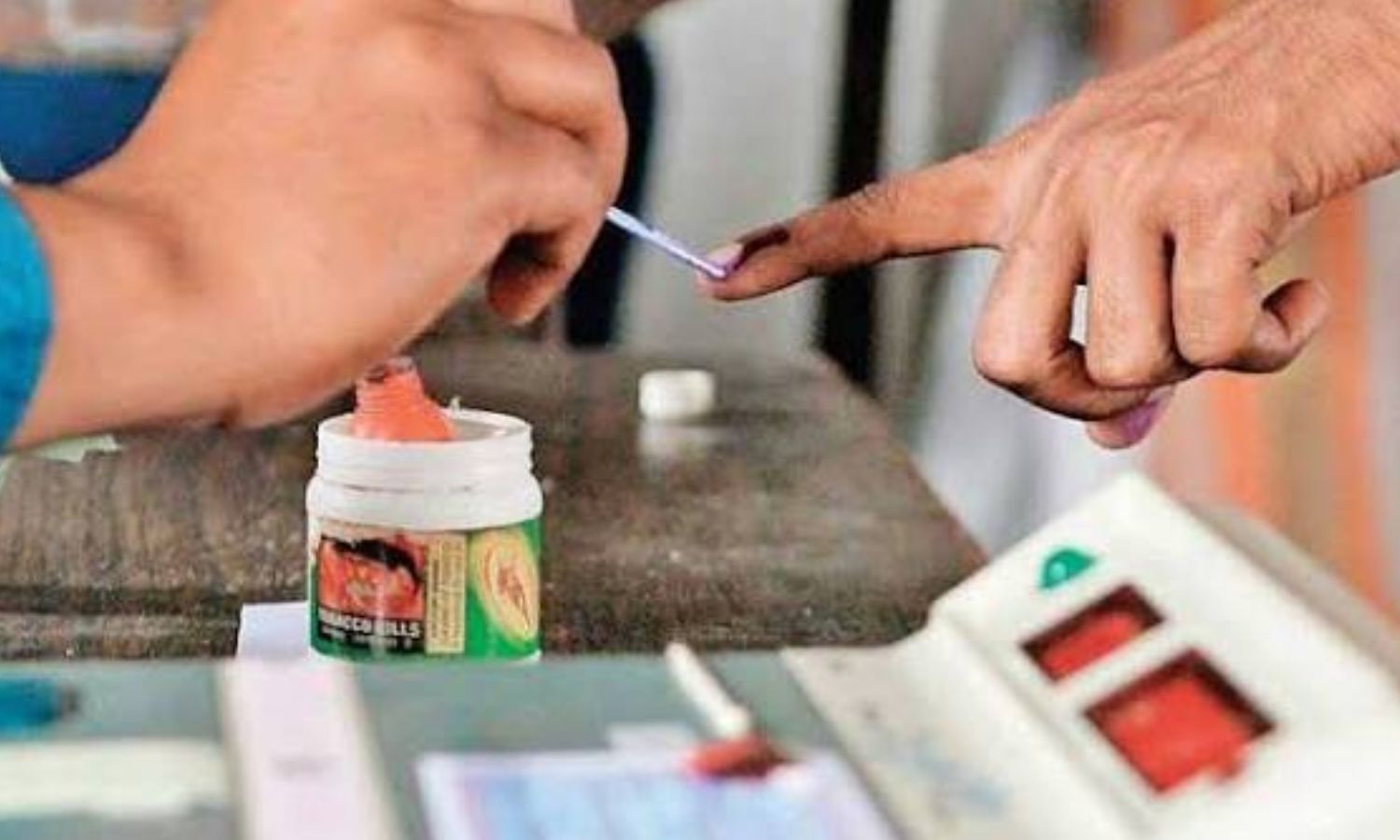
As expected, the Telugu Desam Party-led alliance registered sweeping victories across Andhra Pradesh, including a near-total rout of the YSRCP in its strongest bastion of Kadapa, in the elections to municipal corporations, municipalities and nagar panchayats, for which counting took place on Monday.
But the outcome has also opened up a contentious debate over the credibility of the electoral process.
The scale of the victory, the number of uncontested elections and allegations of electoral irregularities raise important questions about how much of the outcome reflects popular support and how much was shaped by the advantages enjoyed by the ruling coalition.
The TDP and its allies have projected the outcome as an emphatic endorsement of the two-and-a-half-year-old government led by Chief Minister N Chandrababu Naidu.
However, the YSR Congress Party has alleged that the results were influenced by the misuse of official machinery, police interference and manipulation at various stages of the electoral process.
The TDP-Jana Sena-BJP alliance won seven of the 13 municipal corporations and established leads in five others. The YSRCP, which had swept all 13 corporations in the 2021 elections, is now heading towards a solitary victory in Anantapur.
The alliance also won 75 of the 86 municipalities and nagar panchayats, while leading in another six. In contrast, the YSRCP, which had won 86 of 87 municipalities in 2021, managed to secure just Nandikotkur, with leads in Naidupeta and Bethamcherla.
These figures show a reversal of fortunes for the YSRCP in the municipal elections. Needless to say, one can expect similar results in the elections to MPTCs and ZPTCs, scheduled to be held on November 5.
However, interpreting the outcome simply as a complete endorsement of the Chandrababu Naidu government by the people would amount to overlooking the circumstances surrounding the elections.
The comparison with the 2021 municipal elections is particularly revealing. At that time, the YSRCP, under Jagan Mohan Reddy, dominated urban local bodies across the state.
Its victory in all 13 municipal corporations and 86 of the 87 municipalities reflected the political strength it enjoyed during its first term in office.
But within three years, the situation changed completely. The YSRCP was reduced to just 11 seats in the State Assembly elections, whereas the TDP, along with its allies Jana Sena and BJP, won 164 out of 175 seats.
This clearly shows that local body election results do not necessarily reflect the people’s real mandate for the party in power. Instead, they can also indicate how the ruling party is able to bulldoze its way through local body elections using sheer money power, muscle power, administrative influence and police support.
A similar situation is being witnessed now. The TDP-led alliance has not merely displaced the YSRCP in a few politically important urban centres; it has established dominance across much of the state.
However, local body elections are not necessarily a direct referendum on a state government. Local candidate selection, caste equations, community networks, local development issues, factional rivalries and the ability of political parties to mobilise voters often have a decisive influence.
The results should be viewed as an important indicator of the changing political balance rather than conclusive proof that the entire electorate has rejected the YSRCP or unanimously endorsed every aspect of the ruling government’s performance.
The role of the police and district administration is central to the controversy. In any election, the police are expected to provide a level playing field, protect candidates and voters, prevent intimidation and ensure that political parties can participate without fear.
The allegations raised by the YSRCP suggest that the problem was not confined to isolated incidents of violence. The party claimed that its candidates faced obstruction at different stages, including the filing of nominations, scrutiny, withdrawal and polling.
A sweeping electoral victory should not become a reason to dismiss legitimate questions about democratic competition. The opposition’s future political prospects cannot be assessed solely through municipal election results.
The TDP-led alliance has the electoral numbers. Whether the entire outcome can be regarded as an equally unambiguous reflection of popular preference is a question that requires closer scrutiny of vote shares, uncontested victories, candidate withdrawals and the allegations now before the election authorities and tribunals.