You can’t blame us for fearing change. We are calloused from too many changes that had been sold as positives only to find that there were none. Too many times, we‘ve been asked to give more and receive less.
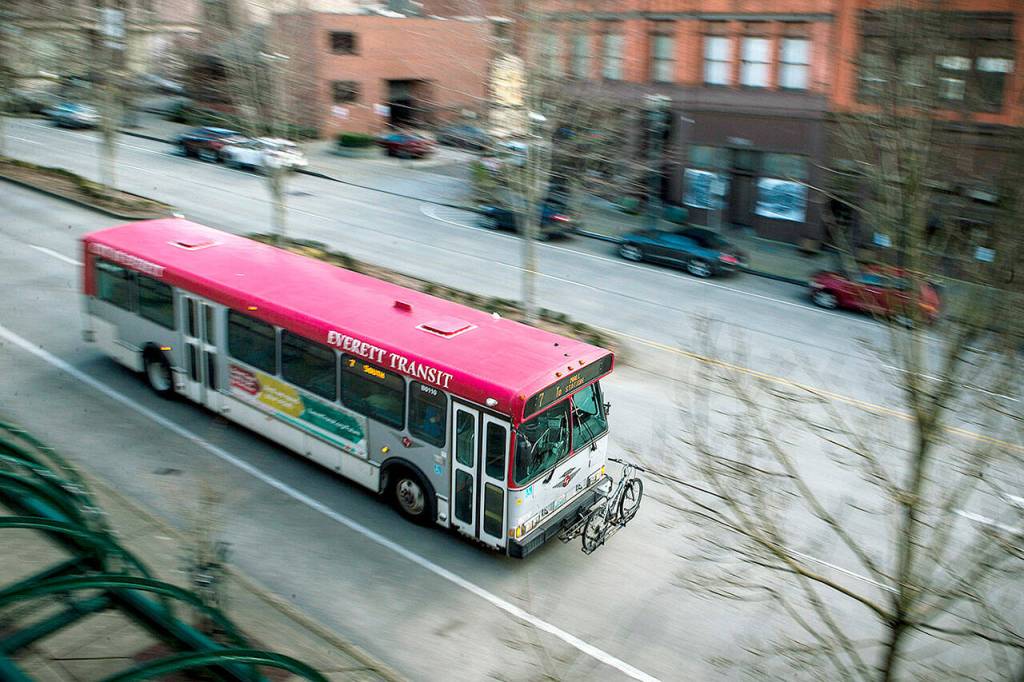
When news broke that Community Transit and the City of Everett were proposing an annexation of Everett Transit, our rightly earned skepticism predicted a litany of negative outcomes: layoffs, rate hikes, loss of services, loss of local control… We are right to scrutinize the proposal with a critical eye. Considering the proposal’s positives and negatives demands a thorough evaluation.
Community Transit and the City of Everett hope that the public, which was not given the opportunity to vote on the change via ballot due to a new state law, learns as much as possible about the merger of the two local transit systems — what it may give and what it may take away.
Transit in Everett is underfunded
We believe the proposed transition, which would take effect April 1, may be necessary to sustain the current services provided by Everett Transit.
Mayor Cassie Franklin says that Everett Transit has the same structural deficit as the city that operates it. In recent years, the city’s transit system was propped up with help from American Rescue Plan Act and COVID dollars, but those were temporary.
“Our transit system does not really collect enough sales tax to deliver robust transit services, and as our community grows, that strains it,” Franklin told The Daily Herald on Oct. 21.
The system needs to grow to meet growing needs, but it can’t grow enough. With light rail planned to extend to Everett in the coming years, this presents a problem. As this became more apparent, the city decided to act.
“The city is growing,” Franklin said. “We anticipate another 60,000 residents over the next 20 years, and we are annexing close to 40,000 just in the next six months. We are going to be up over 150,000 by the middle of next year. We are a big city.”
‘No longer an either-or situation’
Without merging with Community Transit, Everett would still need to raise the sales tax to 0.6% to try to keep up with the type of population growth the city is expecting.
Everett Transit’s long-range plan assumes that, with a 3 cent increase (per $10 taxable purchase) in the city, they could meet 25% growth over 20 years.
Compare that to 50% growth of the transit system over four years.
“That is double what we would be able to do if we went to our voters for a sales tax increase,” she said. “And, if that passed, we would only be able to increase (service) 25%.”
The increase to a 1.2% sales tax required for the merger would bring Everett in line with all the communities south of us that are already in the Sound Transit taxing district.
“We are actually not getting the same level of service as other areas that are in the Community Transit service area,” Franklin said. “We want that. We deserve it.”
Ray Stephanson, president and CEO of Economic Alliance Snohomish County, agrees.
“The cost issue is no longer an either-or situation,” Stephenson told the Herald last week. “Everett Transit is going to have to increase its sales tax anyway, and it is not going to get the level of service of a centralized, combined system.”
Employee anxiety
Everett Transit employees and union members have been vocal in their opposition to the proposed merger, citing concerns, including what they predict would be a loss of local control and service within the city.
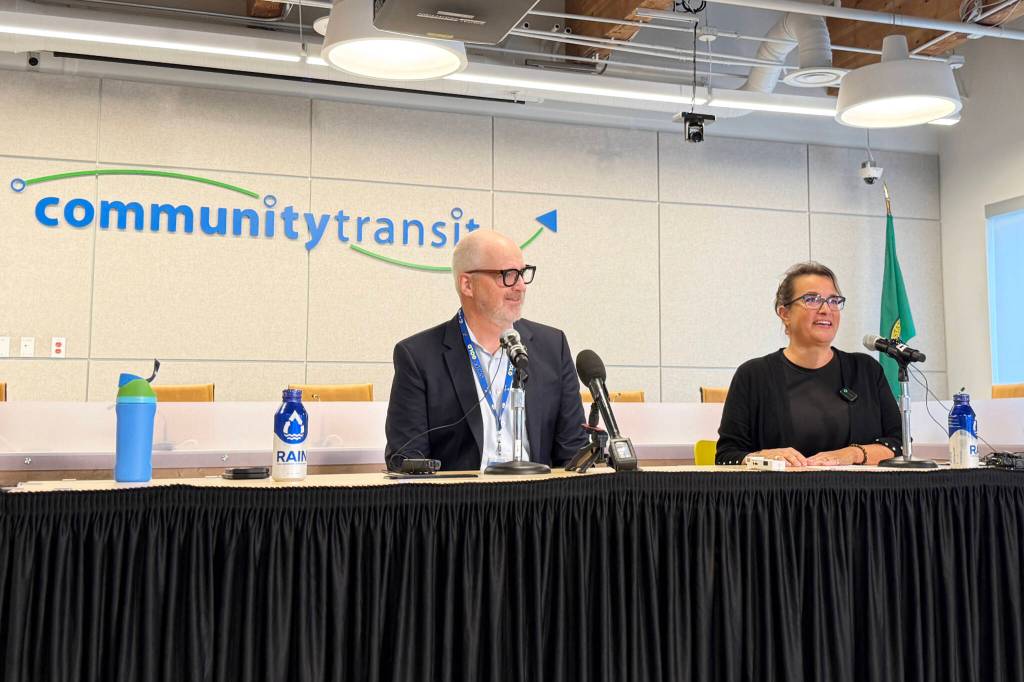
Community Transit CEO Ric Ilgenfritz says he has been trying to address those concerns with empathy and earn their trust, emphasizing the merger would increase, not decrease, service within Everett.
“Trust is earned,” Ilgenfitz told the Herald last week. “I’m all about meeting that expectation and showing the Everett Transit employees who we are and what we can do to continue to help them thrive professionally.”
Ilgenfritz said there are currently about 1,200 Community Transit employees and around 250 of them live in Everett, which is also the home of some of the transit system’s main facilities.
“My philosophy as a leader is to create conditions for people to do their best work,” he said. “I want industry-standard facilities, I want competitive wages and benefits. I want people to not have to stress out about that stuff, so they can show up and serve the public and do it effectively.”
Ilgenfritz made assurances that Everett Transit’s current assets — both human and equipment — would be needed post-merger.
“(I will need to) retain as many as I can because we are going to spend a year planning a new network and then go right into growth mode, and you need people to do that,” he said. “I need everybody I can get from Everett Transit to jump into this and help us do this. Even with the folks who come over, we will still be hiring to support growth. Transit is a very people-driven business, and that is where investment goes.”
‘Stronger together’
Many Everett residents who currently depend on Everett Transit’s paratransit service feared that a merger would mean the end of that service. However, one of the provisions of the proposed interlocal agreement between Community Transit and the City of Everett is the retention of paratransit eligibility and service area for current Everett paratransit riders.
“That fear of change is always real, but we are keeping paratransit services whole for all current paratransit riders,” Franklin said. “The same system, the same buses, the same everything but in Community Transit — and adding other services on top of it.”
Affordability
As we see increases in the cost of cars, maintenance and fuel while also seeing the effect traffic is already having on stretches of road including I-5, Broadway and the trestle, and then we hear the projections for population growth in the area, public transportation is becoming more and more attractive to those of us who love our cars and don’t currently take advantage of the service.
Compare the cost of a 1.2% sales tax increase to the cost of vehicle ownership. Add up the combined costs of owning, insuring and operating a car, truck or van.
Whatever the total cost of that vehicle is, it’s pennies on the dollar in comparison to using mass transit.
Our take
As reported earlier by the Herald’s Will Geschke, Everett and Community Transit expect to take official action on annexation Wednesday and Thursday, respectively.
The editorial board of The Daily Herald believes what will be gained from a merger outweighs what it may take away. We believe this change may be necessary to facilitate a better future for Everett and the region.