A Clark County judge is considering whether water managers must halt their enforcement of a 2021 law requiring the removal of grass that they have deemed “nonfunctional.”
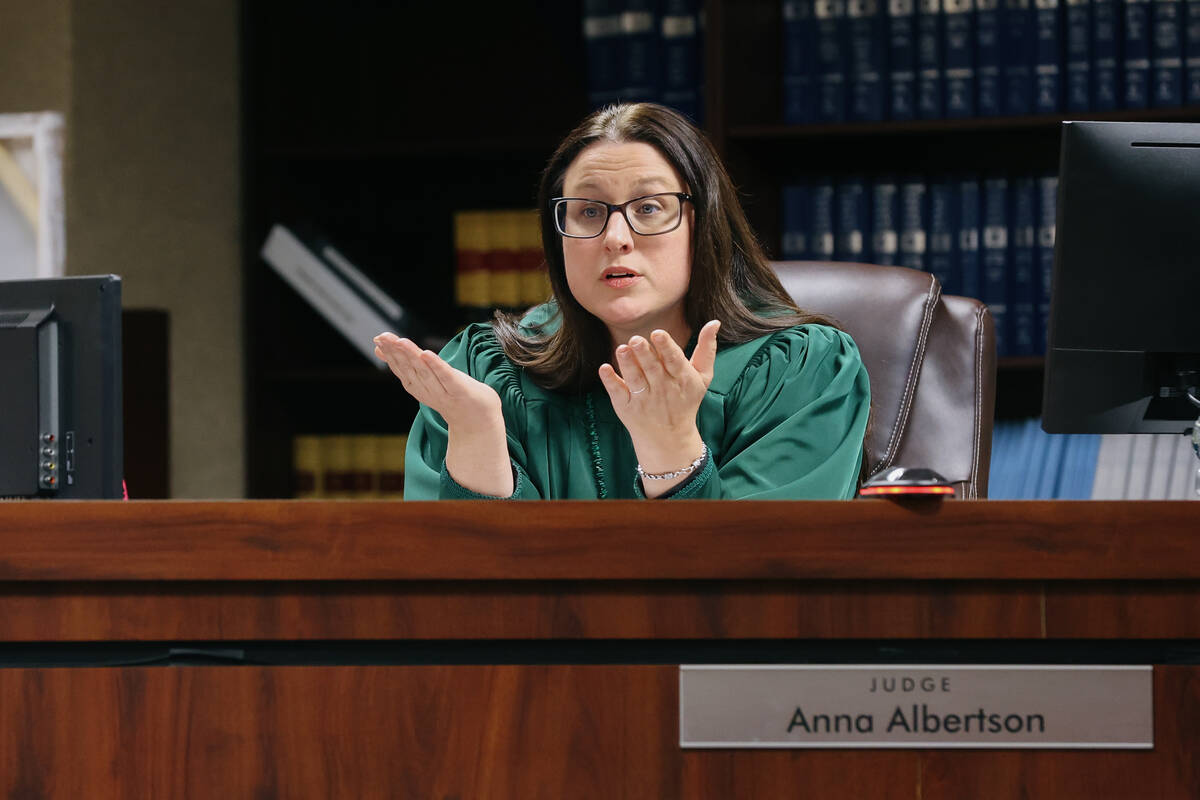
Judge Anna Albertson will decide, too, if she will certify the lawsuit as a class action, meaning any party who meets certain definitions would be added to the challenge to the Southern Nevada Water Authority’s turf removal policy, whether they are in favor of the plaintiffs’ argument or not.
Though attorneys argued two motions in court on Wednesday and Thursday, the judge has yet to make a ruling, as she awaits word as to whether the attorney general’s office would like to be involved in the case.
The high-profile case is an official challenge of the water authority’s enforcement of a law that prohibits the use of Colorado River water to irrigate turf that a committee decided was nonfunctional or decorative. So far, the named plaintiffs include a Las Vegas church, homeowners associations, a golf association and others.
The law takes effect at the beginning of next year, and the Las Vegas Valley Water District — one of the water authority’s member agencies — has floated water use fines for those who violate the law and continue to water nonfunctional turf. That enforcement approach is pending the release of a business impact statement and a vote from the agency’s governing board.
Outdoor landscaping irrigation, water managers say, is the single largest use of water from Lake Mead that cannot be captured and recycled through Southern Nevada’s wastewater capture and treatment systems.
At a hearing in downtown Las Vegas on Wednesday, Albertson questioned what may happen to parties who are asked to tear out their grass and are denied a waiver.
“If they take their grass away, they risk the mature trees going away, too,” she said. “That is irreparable harm, is it not?”
Turf removal is controversial in Las Vegas, the second-fastest-warming city in the nation, because of alleged tree canopy loss. The water authority and its experts have said grass removal doesn’t cause tree deaths, while a Las Vegas arborist who is against the mandate has argued the policies have killed an estimated 100,000 trees to date because of root exposure.
Could most valley residents become involved?
If Albertson certifies the lawsuit as a class-action case as proposed, water authority attorney Chad Fears said it could become one of the biggest class-action lawsuits in the nation’s history.
Attorneys have proposed three classes: individuals, entities such as HOAs and churches or other religious organizations. The definitions would include those that have been subject to the turf removal under the law and live in Las Vegas, Henderson, North Las Vegas, Boulder City, Laughlin or other unincorporated areas within the water authority’s service territory.
At Thursday’s hearing, Fears warned that creating a catch-all category that includes so many people would include those who support the water authority’s efforts to remove turf and disagree with the legal challenge.
“This is not a data breach where everyone can agree that it’s bad,” Fears said. “It’s neither a toxic tort dump because some railroad derailed, nor is it an airplane crash. It is a dispute over public policy, and it is improper to, when you have this conflict, to then have this class.”
Plaintiff attorneys Sam Castor and Michael Gayan have both argued that immediate relief suspending enforcement is necessary, as is the class-action certification, to protect Nevadans’ constitutional rights before fines are levied beginning on Jan. 1. They say the water authority has overstepped the boundaries of a law they find has been poorly executed.
“If I am a police officer, I can certainly give someone a ticket. But I can’t also be the judge,” Castor said. “SNWA is the one who’s not only defining what the speed limit is or what grass can be used, they’re also issuing a ticket, and then they’re also the tribunal that adjudicates whether or not that grass can stay.”
Albertson said she will make a ruling on whether enforcement can continue and if the case will be broadened out to a class-action lawsuit during the week of Nov. 9.
Contact Alan Halaly at ahalaly@reviewjournal.com. Follow @AlanHalaly on X.