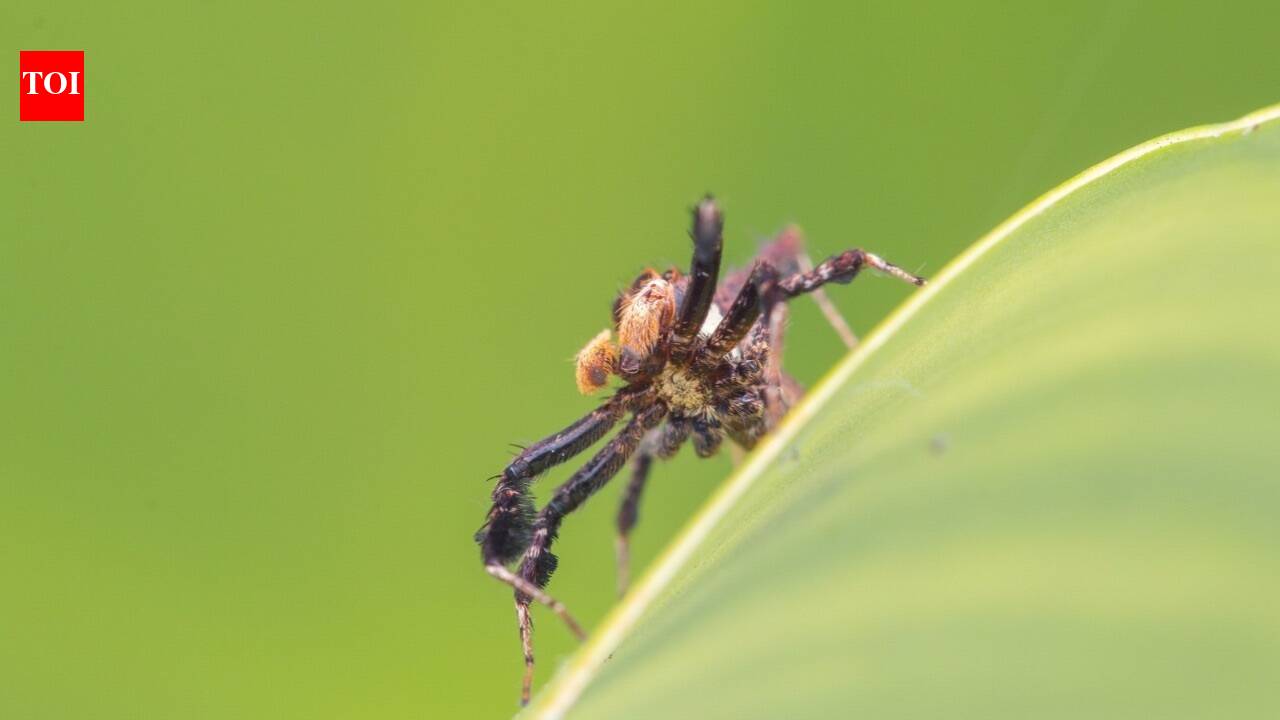
(Image credit: Wikimedia Commons) Dreaming is an experience we often associate with humans but is it something that only humans experience? Scientists have long been curious to ascertain what may happen when other animals fall asleep. While certain sleep behaviours have been observed in mammals and birds, much less is known about how sleep works in creatures with a distinct nervous system. Researchers at the University of Bonn have studied the Australian jumping spider, Portia fimbriata, known to be a clever hunter. As Science Daily reported on the 27th of October 2026, researchers have discovered evidence of distinct sleep stages, including one that resembles the rapid eye movement (REM) sleep seen in humans, opening up new questions about whether spiders could experience something resembling dreams.The study, conducted by researchers at the University of Bonn in Germany, examined the Australian jumping spider Portia fimbriata. The findings, published in the journal Proceedings of the National Academy of Sciences, by monitoring the spiders on several days and nights found clear evidence that spiders experience regulated sleep, and a REM-like sleep that is “marked by eye movements and muscle twitches” .The observations also suggest that some features of sleep may be shared by animals separated by considerable evolutionary differences.
A research study: Portia fimbriata
The choice of spider is particularly interesting because Portia fimbriata is known for its sophisticated hunting behaviour. Members of the genus Portia prey on other spiders and use different strategies to approach and capture them which include imitating the vibrations of insects struggling in a webb, that can draw another spider towards what appears to be potential prey.
(Image credit: Canva)
Such behaviour has made these spiders interesting subjects for researchers investigating animal learning and cognition. Their hunting strategies also raise questions about how their nervous systems support complex behaviour, making their sleep patterns another avenue for scientific investigation. Although scientists have previously reported REM-like movements in jumping spiders, establishing whether these movements occur during genuine sleep required further investigation. The latest study set out to examine not only the movements themselves but also whether the spiders showed other behavioural signs associated with sleep.
What happens when spiders fall asleep?
To observe the spiders, the researchers recorded their behaviour over several days and nights, using infrared cameras to monitor them in darkness. Each individual Portia fimbriata spider was placed in the plastic dishes measuring 12 centimeters in diameter. The animal was also monitored in different lighting conditions to examine distinguishable sleeping stages. The infrared camera helped monitor and reveal their distinct sleeping stages, The recordings revealed two distinguishable sleep stages, including a period of quiet rest followed by a stage marked by eye movements and muscle twitches, however this response does not necessarily mean that these animals experience the same REM sleep like humans.
(Image credit: Canva AI)
These movements are particularly noteworthy because rapid eye movements and changes in muscle activity are associated with REM sleep in humans and other vertebrates. The similarities prompted researchers to investigate whether the spiders’ behaviour represented a distinct stage of sleep rather than ordinary inactivity.However, the resemblance does not establish that spiders dream. The researchers relied on behavioural observations rather than direct examination of their brain activity, meaning they could not determine whether the spiders experienced dreams or what might occur in their brains during these periods.The team also tested how readily the spiders responded to sound to test whether they were asleep or just lay motionless. During the observed sleep stages, their responses to disturbances were delayed compared with when they were awake, and some spiders did not respond at all. Researchers additionally investigated “sleep rebound”, a phenomenon in which an animal makes up for disrupted sleep afterwards. Together, these observations provided evidence that the spiders experience regulated sleep with distinct stages, strengthening the case that their nighttime behaviour involves more than simply resting.
Can spiders dream then?
Sciene Daily has come to note that while the Bonn University is in the process of expanding its research, what remains to be explored is the relationship between sleep and cognitive abilties. However, what the research does tell us is that creatures that are seemingly small and jumpy can have complex sleeping systems just like us humans.Whether spiders can dream or not still remains to be know, but the ongoing inquiry and isnghts into the spiders night time behavouir and responses to external factors has offered a way for understandign how widley different features are distributed across the animal kingdom, with the research time likely to expand the inquiry into how animals sleep in their natural environments.