Synopsis: Senate leader commends the monarch for fostering domestic harmony, preserving stability and advancing global relations.
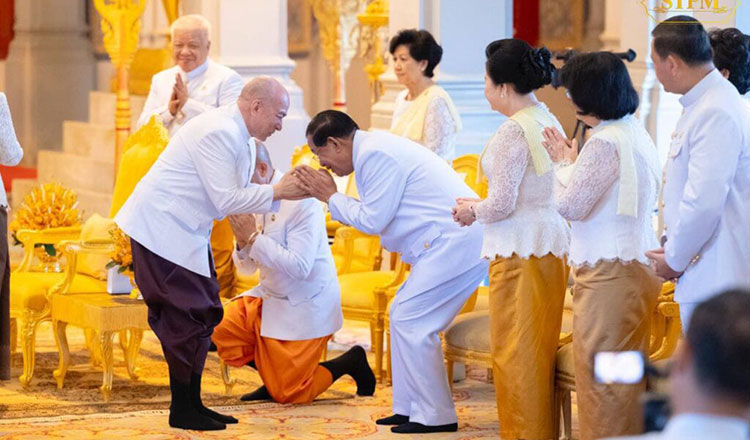
Cambodia is marking the 22nd anniversary of King Norodom Sihamoni’s coronation tomorrow, with Senate President Hun Sen paying tribute to the monarch’s role in preserving national unity, safeguarding peace and strengthening diplomatic relations.
In a congratulatory message on Monday, Mr Hun Sen extended best wishes to the king on behalf of the Senate leadership, members, officials of the Senate Secretariat and himself.
He thanked the king for his dedication to the nation and efforts to uphold Cambodia’s peace, independence, national sovereignty and territorial integrity. “His Majesty is a source of peace, prosperity and protection for the national identity, the homeland and all the Cambodian people,” Mr Hun Sen said in the letter.
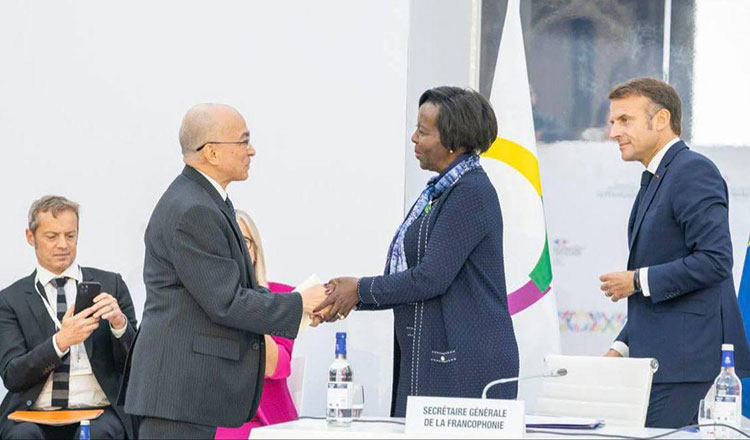
He praised the monarch’s royal duties in promoting the welfare of Cambodian citizens while highlighting his role in building foreign relations and presenting Cambodia’s identity and achievements to the international community.
He commended the king’s diplomatic approach, describing his efforts to foster international friendship as characterised by gentleness, sincerity and wisdom in pursuit of shared prosperity.
The anniversary prompted reflection on the monarchy’s place in Cambodia’s national identity and the importance of preserving historical experiences that shaped the country’s peace and stability.
King’s Cabinet Ambassador Youk Chhang said commemorating the coronation should be understood as more than a formal government occasion or public holiday, calling it an act of civic engagement that encourages citizens to recognise their responsibilities to the country.
He said the occasion offered an opportunity to educate younger generations about the sacrifices and resilience underpinning Cambodia’s stability, while recognising the legacy of the king, the late King Father Norodom Sihanouk, Queen Mother Norodom Monineath and other Cambodian leaders.
“Peace and stability in Cambodia begins and ends with its government, which is representative of and beholden to the people,” Youk said.
He noted that Cambodia’s history included periods when the state was at war with its own people, resulting in horrific violence and genocide, underscoring the importance of understanding the past when reflecting on current stability.
Khmer history scholar Vong Sotheara said the king’s responsibilities as head of state include safeguarding peace, democracy, human rights, social justice and territorial sovereignty.
He said that the monarch’s main responsibility was maintaining national unity, pointing to the historical significance of royal charity and engagement with citizens in fostering social cohesion.
“His biggest role is to ensure national unity, because the King is the supreme figure of the nation,” Sotheara said.
He praised the king’s humanitarian efforts, describing his contributions to public welfare as a continuation of royal philanthropy and service to the people.
Born in Phnom Penh on May 14, 1953, King Sihamoni is the son of the late King Father Norodom Sihanouk and Queen Mother Norodom Monineath Sihanouk.
Before ascending the throne, he spent decades pursuing artistic and cultural work, particularly classical dance and music, in Prague and Paris. He later served as Cambodia’s ambassador to UNESCO from 1993 to 2004.
On October 14, 2004, the nine-member Royal Council of the Throne unanimously selected him to succeed his father, who had abdicated. Coronation ceremonies took place from October 28 to 30 that year.
During his public address at the end of the three-day ceremony, the king pledged to remain a devoted servant of his compatriots, establishing a defining theme of his reign.
Since then, the monarchy has served as a symbol of national identity and continuity, with the king’s role encompassing ceremonial duties, humanitarian engagement and representation abroad.