In Kyrgyzstan, 52 legal entities have ceased operations as part of efforts to minimize sanctions risks, while compulsory liquidation procedures are underway against another 57 companies. State-owned banks have also closed more than 240 accounts.
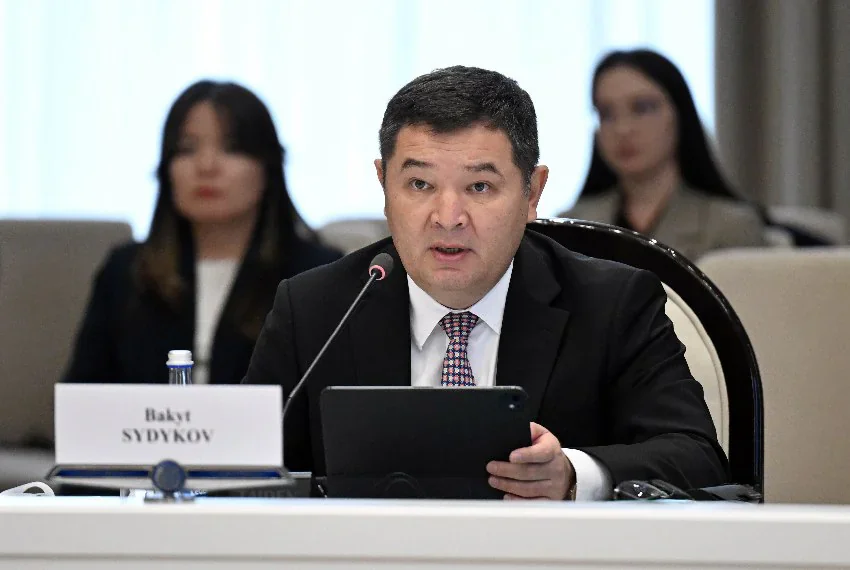
Bakyt Sydykov, the Special Representative of the President of the Kyrgyz Republic for Special Assignments on Sanctions Policy and the Mitigation of Sanctions Risks, announced the figures.
According to him, the Kyrgyz Republic is giving particularly careful consideration to the concerns expressed by the European Union, the United Kingdom and the United States regarding the risk that third countries may be used to circumvent sanctions, including in the context of the activities of the A7 network and the A7A5 stablecoin.
“Our position is unequivocal: the territory, jurisdiction, and banking and payment infrastructure of the Kyrgyz Republic must not be used for transactions intended to circumvent sanctions. Government agencies, regulators and financial institutions are taking steps to detect and put a stop to any attempt at such activity, and to guard against the risk of it being conducted through affiliated entities, intermediaries or new payment channels,” Bakyt Sydykov said.
This work serves the national interests of Kyrgyzstan. Its purpose is to safeguard the resilience of the financial system, to foster the conditions for legitimate trade, and to preserve access for citizens and businesses to international payments, investment and capital markets, he added.
The mitigation of sanctions risks remains under the personal oversight of the President of the Kyrgyz Republic, Sadyr Japarov. Government agencies have been tasked with ensuring a coordinated approach to identifying risks, taking the measures provided for by law and monitoring their implementation.
The Kyrgyz Republic pursues an independent foreign and economic policy and develops mutually beneficial relations with its international partners. Differences in political and legal assessments of particular restrictive measures do not stand in the way of practical cooperation in preventing sanctions circumvention and protecting the financial system.
Government agencies are reviewing companies, analyzing cross-border payments, and establishing the ultimate beneficial owners and the economic purpose of higher-risk transactions.
According to the competent authorities, as at October 26, 2026, 52 legal entities have ceased operations as part of the work to mitigate sanctions risks, and compulsory liquidation proceedings are under way in respect of a further 57. State-owned banks have closed more than 240 accounts. Reviews of other companies are ongoing. These figures reflect the work as a whole and do not relate exclusively to A7 and A7A5.
Preventive measures have been taken in respect of market participants linked to A7 and A7A5. The financial market regulator (Finnadzor) has revoked the licenses of a number of market participants. The Cabinet of Ministers has also taken decisions to liquidate a number of organizations. Materials concerning other entities have been referred to the competent authorities for review.
Government agencies have been instructed to ensure that the decisions taken are implemented and that the restrictions provided for by law are observed.
This work includes identifying affiliated entities and the payment channels they use, as well as the persons exercising de facto control over them. It is essential to prevent any attempt to carry on similar activity under new names, through newly registered companies or by shifting operations to other intermediaries.
All measures are taken on lawful grounds, with due regard to the orderly completion of transactions and the protection of customers’ legitimate rights. The fact that a review is being conducted does not in itself indicate any wrongdoing.
In the banking sector, the National Bank, together with commercial banks, is strengthening procedures for customer identification, the identification of ultimate beneficial owners and the verification of the purpose of payments. Particular attention is paid to transactions whose economic rationale is inconsistent with a customer’s stated business, as well as to settlements involving intermediaries and related parties.
Banks report to the National Bank on a monthly basis on closed accounts, blocked payments and refusals of service. The regulator, in turn, provides banks with information on elevated risks, together with guidance and recommendations. International consultants have been engaged to carry out an independent assessment of the existing systems.
The priority is to identify risk before a transaction takes place. Checks should cover the client’s ownership structure, its ultimate beneficiaries and the circumstances of the payment. At the same time, controls must be proportionate to the risk and must not deprive law-abiding citizens and businesses of the ability to make legitimate payments.
Further measures are being prepared in the field of virtual assets. The National Agency for Virtual Assets and Blockchain Technologies is drafting a Decree of the President of the Kyrgyz Republic providing for enhanced sanctions screening, the establishment of liability for market participants, and mechanisms for restricting transactions where there are lawful grounds to do so.
The draft Decree provides for screening against the sanctions lists of the United Nations, the European Union, the United Kingdom and the United States. The legal basis and procedure for applying restrictive measures are determined by the legislation of the Kyrgyz Republic and its international obligations.
In parallel, a Unified Digital Platform for the Licensing and Supervision of Virtual Asset Service Providers is being established. It is intended to provide automated screening of applicants, transaction monitoring and analysis of crypto wallets. Further work will involve expanding the use of blockchain analytics and strengthening risk-based supervision of market participants.
Responsible engagement by the business community remains an essential part of preventing sanctions risks. We call on entrepreneurs to carry out due diligence on their counterparties and their ultimate beneficial owners, to assess the economic substance of transactions, and to take applicable restrictions into account. Particular caution is warranted in respect of any proposal to conceal the true party to a payment, to state a false purpose of payment, or to use an intermediary whose economic role is unclear.
Government agencies will continue to explain the applicable requirements and to keep businesses informed of identified risks. At the same time, the State will, within its competence, assist in protecting the legitimate rights of citizens and organizations of the Kyrgyz Republic, including where they are designated under sanctions regimes. Such protection entails establishing the facts of each case, providing verifiable information and making use of the procedures available in the relevant jurisdiction.
“The Kyrgyz Republic stands ready to engage in regular professional dialogue with the competent authorities of the European Union, its Member States the United Kingdom and the United States. We will give due consideration to well-documented information on risks and will share information on the measures taken through established channels, in accordance with the law and confidentiality requirements,” Sydikov noted.
“The Kyrgyz Republic publicly reaffirms its determination to identify and put a stop to any transactions aimed at circumventing sanctions through its jurisdiction and financial infrastructure. We will continue to monitor the implementation of the decisions taken and to prevent any attempt at similar activity through related persons, new organizations or payment channels. We will keep the public informed of the measures taken and their outcomes.
We will pursue this work consistently, in cooperation with the European Union, the United Kingdom, the United States and other international partners. Our aim is to ensure the reliability of the financial system, to protect legitimate trade and to preserve the conditions for Kyrgyzstan’s long-term economic development,” the Special Representative of the President of the Kyrgyz Republic said.
Since 2024, the United States, the United Kingdom, the European Union and Canada have imposed sanctions on a number of Kyrgyz companies over suspicions that they helped Russia circumvent restrictions. Those targeted have included Tolubay Bank, Capital Bank of Central Asia, Eurasian Savings Bank, the A7 payment platform, and the Grinex and Meer cryptocurrency exchanges.
The EU’s 21st package of sanctions also included three Kyrgyz companies and EcoIslamicBank. Earlier, the European Union had imposed restrictions on the TengriCoin crypto platform, Keremet Bank and Capital Bank.