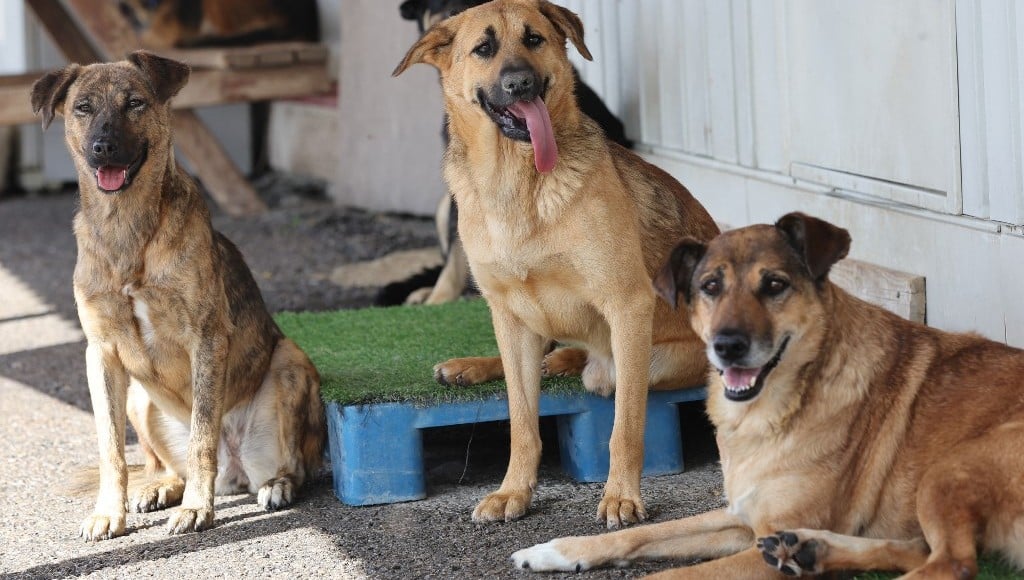
Turkish Interior Minister Mustafa Çiftçi has said authorities have rounded up all stray animals in Turkey and put them in shelters or what authorities call natural living areas, saying the nationwide campaign was complete amid longstanding criticism from animal rights groups, the state-run Anadolu news agency reported.
Speaking during a live broadcast on the Lider Haber TV station, Çiftçi said the last stray animal was taken to a shelter in the southeastern province of Diyarbakır on October 21, which he said marked the completion of the nationwide operation.
“We have rounded them all up, 100 percent, and taken the stray animals to shelters or natural living areas,” he said.
Çiftçi said the campaign began in the 51 provinces without metropolitan status before being extended to Turkey’s 30 metropolitan provinces in August.
He said shelters and natural living areas had been established and that animals taken off the streets were treated and sterilized, with adoption procedures also carried out.
According to Çiftçi, the animals are being fed and vaccinated at the facilities and are available for adoption.
The announcement follows Çiftçi’s pledge in June to have all stray dogs taken off the streets by the end of the year.
Çiftçi said in April that Turkey had rounded up approximately 75 percent of its stray dogs. Later that month, an Interior Ministry adviser told parliament that the collection rate had reached 78 percent and that about 1.2 million dogs had been taken off the streets.
The campaign stems from controversial amendments to Turkey’s Animal Protection Law adopted in July 2024. The legislation requires municipalities to catch stray dogs and keep them in shelters until they are adopted. Dogs deemed dangerous, terminally ill or unfit for adoption may be euthanized under provisions of the Veterinary Services Law.
Animal rights groups and the Republican People’s Party (CHP) opposed the legislation, calling it a “massacre law” and warning that insufficient shelter capacity and weak oversight could lead to widespread killing and neglect.
When the law was adopted, Turkey had an estimated 4 million stray dogs but only 322 shelters with capacity for approximately 105,000 animals, according to figures reported at the time.
The government has defended the policy on public safety grounds, citing dog attacks, traffic accidents and the risk of rabies. Animal rights advocates have instead urged authorities to prioritize sterilization, vaccination and adoption, warning that mass roundups could leave animals confined in overcrowded or poorly monitored shelters.
The then-main opposition CHP petitioned the Constitutional Court in August 2024 to annul most of the law’s provisions, arguing that they violated the right to life and conflicted with international agreements. The court rejected the challenge in May 2025, leaving the law in force.
Enforcement pressure on municipalities intensified in 2026. In June the Interior Ministry authorized investigations into three district mayors over stray dog attacks and alleged failures to meet their legal obligations on collecting animals and providing shelters.
In September authorities in the eastern province of Erzurum banned feeding stray animals on the streets and instructed neighborhood officials, police and gendarmes to identify stray animals and report them to municipalities. The provincial Animal Protection Board also suspended operations at one shelter until it complied with regulations and ordered another to remedy deficiencies.
Concerns about conditions in shelters have persisted. The Turkish Union of Bar Associations warned in August 2025 of animals dying due to inadequate care and cited reports of neglect, insufficient food and poor conditions during transport.