Meta’s decision to build one of the world’s largest data centers in a northeast Louisiana rural farming community has made a group of shrewd landowners millions of dollars, but it’s also creating tension around who is benefiting from the sales as the cost of land there soars.
Land previously worth a few thousand dollars per acre is now priced at $40,000 an acre or more. The dramatic swings in price have caused some in Richland Parish to question who was “in the know” about the project and benefited from land deals made shortly before Gov. Jeff Landry officially announced it in December 2024.
Those complaints are now being litigated in court. A handful of landowners who sold their acreage near the site at lower rates in the months leading up to the project’s announcement are suing to unwind the deals. They allege that they were shorted on profits by buyers who had inside information about Meta’s plans.
The company, state officials and some landowners kept the existence of the project secret through nondisclosure agreements, including one signed by the family that sold much of the land for the data center. Internal Louisiana Economic Development emails also show negotiations dating back to early 2024, and Meta told the state that a property tax break for the project was a “requirement.”
The buyers — including owners of one of the biggest real estate firms in the region — deny having inside information about Meta’s deal and said the sales prices were fair at the time. One defendant, a real estate agent, said he discussed the rumors of a potential Meta project with the seller before buying his property that sits next door to the site a few months before the announcement. Attorneys for both the plaintiffs and defendants in the three cases either didn’t respond to messages seeking comment or declined to comment, citing pending litigation.
John Lovett, an LSU Law Center professor who studies property law, said real estate values are seeing “sudden and dramatic” changes in places where data centers and other industrial projects are popping up. He expected these lawsuits would be filed after Meta announced the project.
“The data centers, if they were suddenly announced but there were insiders who knew about it and were taking advantage of that earlier, there’s a potential these claims could proliferate around the state,” Lovett said.
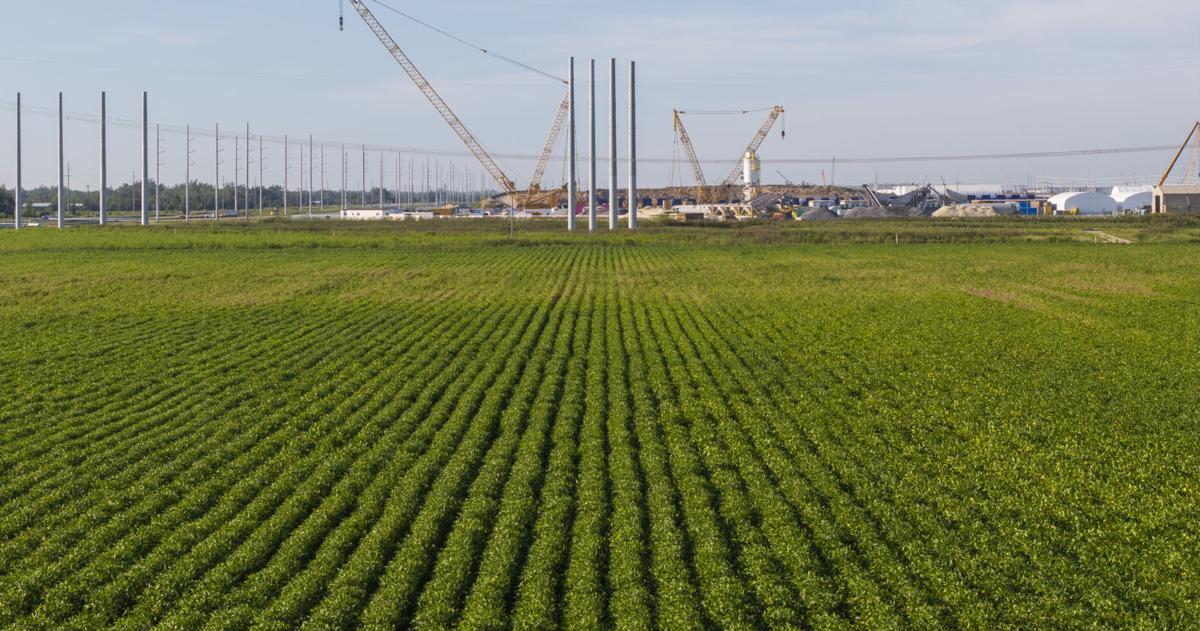
Land is built at the Meta data center construction site in Richland Parish, La., Wednesday, Sept. 2, 2026. (Staff photo by Sophia Germer, The Times-Picayune)
STAFF PHOTO BY SOPHIA GERMER
The lawsuits come as Richland Parish, long a quiet agricultural community with high poverty rates and declining population, experiences rapid changes from Meta’s decision to build one of the world’s largest data centers on a sprawling campus in Holly Ridge. And the legal fights, filed last year and still ongoing, are shedding more light on who is benefiting from the deal, at a time when Landry’s administration is welcoming a host of large-scale industrial projects in areas that traditionally have not seen them, including data centers, SpaceX and liquefied natural gas terminals.
Another smaller data center is in the works for Richland Parish as well, records show.
Prices for unimproved land have long been a few thousand dollars an acre in Holly Ridge, according to local real estate professionals and land records. While Meta and Entergy have shielded the sales price for most of their purchases, records filed in court and data from the local assessor suggest they paid tens of millions of dollars to acquire the huge swaths of land to build. Some land near the site is now going for tens of thousands of dollars per acre.
“It has caused a little frenzy up here,” said Lannie Philley, an appraiser in Mer Rouge, referencing Richland Parish. “But they’ve got to need it. It’s got to be close. … And preferably close to a large transmission line.”
Philley said some hopeful property owners miles from the Meta site are listing their property for inflated prices in the hopes that someone associated with the data center buildout will pay top dollar. But the high-priced deals are mostly happening directly on and around the Meta site. Farther away, he said companies are mostly renting out land.
Workers build a structure at the Meta Hyperion Data Center site in Richland Parish, La., Wednesday, Sept. 2, 2026. (Staff photo by Sophia Germer, The Times-Picayune)
STAFF PHOTO BY SOPHIA GERMER
Meta, through two LLCs, has bought up thousands of acres of property from landowners in Holly Ridge since October 2024, hiding the sales price by listing it as $100. The practice is a common way for businesses and wealthy homeowners to cloak the true price, listing it as “$100 and other goods and valuable considerations.” Typically, buyers and sellers will enter into a separate contract not entered into the record that spells out the true sales price.
Entergy made similar moves, including for a piece of property owned partly by state Sen. Jay Morris, R-Monroe. Morris, who supported tax breaks for data centers in the Legislature, didn’t return messages seeking comment. He previously told the news outlet Floodlight that there was no conflict in his decision to sell the land and that he had no prior knowledge of the economic development to come there.
The hidden sales prices and secrecy associated with the deal have fueled rumors in Richland Parish about the gold rush for land. And they’ve made it difficult on Lee Brown, the parish assessor, who said he’s “grabbing at air” to try to accurately assess property values amid the boom.
One of the lawsuits from disgruntled sellers used Brown’s assessment data to peg the price of one of the Meta parcels at $26 million, or more than $40,000 an acre. A person involved in the deal who declined to speak publicly, citing the controversial nature of data centers, confirmed the figure is roughly accurate. The seller was George B. Franklin and Son, Inc., a large landowner in the area run in part by Scott Franklin.
The Franklin family also partnered with Morris, the state senator, in two sales of land to Entergy spanning about 300 acres, which the Franklins and Morris owned together.
Brown said property tax millage rates are declining because of Meta’s data center. Despite the company’s massive tax exemption, it’s still causing a windfall for the parish coffers.
But he said he’s struggling to find good data on land sales ahead of the next reassessment year, in 2028.
“I feel like a mushroom,” Brown said. “Kind of in the dark.”
‘True market value’ at center of debate
The disgruntled sellers are using a law called “lesion beyond moiety” that is unique to Louisiana and allows sellers to rescind the sale of a property if they sold it for less than half the true market value.
The key question playing out in court: What was the true market value of the properties at the time of the sales, which occurred months before Meta announced the project?
In one case, a 73-year-old Rayville resident named Dennis Stewart asked his real estate agent to find a buyer for a plot of land he owned in Holly Ridge. That was in August 2024, three months before the Times-Picayune | The Advocate broke the news that Meta was considering a project, according to Stewart’s lawsuit. Stewart declined to comment, citing pending litigation.
Days later, the agent had a purchase agreement ready, according to documents filed in court. The buyer was a group of executives at Brown Realty — her employer — and their family members, documents show. The group bought the land for $2,850 an acre.
Construction continues at the Meta Hyperion Data Center site in Richland Parish, La., Wednesday, Sept. 2, 2026. (Staff photo by Sophia Germer, The Times-Picayune)
STAFF PHOTO BY SOPHIA GERMER
Shortly after the Meta deal was announced, in December of that year, Brown Realty began advertising tracts near the site for “more than 10 times what they paid Stewart,” according to the suit.
“Had he received the price that defendants value the land at, it would have changed Stewart and his family’s life,” Stewart’s attorneys wrote in court filings. ”Stewart was not an informed seller. He had no access to the information that defendants had access to. Defendants had access to information that led them to believe the property was more valuable than the purchase price and used this information to benefit themselves at the expense of Stewart in violation of their duty to him.”
The defendants, including the president and treasurer of Brown Realty, wrote in filings that they have routinely purchased land in the region, “as is their core business,” and that the plaintiffs have no evidence that anyone broke a nondisclosure agreement to inform them about the impending Meta announcement.
“The property at issue sold in September 2024, months prior to the public disclosure of the proposed Meta data center,” the defendants’ lawyer wrote in court filings. “The price for the property at the time of the sale was fair, reasonable and consistent with comparable land values in the area.”
‘Vulnerable sellers’
Lovett, the LSU law professor, said sellers may have a difficult time proving their land was worth more if it sold many months before Meta announced the deal.
However, the sellers have one potentially compelling piece of evidence: A large landowner in Richland Parish sold a 665-acre plot of land for around $26 million in October 2024. If plaintiffs can prove that the transaction set the market for land in the area, they could succeed in arguing that their land was worth far more than what they sold it for, Lovett said.
“It’s always possible that you have more sophisticated buyers who realize that real estate is actually going up in value or has an alternative use that the current owners don’t appreciate,” Lovett said. The law was designed to protect what he called “vulnerable sellers.”
Lovett said he expected these cases would start to pop up around Meta’s site, and he even crafted an exam question about it for his LSU law students. And given the projects by SpaceX and other data centers around the state, he said more sellers could try to rescind their property sales if they missed out on the real estate boom.
“Were people exploiting NDAs?” Lovett said about the Richland Parish sales. “I bet.”
Louisiana has become one of the few states where political leaders are vocally welcoming data centers, and another developer appears to be planning another one in Richland Parish near the Meta site, albeit much smaller than “Hyperion.”
In April, EDC Monroe, LLC, a company tied to a data center developer based in Atlanta, bought a 28-acre tract of land less than a mile from Meta’s data center. The sales price: $1.6 million, or $57,000 an acre.
Jeff Churchwell, executive director of the electric utility in the region, Northeast Louisiana Electric Power Cooperative, confirmed the developer has plans for a data center on the property, but declined further comment. EDC didn’t respond to messages.
The seller of the land, Floyd Swain, declined to comment on the sale price. He said he doesn’t even know “what a data center is” and was not aware of the buyer’s plans for the property.
“If you find out about it, you let us know,” Swain said. “We don’t know nothing about it.”