Why Driving Offers Unmatched Freedom Across Central America
Forget the buses. Seriously. Trying to catch an early morning shuttle out of Panama City up toward Boquete when every seat is somehow already booked? Pure chaos.
Having your own set of wheels completely rewrites the rules. Total freedom. Zero schedules. Pulling over next to a random roadside coconut stand just because the vibe is right – that is what makes a trip actually stick in your memory.
Data from regional tourism boards shows roughly 38% of independent travelers ditch public transport entirely once they leave major capitals behind. Makes sense, right? But driving down here has its quirks. The fine print will bite you if you don’t pay attention.
Navigating Local Rental Agreements and Deposit Policies
Let’s talk about the biggest headache. It is rarely the traffic. It happens right at the rental desk.
Big global franchises love flashing impossibly cheap daily rates online. Then you show up, and bam – mandatory insurance fees and a sudden $2,500 hold slapped onto your credit card. Awful.
Smart road-trippers dodge those traps completely. Instead of feeding the corporate giants, they look for straightforward local operators. If you are planning an extended stay or a massive cross-country run, tapping into a dedicated local rent network changes the game. Reasonable cash deposits. Zero hidden nonsense. Just reliable cars managed by people who actually drive these roads every single day.
“Expats waste thousands on car rentals simply because they assume big international airport brands mean safety,” says Carlos Mendez, a Panama City logistics consultant. “Total myth. Local booking setups usually give you way better support without holding your credit limit hostage.”
Before you drive off, do this:
- Film everything: Walk around the car with your phone camera. Capture every scratch, bumper scuff, and tire tread before touching the ignition.
- Verify actual insurance: Make sure the policy covers local third-party rules, rather than trusting standard overseas credit card perks blindly.
- Get deposit numbers in writing: Demand a clear written text showing the exact hold amount so your credit card doesn’t randomly freeze mid-trip.
Mastering Driving Conditions, Tolls, and Local Rules
Cruising through Panama, Costa Rica, or Guatemala is nothing like a lazy Sunday drive back home. Mountain passes – like the steep twists leading into El Valle de Anton – frequently lack lights, guardrails, or warning signs.
Transport stats note that unannounced road patches and massive speed bumps (policías muertos) cause about 22% of minor rental damage claims. Take it slow. Seriously.
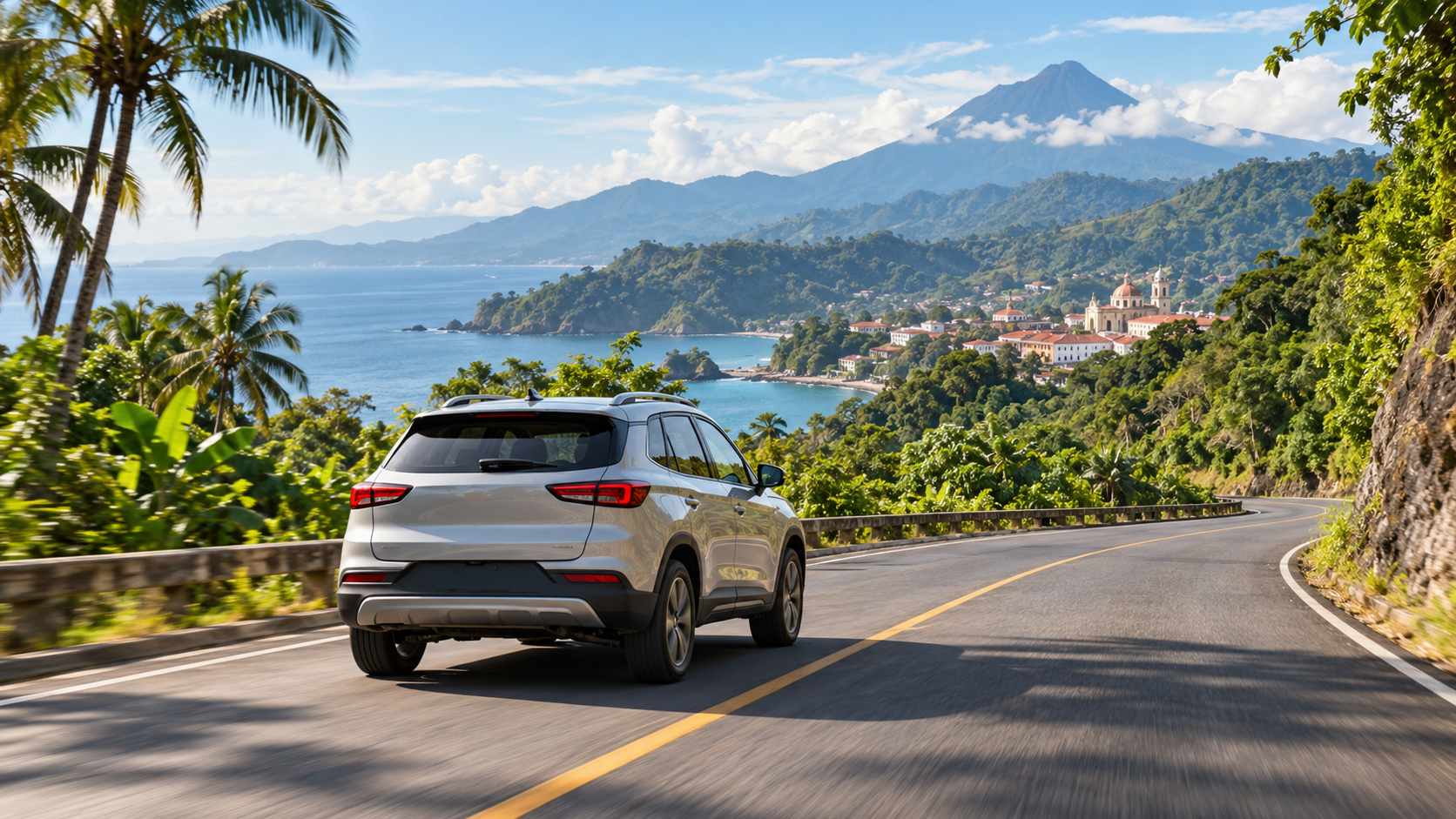
Take a nomad couple heading out to Playa Venao, for instance. They saved themselves $350 in potential repair bills simply by skipping a low-slung sedan and renting a compact AWD crossover instead, gliding right over washed-out coastal dirt tracks during the rainy season.
Quick look at average road expenses:
Expense CategoryAverage Daily/Unit CostPractical Advice for DriversFuel (Unleaded / Diesel)$3.80 – $4.50 per gallonKeep physical cash handy. Rural gas stations often reject cards or suffer internet dropouts.Highway Tolls (Panamá)$0.35 – $2.50 per gantryCheck that your rental car already has an active Panapass sticker stuck to the windshield.Daily Rental Rate$25 – $60 depending on classBook months ahead if you’re traveling during the dry season crunch (December through April).
Practical Strategies for a Smooth Journey
Hitting the highway across Central America shouldn’t feel like a survival test. Pick the right car size, lock down a transparent rental agreement, and match the local driving pace. Do that, and you’ll unlock spots most tourists never even touch. Download offline maps, keep your cool at police checkpoints, and enjoy the open road.