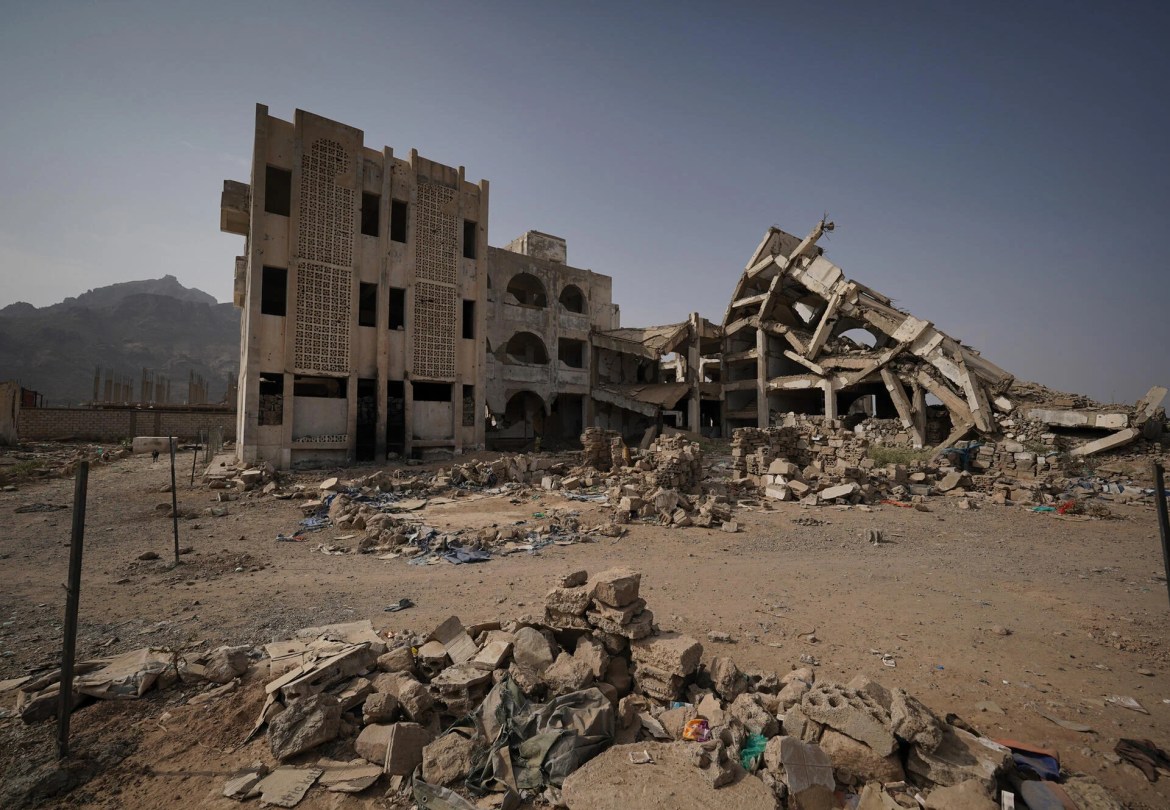
Casualties continue to rise on four fronts, and a new one has opened in Shabwah.
Hostilities continued across Marib, Lahj, Taiz and Al-Dhale’e during 12–19 October, and a new front opened in Shabwah (Jardan, Bayhan).
The violence is no longer confined to frontline districts: in Taiz the crisis has spread from rural districts into all three city districts (Al-Mudhaffar, Al-Qahirah and Salah), with reports of missile strikes on civilian neighborhoods.
There are reports of looting of health facilities, with many of them rendered completely out of service.
Access into Taiz city is the defining constraint of this period.
The main road via Haygat Al-Abd has been cut, and partners are negotiating alternative routes from Aden; FMF delivered one consignment to Al-Thawra Hospital by an alternate road.
On the West Coast most health partners have withdrawn following the shift in administrative control, leaving severe shortages of health workers and medicines, with only partners reaching from the north still present.
The Health Emergency Operations Center (HEOC) register has reached 8,513 casualties among them 6,939 injured and 1,574 deaths by 19 October 2026.
This is an increase of 1,340 casualties in eight days.
Daily totals eased to around 102 and 142 recorded between 15 and 18 October, then jumped to 428 on the 19th of October, the highest single-day report this month, driven by Shabwah (Jardan, 205 casualties, 47 deaths) and Lahj (140).
Lethality is also up.
Deaths made up 21.8 percent of casualties this period, a cumulative of 18.5%.
Marib accounted for 77 deaths in five days and Shabwah for 51 in two.
Taiz city remains the most critical gap.
The main Haygat Al-Abd Road is cut; 42 facilities in the city report severe shortages of medicines, fuel, oxygen, blood and reagents.
The Joint Medical Emergency Committee estimates US$ 624,900 to keep five public hospitals running for three months (fuel and staff incentives).
Displacement keeps growing
The International Organization for Migration (IOM) Displacement Tracking Matrix (DTM) counts 256,591 people (42,764 Households) as of 19 October, up from 201,217 on 7 October.
The Rapid Response Mechanism (RRM) has reached 24,164 Households; in Taiz 629 Households were on alert on 19 and 20 October and none could be assisted.
Cholera is trending down but not over.
Suspected cases in the five most-affected governorates fell from 639 (W40) to 562 (W41); W42 is incomplete. Part of the drop may reflect reduced care-seeking in conflict areas.
The Ministry of Public Health and Population (MoPHP) has asked the World Health Organization (WHO) to support 10 Direct to Consumers for three months; supplies reached 8 priority DTCs on 15–18 October.
WHO delivered 168 trauma and emergency kits (US$121,198) to five hospitals in Abyan, Aden, Lahj and Marib on 13 October, completed cholera supply deliveries to 8 priorities Direct to Consumers (DTC)s in Aden, Abyan and Al-Dhale’e on 15–18 October.
The consignment began emergency dispatches of Trauma and Emergency Surgery Kit (TESK), Interagency Emergency Health Kit (IEHK) and medicines to Ataq on 20 October in response to the Shabwah escalation